Friday, November 29, 2019

Virginity mandatory, wakakaka


FMT:

Indonesian gymnast dropped after being told ‘she’s no longer a virgin’


Shalfa Avrila Sania 

KUALA LUMPUR: An Indonesian female gymnast training for the SEA Games has been sent home on grounds she was no longer a virgin, her family said on Friday, a claim rejected by officials who insisted it was over disciplinary issues.

Shalfa Avrila Sania, 17, had been due to leave for the biennial Games in the Philippines on Nov 26 until she was dismissed suddenly from the training in mid-November, her lawyer and family said.

“The coach said my daughter always goes out late with her male friends and their interrogation showed she was no longer a virgin,” her mother Ayu Kurniawati told the Thomson Reuters Foundation by phone from Indonesia’s East Java province.

“I was shocked. I want my daughter’s name cleared,” the mother-of-two added.

Indonesia’s sports ministry denied the claim on Friday, saying the dismissal was due to performance and disciplinary issues.

“We will take firm action if the athlete was sent back due to questions over her virginity because this is a matter of privacy, dignity and has nothing to do with performance,” it said in a statement according to Indonesia’s Detik news website.

Kurniawati said her daughter had won nearly 50 medals since she took up the sport when she was eight, and rejected doubts over her performance.

The family has sent a letter to the ministry to protest her dismissal alongside a medical report that showed her hymen was intact, their lawyer Imam Muklas said by phone.


Parts of Indonesia — the world’s most populous Muslim country — remain conservative and some still value female virginity highly, although pre-marital sex is not uncommon among the younger generation.

Human rights groups have previously opposed “virginity tests” on Indonesian women seeking to join the police or military, saying the practice was unscientific and degrading.

Other attempts to introduce virginity tests on students in some Indonesian schools faced opposition, including from among Islamic clerics.


Anti Chin Peng ashes but pro Faekah Shamsiah?


Malaysiakini:


Chin Peng (Ong Boon Hwa) 

Chin Peng's ashes and 'Heil Hitler!' salutes


by Kua Kia Soong


One would have thought that the return of Chin Peng’s ashes to his homeland would have led to a sigh of relief that there is finally closure to our turbulent anti-colonial history and perhaps some reflection leading to reconciliation for all who have suffered tragically during the “troubles”.

Instead, Bukit Aman CID director Huzir Mohamed has said that the police are investigating the group who had reportedly brought in the remains of former Communist Party of Malaya (CPM) secretary-general Chin Peng from Thailand to Malaysia.

So, it looks as though Chin Peng’s ashes are being treated like contraband drugs, the possession of which could make the possessors liable to terrifying penalties!

While this recent “storm in an urn” has been going on in West Malaysia, we read another report that a graduating student at the convocation ceremony of Universiti Malaysia Sabah (UMS), had given a “Heil Hitler” salute during the ceremony.


Despite such a blatant salute to fascism, it appears that this student received none of the reprimands accorded the Universiti of Malaya graduate who had carried a placard calling for the vice-chancellor to resign for racism. The graduate at UMS, known only as "Ibn Ruru" justified the salute by claiming solidarity with the plight of the Palestinians against the Israeli establishment, and venting his anger towards the Jewish people.


It is interesting that these two news items should appear in the same week given that Chin Peng was centrally involved with the anti-fascist and anti-colonial struggles that led to our independence in 1957. Did we not fight the Japanese fascists who were in the Axis with Hitler’s Germany?

One wonders what Malaysian students are taught today in schools and universities about fascism, Nazism and World War II that cost so many lives and resources. Who among our past leaders can we say sacrificed more in the struggle against Japanese fascism and British colonialism?

Today, we have forgiven the Japanese and our prime minister is the main proponent of the "Look East Policy". The leaders of post-colonial Malaysia never had any problems with the British anyway - independence was handed to the Alliance on a plate even though the British colonial power had sapped our workers and resources dry by then.


Forgiveness is indeed taught in all religions but our nation’s leaders maintain that Chin Peng and the CPM cannot be forgiven for their past actions during the Emergency. It is clear, however, that these leaders are certainly capable of selective forgiveness. Let us put all this into perspective.

During the 12-year Emergency when the CPM was waging a war against British colonialism, a total of 3,945 security forces, 2,473 civilians and 6,697 insurgents were killed. Because of this record, it is argued, Chin Peng and the CPM he led cannot be forgiven. Now, how does this compare with the casualties of the Japanese occupation?

During the Japanese Occupation of Malaya, more than 100,000 Malayans (mainly Chinese) were killed in the three years between 1942 and 1945. The Japanese killed 5000 Chinese in an operation called “Sook Qing” in just one month in February 1942 in Singapore. During the three years of occupation, 66,000 people were killed in Singapore.


The atrocities committed in the name of Japanese fascism during the Occupation left an indelible mark on those Malayans who suffered the terror of those dark years. And yet we are, quite rightly, prepared to forgive and reconcile with the Japanese even though their authorities have not formally recanted for their fascist and imperialist actions as the Germans have.

Do our history books extol the patriotic role of Chin Peng and the CPM during the struggle against Japanese expansionist aggression during World War II? The CPM-organised Malayan Peoples’ Anti-Japanese Army was decorated by the British queen in London after the war, but their contributions have not been acknowledged in our own country. How’s that? And how do our school textbooks portray this part of our history?


All over the world, the progressive democratic alliances were the true patriots who fought against German and Japanese fascism during World War II. Can we name any of our independence leaders who distinguished themselves during that effort to liberate our country from Japanese occupation?

Our nation’s leaders say that the CPM’s insurrection against British colonialism was wrong but what alternative strategy did the Alliance have to liberate the country from colonial exploitation? Do they believe that independence could have been won without the insurrection against British colonial power?

My research at the British archives shows that the Malayan Emergency was essential for securing western economic, political and military-strategic interests. With this aim in mind, it was the British High Commissioner who had initiated an “Alliance” formula between the Malay aristocracy and non-Malay capitalist interests which led to the post-colonial status quo.

The colonial strategy against the CPM and the workers’ movement can be seen in the fact that the Emergency was declared by the British colonial power in June 1948, while the CPM only launched their armed struggle in December 1948.

Against 10,000 Malayan National Liberation Army regulars, the colonial power arraigned 40,000 British Commonwealth troops; 70,000 armed police; 300,000 Home guards, “including aircraft, artillery and naval support…perhaps the largest armed force in proportion to population ever used in a colonial war.”

Anthony Short (UM lecturer, later Aberdeen University) was commissioned to write the official history of the Emergency but his work was rejected by the Malayan Government. Why?

Bukit Kepong was screened by the BN government at every election before 2018, but where is Mat Indera in the film when he was the Malay CPM leader who led the assault on the police station at Bukit Kepong? This telling fact was exposed by none other than the present Defence Minister Mohamad Sabu when he was in the opposition previously.


Mat Sabu and book on Mat Indera the communist fighter but proclaimed as 'pejuang kemerdekaan' whilst Chin Peng sebagai 'pembunuh Melayu'

The rest, as they say, is history. The task for us reflective Malaysians is to painstakingly record the contributions of all true, progressive Malaysians who have contributed to our blessed homeland. Let Chin Peng rest in peace while we continue our struggle against racism and fascism in the world today. As the British Poet Laureate John Betjeman put it so wittily:

“History must not be written with bias,
Both sides should be given,
Even if there is only one side…”


Thursday, November 28, 2019

Kipas Menteri MIS-represented KDK car as public project; used RM20 million public money


Malaysiakini:


Kipas Menteri 

PAC orders audit on RM20m public funds channelled to flying car firm Aerodyne


Parliament’s Public Accounts Committee (PAC) has called for an audit on the RM20 million in public funds invested into Aerodyne Ventures Sdn Bhd, the private firm behind the flying car project.

This is to scrutinise if the funds had been used for the project.

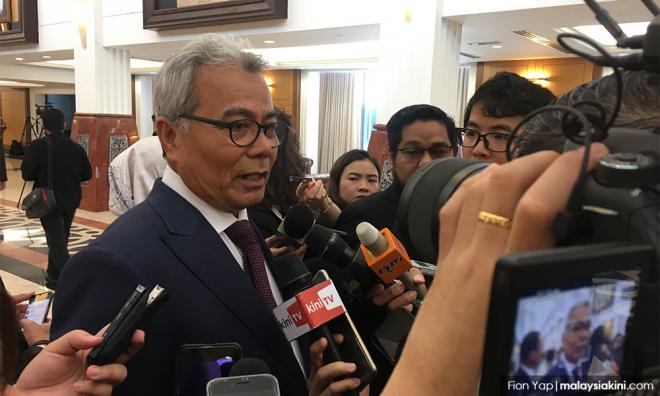
Entrepreneur Development Minister Mohd Redzuan Yusof (above) previously told Parliament that no tax money would be involved in building the prototype of the flying car.

In its report on the flying car project published today, the PAC found that RM20 million had been channelled to Aerodyne through VentureTech Sdn Bhd.


VentureTech is a subsidiary of the Malaysian Industry-Government Group for High Technology (Might), an entity under the Prime Minister’s Department.

“Although the minister (Redzuan) said the flying car project is a private initiative and would not use government funds for the project, the PAC found that Might, through VentureTech, had approved an RM20 million investment into Aerodyne.

“The Economic Affairs Ministry confirmed that the money was channelled from VentureTech to Aerodyne on Nov 1, 2019,” the report states.

According to the report, VentureTech’s board of directors had approved the RM20 million investment to develop a data processing centre in Cyberjaya; research and development; as well as “other capital expenditures” that included the purchase of drones.

The PAC recommended that VentureTech “closely monitors” that Aerodyne used the funds for its original purposes.

“The National Audit Department is asked to conduct an audit on the RM20 million government investment to ensure it is used for its original purposes and not for the flying car project,” it also said.
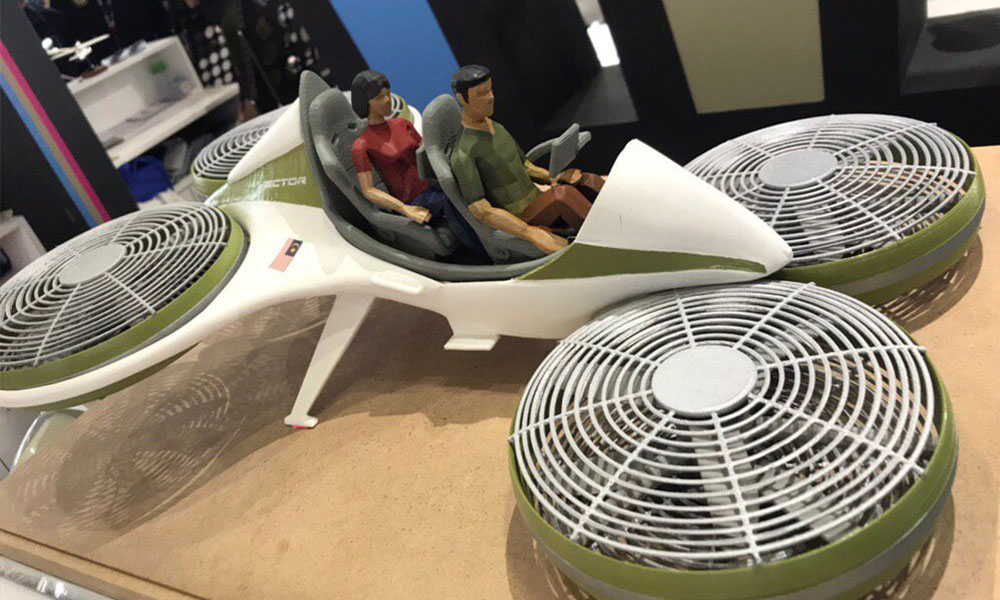


In its hearings for this report, Might CEO Mohd Yusoff Sulaiman told the PAC that the RM20 million investment into Aerodyne was not for the flying car project.

Cabinet unaware, no other ministry involved

Funding was one of the many concerns the PAC had about the project.

It noted that Redzuan’s public announcement about the flying car back in February was done without any prior presentations to the cabinet.

No detailed planning or due diligence on Aerodyne’s financial and technical capabilities was done before the project was publicly promoted, it also said.

Furthermore, the PAC found through its hearings with government officials that no other ministry or government agency was informed about the project, nor was asked to offer its input.

Also, it noted how Malaysia did not have any law to regulate air mobility and flying vehicles.

The PAC remarked how Redzuan had misrepresented the flying car project as a national initiative.

“Even though the minister promoted the project as a national project, the PAC found that the project is a private initiative…

“The minister said that Aerodyne would be using local technology but the PAC found that the prototype is being built in Japan as the country has the ecosystem and facilities needed to construct a flying car,” the report says.

The committee thus recommended that Redzuan’s ministry prepares a comprehensive cabinet paper about the project and present it during a cabinet meeting.

It also urged the ministry to work with other ministries and government entities in its programmes, especially high profile ones.

The PAC further recommended that detailed studies and due diligence be done before any initiative is announced to the public.

The bipartisan PAC is headed by Noraini Ahmad (Umno-Parit Sulong) and comprises 14 MPs on the government side including Wong Kah Woh (DAP-Ipoh Timur), Wong Chen (PKR-Subang), Nurul Izzah Anwar (PKR-Permatang Pauh), Steven Choong (DAP-Tebrau), Wong Hon Wai (DAP-Bukit Bendera), Wong Shu Qi (DAP-Kluang), Akmal Nasrullah Mohd Nasir (PKR-Johor Bahru), Hasanuddin Mohd Yunus (Amanah-Hulu Langat) and Muslimin Yahaya (Bersatu-Sungai Besar).

Opposition MPs on the committee are Ahmad Hamzah (Umno-Jasin), Takiyuddin Hassan (PAS-Kota Bahru), Ismail Mohamad Said (Umno-Kuala Krau) and Robert Lawson Chuat (GPS-Betong).

Dewan Rakyat secretary Roosme Hamzah is the PAC secretary.

Lim GE jangan terlampau sombong-busuk hati atas perkara TAR UC


keangkuhan-kesombonganmya yang tidak cocok dengan kemampuannya, wakakaka 


From Malaysiakini's Readers Write-In:

FairMalaysian: This is one issue which I will not agree with Finance Minister Lim Guan Eng.

There are already four Education Ministry officials and one Finance Ministry representative on Tunku Abdul Rahman University College’s board of governors.

Despite the fact that it was "owned" by MCA, and despite the fact that TAR UC has helped thousands of students academically, the Chinese voted for Pakatan Harapan - which simply means the Chinese know well enough not to mix education with politics. Why should Lim rock the boat now?


all above three are alumni of TAR UC - did MCA influence or control them? 

If Lim or the Finance Ministry or the Harapan government want to ensure the funds are used for the intended purpose, this could be done through the appointed representatives from the government ministries and a properly and independently conducted audit.

While MCA may have its faults, TAR UC has always been close to the hearts of the Chinese.

Unless there are specific reasons that we don't know about, Lim should not drag the issue with stunts that may further alienate the people. In all honesty, neither the Chinese nor the people want the funds to be misused. All it takes is to ensure proper monitoring.

After all, when four vice-chancellors of premier universities openly thrashed non-Malays, the government did not cut off the funds to these universities, did it?

I do not wish to link the two matters but I’m just pointing this out as a matter of fact. Lim should not allow this issue to drag on.


What price's Malaysia's honour, and Mahathir's so-called 'dignity'?


MM Online:


The former Communist Party of Malaya secretary-general known as Chin Peng but born Ong Boon Hua was last photographed celebrating his 85th birthday at a Bangkok hotel on October 14, 2009

Picture by Debra Chong

KUALA LUMPUR, Nov 27 — Datuk Ngeh Khoo Ham has asked Putrajaya today if the previous Barisan Nasional (BN) administration had violated the terms of the three-way peace treaty with the Malaysian and Thai governments, as well as the Communist Party of Malaya (CPM), known as the Hat Yai Accord.

Speaking in the Dewan Rakyat, the DAP MP said this was in relation to former CPM secretary-general Chin Peng’s failed bid to enter Malaysia, after the then government banned him from entering the country.

“Deputy Speaker, I intend to only ask the government one thing. Is it true that the Malaysian government under BN had violated an agreement which was inked between the government and the Communist on December 2, 1989, when the peace treaty between the government and the Communist Party was signed?”

“I would like to read this agreement, as it is only four paragraphs. And I would like to get an explanation from the government, so that Malaysians know truthfully, what was agreed upon, and that we can understand that the ashes of the late Chin Peng was brought back according to facts,” he added.


Notorious for breaking international agreement-treaties and local promises for his own interests, he has no scruples nor qualms about doing so

Eg. Hat Yai Peace treaty 1989, Extradition Treaty with India, refusing to sign Rome Statue, ICERD and blatantly refusing to honour Pakatan pre-GE14 manifesto promises including handing over PM-position to Anwar Ibrahim, accepting UMNO frogs into his PRIBUMI etc etc etc

he is so shameless, thick-skin and emptied of 'Malay dignity' (bearing in mind he is NOT a true Malay, wakakaka) that he has the brazen nerve to say of the manifesto:

“We thought we were going to lose. We put in tough things in the manifesto so that if we lose, the (BN) government would be in a quandary (after winning the polls).

“But now, we are the government. We are victims of our own manifesto.”


Mahathir: “We thought we were going to lose. We put in tough things in the manifesto so that if we lose, the (BN) government would be in a quandary (after winning the polls). 


1. Badmouthed Tunku, 2. Sabo Ku Li, 3. Incarcerated opposition in Ops Lalang but mainly to frighten his own UMNO wannabe 'challengers', 4. Jailed Anwar on dodgy charge, 5. Undermined AAB kaukau - & there's more, wakakaka 

The Beruas MP then used his floor time to pose the question, in which he also raised one of the agreement’s terms, on allowing CPM members to live in Malaysia.

Among the terms of the Hat Yai Accord signed on December 2, 1989, CPM members who laid down their arms would be allowed to return to their homeland if they wanted.

Among the communist party members allowed home included its chairman Abdullah CD, though Malaysia had routinely denied Chin the same courtesy.


The Sitiawan-born former guerrilla fighter had launched a legal campaign to be allowed back into Malaysia in 2009, but lost his bid in the Federal Court in 2010.

He had lived a reclusive life in exile, mostly in Bangkok, Thailand, where he died on September 16, 2013, but the BN government also blocked efforts to bring his cremated remains back into the country.

News emerged yesterday, however, that his ashes have been brought into country and scattered at undisclosed locations near his birthplace.


While debating the Ministry of Defence’s allocation in Budget 2020, Ngeh also reminded the government on the image Malaysia would have globally, if it breaks international agreements which it had jointly signed.

“Why didn’t we follow the agreed terms? If we cannot follow an international agreement, to me, this is not good for Malaysia, as Malaysia’s name will be bad. And the agreement inked by us, if we don’t follow it, truly, people would not trust our integrity and our honesty,” Ngeh added.

In 2013, the late DAP leader Karpal Singh had also raised similar sentiments, lamenting that Putrajaya’s refusal to allow former Chin Peng — born Ong Boon Hua — to be buried in his Perak hometown, was a stain on the country’s honour.

The then Opposition party chairman chided the federal government for breaking the peace deal it inked 30 years ago in Hat Yai with the CPM and the Thai government that put an end to the decades-long guerrilla war that threatened the two South-east Asian nations’ democracy and economic growth.


COMMENT by Terence Netto in Malaysiakini's
Rahim Noor injects sense into ashes row:

Former
 Inspector-General of Police Abdul Rahim Mohd Noor has weighed in on the debate – firmly on the side of us keeping our solemn commitments as outlined in an international peace agreement.

Chin Peng, longtime Secretary-General of the Communist Party of Malaya, was denied entry into Malaysia and now that he is dead, his ashes are barred from being brought into the country for interment, presumably at the Chinese cemetery in the village of Pundut, in Lumut, where the graves of the CPM leader’s parents lie.

The disbarments, according to Rahim Noor (photo above), are in violation of the Hatyai Peace Accords signed in December 1989 between the governments of Malaysia, Thailand and CPM.

If it wasn’t for the fact that former IGP was the man who headed the Malaysian team in the negotiations that led to the Hatyai Peace Accords, his opinion that we are making an international “laughing stock” of ourselves in refusing Chin Peng’s ashes to be interred here would not have mattered, given the nature of the public debate, suffused as so many things are in Malaysia with racist sentiment.

Rahim has weighed in the public debate on the sanest side possible in this wrangle. This is the side of the letter of the Hatyai agreement that brought peace to the Malaysia-Thailand border, the focal area, between 1960 and 1989, of the conflict between communist terrorists belonging to the CPM and Malaysian and Thai security forces.

As Special Branch head at the time of accords with the CPM and as the government’s lead negotiator, Rahim should know the terms and conditions of the Hatyai agreement.

If there is anybody who can hold forth authoritatively on the contentious matter of whether Chin Peng had a right to come back to Malaysia and, now that he has died, have his ashes buried in his hometown of Sitiawan, it is Rahim.

Rahim said the government was in violation of the agreement when it barred Chin Peng from returning to Malaysia as the former Secretary General of the CPM desired and, when he was baulked, petitioned the Malaysian courts for recourse.

The courts upheld the government’s bar on Chin Peng’s return and now the government thumbs its nose further at the Hatyai accords by barring the entry of the CPM leader’s ashes.

Rahim believes in keeping his word

Rahim’s opinion that the government is behaving less than honourably is the more remarkable because he has appeared in recent years at public forums organised by Perkasa, the Malay right wing group that is prominent among the voices defending the government’s disbarments of Chin Peng.

At least, Rahim believes in keeping his word and in the government keeping theirs, but the NGO Rahim has seen fit to patronize does not.


Today in NST's
Group that brought Chin Peng's ashes back to Malaysia slammed, we read that:

PVATM president Datuk Sharuddin Omar said there was no need to bring back Chin Peng’s ashes as the former communist leader had chosen to live in Thailand and become a Thai national. [...]

“Moreover, the peace treaty between PKM and the government in 1989 stated that Chin Peng had agreed to stay in Thailand, where he died six years ago,” he said.


This bloke must be utterly stupid, ignorant or issuing fake news. As we all know (except Sharuddin Omar, wakakaka) Chin Peng was denied entry back into Malaysia as per the Hat Yai Peace Accords (1989), because a "someone" who has a notoriety for violating International Treaties-Agreements and local promises to the rakyat, reneged on the terms of above-mention Peace Accord which allows Chin Peng to return home to Sitiawan, thus Chin Peng was forced to stay in Thailand - thanks to the generosity and compassion of the Thai government, unlike a renegade Malaysian government at that time.

And as we have shown above, even former IGP Rahim Noor said so in support of the return of Chin Peng to Sitiawan Malaysia in accordance with the Tripartite signed Peace Treaty (Malaysia, Thailand and The now-defunct CPM). He also said (as reported by The Star):

"... the Hat Yai agreement was signed on Nov 21 1989. There were two agreements - the main agreement signed in public and the other from Thailand as the communist was based in Thailand. Chin Peng and Rashid Maidin represented the CPM. The secondary agreement was about administrative arrangements for them to return."

"One was signed by me as director of Special Branch and as one of the representatives from Malaysia and by CPM people including Chin Peng and Rashid Maidin."

"Both agreements covered everybody including men from the lowest ranking (people’s army) until the highest. It covered everyone including Chin Peng. We kept our promises and CPM kept their part of the bargain. The Thai government also kept their agreement with the communist. There was a separate agreement between CPM and Thailand. They (the Thais) give them a lot of things in their territory. They gave land equivalent to six acres. Thailand even gave them PR status. I am not sure whether they got citizenship. They also gave them seeds and life stock. I am not sure whether they gave allowance, like we did."

"We were lucky in this whole issue; earlier Thailand had not bothered about the problem. Their National Security Council perceived the CPM as our problems."

"The meeting in Hat Yai only started after we discussed with the Thais and their National Security Council. They also had their own problems at the border. Not only were they facing the communist problem but also the Islamic (threat) in Southern Thailand."

"On Chin Peng's application to come back, I think as the agreement covered all, Chin Peng under the agreement is entitled to come back. According to the agreement, he was given one year to decide if he wanted to come back or not."


Rahim added: "We (Malaysia) are making an international “laughing stock” of ourselves in refusing Chin Peng’s ashes to be interred here."

And Mariam Mokhtar narrated in MySinChew.com's Even in death, Chin Peng still stirs strong emotions (extracts only):

... when World War II broke out, the British made contact with Chin Peng, through their commandos in Force 136. They gathered intelligence behind enemy lines, and started a guerrilla war, to fight the Japanese who had conquered Malaya, Singapore and East Asia.


Head of SOE's Force 136 (Malaya) Col John Davis DSO, CBE (center) with Force 136 (Malaya) Tham Sian Yen (left), and Wu Chye Sin, in Singapore, September 1945. (BBC)

The Japanese army and their Kempeitai caused untold suffering to the residents of Malaya. Attractive girls were selected to become comfort women for the army and scores of thousands of able-bodied men were forced to build the infamous death railway to Burma. Very few returned.


Lim Bo Seng - the freedom-fighter who was tasked to establish Force 136, a guerrilla task force backed by Special Operations Executive (SOE). However, he was captured by Japanese forces and died while interred. After the war, he is remembered as a war hero in Singapore.

Lim Bo Seng was the head of the Labour Services Corps and he provided the British government with labourers for the war effort before the Japanese invasion. When the Japanese troops began advancing towards Singapore from Malaya, he and his men attempted to destroy the Causeway.

Right before Singapore fell, Lim Bo Seng left his seven children to his wife and went to India. He trained to fight in the jungle and later recruited resistance fighters for Force 136, which was a special operations force formed by the British in June 1942 to infiltrate and attack enemy lines.

After Lim Bo Seng had organised everything in China and India, he sent the first batch of Force 136 agents to Japanese-occupied Malaya in 1943 to set up an an intelligence network in the urban areas in Pangkor, Lumut, Tapah and Ipoh. To avoid detection by the Japanese, secret messages were smuggled in empty tubes of toothpaste, salted fish and even in the Force 136’s members’ own diaries. Lim Bo Seng even pretended to be a businessman at checkpoints under disguise. He also had an alias, Tan Choon Lim.

He was betrayed and died in prison.
Lai Teck, one of Force 136’s members who was a triple agent between Force 136, the British and Japanese, betrayed Force 136 and Lim Bo Seng. He leaked out valuable information that allowed the Japanese to pick up coded messages from Force 136.

In March 1944, Lim Bo Seng was captured by the Japanese. Even when he was being cruelly tortured by the Japanese, Lim Bo Seng refused to reveal the names of the people who worked with him against the Japanese. In prison, he often shared his food with the other prisoners. Unfortunately, the lack of food and unhealthy living conditions in the prison made him very ill. On 29 June 1944, he died in Batu Gajah jail in Perak at the young age of 35.

He has his own memorial.
The Lim Bo Seng Memorial at Esplanade Park is a tribute to Major-General Lim Bo Seng. On 13 January 1946, the British brought Lim’s remains to Singapore and reburied him with full military honours at MacRitchie Reservoir, where his grave still lies today.

There is a 3.6-metre-high octagonal pagoda made of bronze, concrete and marble which is the only structure in Singapore that commemorates an individual from World War II. The pagoda has a three-tiered bronze roof, with four bronze lions at the base. Do take the time to read the four bronze plaques that give an interesting account of Lim’s life in English, Chinese, Tamil and Jawi (Malay).

After the war, King George VI, honoured Chin Peng with two campaign medals and an Order of the British Empire (OBE) for his services to the Crown in Japanese occupied Malaya. He refused to accept the honours, because he was aware that these enticements would have meant he would have to disband his fighters in the Malayan Peoples Anti-Japanese Army (MPAJA).


Order of the British Empire (OBE) 

Soon after the surrender of the Japanese, the British returned to re-establish their hold on the nation. The threat of civil unrest was real. There was terrible hardship in the land.

According to Chin Peng's account of 'The Emergency', in his book, "My Side of History", people were starving, they wanted jobs, they wanted rice to feed their families. Food supplies were running out and prices soared, because of corruption.


He claimed that on 21 October 1945, British troops fired live rounds on tens of thousands of demonstrators in Sungai Siput, Ipoh, and Batu Gajah. This fuelled the simmering discontent of the local population against the returning British.


Instead of organising national resistance against the British, the CPM sought to influence the population using moderation and respect for order. They encouraged the formation of people's committees, clubs, unions and organisations for workers, including young women and youths. [...]

... will Malay nationalists, demand that the friends and colleagues who brought Chin Peng's ashes back home, be punished?

How will they justify this, especially as the majority of Malaysians, are furiously against the repatriation of ISIS fighters? Some of the al-Qaeda and ISIS inspired Malaysian terrorists are chemical engineers and explosive experts, who will bomb nightclubs to kill and maim innocent civilians. They intend to kidnap tourists or westerners and decapitate them. Others want to use anthrax, to kill people.


Yazid Sufaat reputed to be unrepentant and the MOST DANGEROUS MAN in Malaysia - now released by police and residing in Ampang

and clowns are making noises over the ashes of Chin Peng
  

After a peace treaty was brokered by the Thai government, and signed by the Malaysian government, the Thai authorities and the CPM in Hadyai, in 1987, the former CPM guerillas were allowed to return to Malaysia, given Malaysian citizenship and reintegrated into society; however, Chin Peng was forbidden from entering Malaysia.

When he died at 88, in Bangkok, on 16 September 2013, Chin Peng's funeral was attended by retired generals of the Thai army and a former Thai prime minister, but his ashes were not allowed to be interred in his ancestral grave, in Sitiawan. Some Umno-Baru politicians claimed that he had left a trail of bloodshed, and they did not want people to make his tomb a shrine.

How do some nationalists justify the memorial which was built in Kedah, in March 2019, to honour the "Japanese heroes", who invaded Malaya? In the Japanese Imperial conquest of Malaya, Borneo and the Far East in WWII, millions died, and 200,000 civilians perished in the Nanking Massacre.


Anger as wartime memorial in Malaysia calls Japanese troops 'heroes'

History, as it is taught in our schools, needs a revamp. Education Minister, Dr Maszlee Malik must present our children with both sides of the story and let them figure out why things happened.

Chin Peng went from liberator, to public enemy.

Then, from The Malaysian Insider via OneWorldTalk's What price Malaysia’s honour?:

by Debra Chong
Malaysia Insider 4 Dec 2009

KUALA LUMPUR, Dec 2 – Twenty years ago today, Malaysia made a pact to put an end to an armed conflict that was costing incalculable damage to lives and the country’s economy.

The two-document deal, inked in a small hotel in Hatyai, bore the names of Malaysia’s highest-level government officials, their Thai counterparts and the leaders of the Communist Party of Malaya (CPM).

The first document, termed the “Agreement Between The Government Of Malaysia And The Communist Party Of Malaya To Terminate Hostilities” was signed by the then home affairs ministry’s secretary-general Datuk Wan Sidek Wan Abdul Rahman, chief of defence forces General Tan Sri Hashim Mohd Ali and police inspector-general (IGP) Tan Sri Haniff Omar.

A second document, detailing the terms and conditions of the peace treaty, was signed by then deputy IGP Datuk Rahim Noor and the director of Special Branch (SB) Datuk Zulkifli Abdul Rahman on behalf of Malaysia and Chin Peng, the CPM secretary-general, and central committee comrade, Rashid Maidin, on the same day and in front of the Thai government.


former IGP Rahim Noor 

The three-way treaty, also known as the Hatyai Peace Accord, was met with international support then.

In a nutshell, the two countries agreed to stop hunting down CPM members, who had been waging a jungle war against the governments for over 40 years.

The guerrillas were allowed to settle down and live peacefully in a country of their choice and their slates wiped cleaned.

In return, they must dispose off their weapons and swear to be loyal to King and country and follow the rule of law.

But today, the Federal government has gone back on its word in its repeated refusal to allow Sitiawan-born Chin Peng to return home and, in the process, may have caused irrevocable damage to Malaysia’s reputation as a democratic country.

Article 3 on the one-page first document states: “Members of the Communist Party of Malaya and members of its disbanded armed units, who are of Malaysian origin and who wish to settle down in MALAYSIA, shall be allowed to do so in accordance with the laws of Malaysia.”

In the second document, the terms are laid out more clearly for those who want to live in Malaysia.

Ex-CPM members have a one-year grace period to decide where they want to live: in Malaysia, Thailand or elsewhere and arrangements shall be made to fulfil their wishes.

The Malaysian government is to supply the necessary identity cards to those who want to return; and shall replace the documents for those who lost theirs, after verification.

Chin Peng, who has since reclaimed his given birth name of Ong Boon Hua, had applied to return to Malaysia, which the IGP Haniff acknowledged in an NST report dated April 28, 1991.

“Chin Peng submitted his application quite late ... towards the end of the period,” the English daily quoted him saying then.

On Sept 9 that same year, NST reported then Special Branch director Datuk Zulkifli Abdul Rahman as saying Chin Peng’s application “was being processed” and would be given the same treatment as the rest, after announcing that the first batch of 13 ex-CPM members had returned home.

The next day, IGP Haniff was reported saying Chin Peng’s application was being “studied.”

In the end, the cops denied the communist leader had ever put in his application to return.


Chin Peng mooted a suit in 2005 that also failed when the Federal Court upheld two lower court judgments requiring him to produce his birth certificate to prove his citizenship claim, despite his argument that he had lost them during World War II when he left home to fight the Japanese army.

The Malaysian Insider recently received a bundle of documents from Chin Peng’s lawyers, including copies of declassified information, which showed the government flipping and flopping over his status in the years that followed the signing of the deal.

Among them were documents to support his claims to having been born here, such as his parents’ Malaysian citizenship papers, his mother’s Malaysian passport and his only son’s Malaysian birth certificate.

Yes, what about MCP leaders like, for example, Syed Hamid Ali and Shamsiah Faekah who were allowed back into Malaysia to settle down as Malaysian citizens? Did they have still have identification papers showing their citizenship? Did they spilled Malaysian blood?


Yet Ong Boon Hwa (Chin Peng) after his death could not even have his ashes buried in Sitiawan, his place of birth.

Can we ignore the blatant double standards exhibited by the government in their treatment of Ong Boon Hwa, a Chinese former CT, and Malays like mass murderers Azahari and Noordin Top and former CT Syed Hamid Ali and Shamsiah Faekah, and now returning failed IS terrorist-murders?

Another former CPM core member, a colleague of Chin Peng, CD Abdullah, preferred to retire with his Chinese wife (also CPM member) in Thailand, was even given an audience with Al Marhum Sultan Perak, Raja Azlan Shah.


CD Abdullah 


Suraini Abdullah
née Eng Ming Ching


(left) CD and wife Suraini at reception in Malaysia in recent years

Suraini was married to CD for more than 60 years. She finally passed away in 2013 (age 90) leaving CD with a daughter

This has been Mahathir's "Mamak Indignity" - Podah.


Related:

Shame on thick skin Mahathir (and thus Malaysia).