


Published: Jan 25, 2026 7:00 AM
Updated: 11:43 AM
COMMENT | Mirror, mirror on the wall, which animal is the most “busuk” (smelliest) of them all? This is the sad yet hilarious face of our politics.
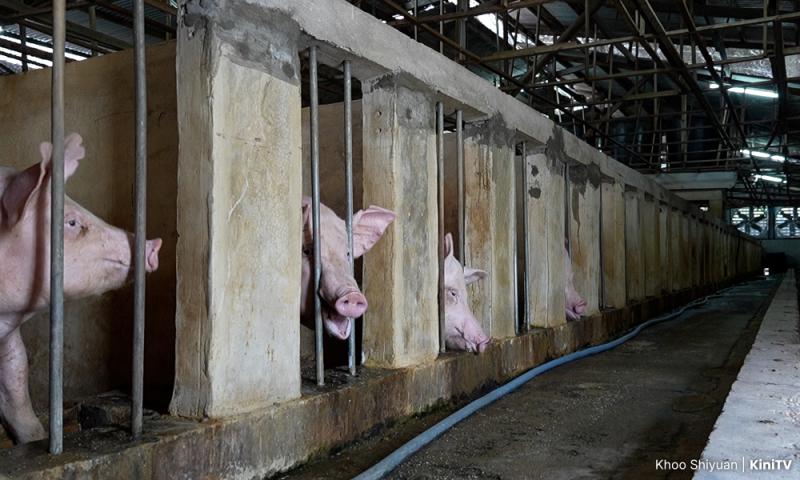
The recent brouhaha over pig farming in Selangor led to many social media posts slamming the animals and meat as “smelly and dirty”.
But don't chicken, cow and goat farms also stink? Some people find mutton too pungent to eat as well.
Puncak Borneo MP Willie Mongin responded to the anti-pork side by telling Parliament: “Although pigs are smelly, budu and belacan are worse. But we have never insulted those foods, we practise mutual respect.
“While we do eat pork, many of us don’t take bribes, abuse drugs… But we have been condemned as uncivilised for eating pork.”
His point was that “hati busuk” or hateful minds, plus corruption, are worse than any farm odours.
Updated: 11:43 AM
COMMENT | Mirror, mirror on the wall, which animal is the most “busuk” (smelliest) of them all? This is the sad yet hilarious face of our politics.
The recent brouhaha over pig farming in Selangor led to many social media posts slamming the animals and meat as “smelly and dirty”.
But don't chicken, cow and goat farms also stink? Some people find mutton too pungent to eat as well.
Puncak Borneo MP Willie Mongin responded to the anti-pork side by telling Parliament: “Although pigs are smelly, budu and belacan are worse. But we have never insulted those foods, we practise mutual respect.
“While we do eat pork, many of us don’t take bribes, abuse drugs… But we have been condemned as uncivilised for eating pork.”
His point was that “hati busuk” or hateful minds, plus corruption, are worse than any farm odours.

Puncak Borneo MP Willie Mongin
Willie urged all Malaysians to refrain from mocking the food choices of other races.
I personally love budu, which is fermented anchovy sauce, it adds a real zing to Kelantanese food. And we all love belacan, even though this fermented shrimp paste has a jarring odour.
For me, all “smelly” stuff adds a unique, delicious twist to food, be it petai, durian, salted fish, tempoyak, cincalok, blue cheese, stinky tofu, etc.
Imposing on others
However, imagine a Malay who lives in Europe and fries vegetables with belacan. The neighbouring Caucasian family then lodges complaints against “odour pollution” and demands that he stop. Is it fair for one community to impose their culture on others?
Pigs can actually be very clean and even kept as pets. Actor George Clooney was “inseparable” from his pet pig called Max for 18 years.
It was a beloved companion which Clooney had described as "his longest relationship".
So, just because pork is forbidden to Muslims, is it fair to demand that non-Muslims cannot rear pigs in Selangor? Because they are smelly?
In India, Hindu radicals have beaten up Muslims on suspicion of eating, storing, or transporting beef or cattle.
In the latest of several incidents, on Jan 14, a Muslim youth named Sheikh Makandar Mohammad was driving a van loaded with cattle in Odisha, west India.
He was badly whacked by “cow vigilantes” and later died in the hospital.
Willie urged all Malaysians to refrain from mocking the food choices of other races.
I personally love budu, which is fermented anchovy sauce, it adds a real zing to Kelantanese food. And we all love belacan, even though this fermented shrimp paste has a jarring odour.
For me, all “smelly” stuff adds a unique, delicious twist to food, be it petai, durian, salted fish, tempoyak, cincalok, blue cheese, stinky tofu, etc.
Imposing on others
However, imagine a Malay who lives in Europe and fries vegetables with belacan. The neighbouring Caucasian family then lodges complaints against “odour pollution” and demands that he stop. Is it fair for one community to impose their culture on others?
Pigs can actually be very clean and even kept as pets. Actor George Clooney was “inseparable” from his pet pig called Max for 18 years.
It was a beloved companion which Clooney had described as "his longest relationship".
So, just because pork is forbidden to Muslims, is it fair to demand that non-Muslims cannot rear pigs in Selangor? Because they are smelly?
In India, Hindu radicals have beaten up Muslims on suspicion of eating, storing, or transporting beef or cattle.
In the latest of several incidents, on Jan 14, a Muslim youth named Sheikh Makandar Mohammad was driving a van loaded with cattle in Odisha, west India.
He was badly whacked by “cow vigilantes” and later died in the hospital.
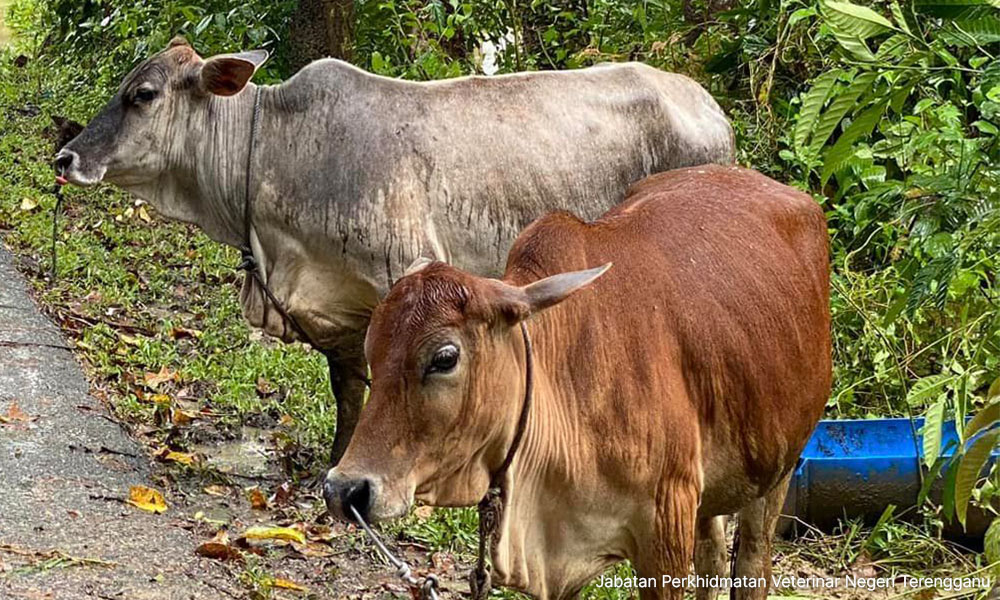
The cow is a sacred animal for Hindus, but is it right to demand that Muslims in India cannot be allowed to eat or transport beef? Because it's “sensitive” or “offensive” to the majority?
In a multicultural society, let's learn to live and let live.
The respected former Sarawak chief minister Adenan Satem was reported as saying: “Sarawakians, whether they are Malays, Chinese, Dayak, Bidayuh, they live together, drink together, eat together, find partners together.”
What I admire about Sarawak is that Muslims, Chinese and Dayaks can sit together in a coffee shop. The Muslims eat their halal nasi lemak while the others eat non-halal kolo mee. Everyone is cool.
That's why Sarawak is the model for Malaysian racial harmony.
Cows, goats and pigs
Yes, admittedly, traditional pig farms in coastal Selangor, in Kuala Langat and Sepang, have issues with smell and pollution.
On Jan 10, Selangor ruler Sultan Sharafuddin Idris Shah said he firmly opposed the renewal of licences for existing pig farms there.
However, are chicken, cattle and goat farms more “fragrant”? Or less dirty? Well, it all depends on how they are managed, right?
Even the cleanest animals will stink if they are not taken care of, and that includes pets. Think about cats in apartments that poop everywhere.
I had a friend who caught leptospirosis after accidentally swallowing river water while doing white-water rafting at Gopeng, Perak.
It's a serious disease from rat urine. Rafting guides told him the source was an unhygienic riverside goat farm.
As for cattle farms, they can spread various diseases to humans, such as Q fever, cryptosporidiosis, salmonellosis, E coli, and brucellosis.
So even farms that supply halal meat can be smelly, cause diseases and taint water. It's all about how they are operated.
Clean modern farming
To solve the problem of polluting pig farms, Selangor wants to relocate them to a modern eco-friendly system at Bukit Tagar to minimise odour, noise and pollution, said Menteri Besar Amirudin Shari.
This means zero waste emission, as everything will be in a closed system. Pig waste will be converted into biogas for electricity generation, explained Izham Hashim, the state executive councillor overseeing agriculture.

Exco member Izham Hashim
He added that the farms will be located away from residential areas and flanked by buffer zones.
For the record, Lam Sai Kit was the scientist who discovered that the Nipah virus from bats in nearby fruit orchards had transferred to pigs to cause a deadly outbreak in 1998.
He supports the Bukit Tagar plan as “modern and centralised pig farming enhances public health”, CodeBlue reported on Jan 23.
Centralised systems allow for engineered wastewater treatment, reducing pollution, he explained. It also allows veterinary disease monitoring and vaccination.
In short, the most reasonable opinion is that we need to clean up pig farming through modern methods, as done in Europe.
Emotional politics
But sadly, pigs and pork have become emotional religious issues, and rational debate starts to break down. Then, political calculations enter.
Perhaps that's why, on Jan 23, Prime Minister Anwar Ibrahim called for the proposed Bukit Tagar modern farm to either be put on hold or relocated due to “residents’ concerns”.
Yet, “residents’ concerns” have often been ignored when it comes to super high-density condos, local council elections or lately, the imminent destruction of parts of the Ayer Hitam Forest Reserve in Puchong, Selangor.
So, why is Anwar suddenly so sensitive to residents' unease over an eco-friendly pig farm?
He added that the farms will be located away from residential areas and flanked by buffer zones.
For the record, Lam Sai Kit was the scientist who discovered that the Nipah virus from bats in nearby fruit orchards had transferred to pigs to cause a deadly outbreak in 1998.
He supports the Bukit Tagar plan as “modern and centralised pig farming enhances public health”, CodeBlue reported on Jan 23.
Centralised systems allow for engineered wastewater treatment, reducing pollution, he explained. It also allows veterinary disease monitoring and vaccination.
In short, the most reasonable opinion is that we need to clean up pig farming through modern methods, as done in Europe.
Emotional politics
But sadly, pigs and pork have become emotional religious issues, and rational debate starts to break down. Then, political calculations enter.
Perhaps that's why, on Jan 23, Prime Minister Anwar Ibrahim called for the proposed Bukit Tagar modern farm to either be put on hold or relocated due to “residents’ concerns”.
Yet, “residents’ concerns” have often been ignored when it comes to super high-density condos, local council elections or lately, the imminent destruction of parts of the Ayer Hitam Forest Reserve in Puchong, Selangor.
So, why is Anwar suddenly so sensitive to residents' unease over an eco-friendly pig farm?

Prime Minister Anwar Ibrahim
“Even if the technology is the best available, if it causes concern in the area, it should not be allowed to proceed,” Anwar added.
So, it's a big no to modern science and yes to emotional fears and possible loss of votes - when the issue is blown up by the usual suspects.
The reason earlier pig farms could survive was that they were scattered, small-scale operations under the radar. However, that meant a lack of central pollution control.
Whereas Bukit Tagar is a big, integrated operation that invites political attention, like a big red bullseye target.
So, will pig farming in Selangor have to shut down even though a modern, hygienic alternative is available?
Why not just be honest and declare: “Sorry, actually we want to close down all pig farms as the animals and meat are offensive to Muslims, no matter what scientific farming methods are used.”
What’s next?
In 10 or 20 years, what will come next? Will shops be banned from publicly displaying “offensive” roasted pork products such as char siew and siew yuk?
Perhaps, Selangor's pig farms can be relocated to an island far, far away - namely Sarawak - but that will mean higher costs. Maybe we have to import pork from Thailand or faraway Europe and Brazil, even if it goes against local “food security” policy.
Izham underlined that the issue was long-standing and should not be politicised, stressing that the state government’s focus is on resolving pollution and safeguarding community well-being.
That is the right approach. One can only hope that such rational ideas will speak louder than emotional or political panic.
Meanwhile, please stop evoking the ridiculous argument of “busuk”.
ANDREW SIA is a veteran journalist who likes teh tarik khau kurang manis. You are welcome to give him ideas to brew at tehtarik@gmail.com
“Even if the technology is the best available, if it causes concern in the area, it should not be allowed to proceed,” Anwar added.
So, it's a big no to modern science and yes to emotional fears and possible loss of votes - when the issue is blown up by the usual suspects.
The reason earlier pig farms could survive was that they were scattered, small-scale operations under the radar. However, that meant a lack of central pollution control.
Whereas Bukit Tagar is a big, integrated operation that invites political attention, like a big red bullseye target.
So, will pig farming in Selangor have to shut down even though a modern, hygienic alternative is available?
Why not just be honest and declare: “Sorry, actually we want to close down all pig farms as the animals and meat are offensive to Muslims, no matter what scientific farming methods are used.”
What’s next?
In 10 or 20 years, what will come next? Will shops be banned from publicly displaying “offensive” roasted pork products such as char siew and siew yuk?
Perhaps, Selangor's pig farms can be relocated to an island far, far away - namely Sarawak - but that will mean higher costs. Maybe we have to import pork from Thailand or faraway Europe and Brazil, even if it goes against local “food security” policy.
Izham underlined that the issue was long-standing and should not be politicised, stressing that the state government’s focus is on resolving pollution and safeguarding community well-being.
That is the right approach. One can only hope that such rational ideas will speak louder than emotional or political panic.
Meanwhile, please stop evoking the ridiculous argument of “busuk”.
ANDREW SIA is a veteran journalist who likes teh tarik khau kurang manis. You are welcome to give him ideas to brew at tehtarik@gmail.com


Cat poop is way smellier than dog poop. And you can take your dog out for a walk to poop then pick it up to dispose properly but not cats.
ReplyDeletethose body smell can be effectively covered up via perfumes - likening the female caucasians use to camouflage their persistent axillary odor!
ReplyDelete