Monday, May 30, 2022

Taiwan legislature erupts in violence over ‘secret expenses’ bill

al Jazeera:

Taiwan legislature erupts in violence over ‘secret expenses’ bill

KMT lawmakers try to block bill they say could be used to overturn ex-President Chen Shui-bian’s corruption conviction.


A screengrab of a Kuomintang protest at Taiwan's Legislative Yuan on May 30, 2022 over a bill that could exonerate ex-President Chen Shui-bian [KMT Facebook Livestream]
Published On 30 May 202230 May 2022


Taipei, Taiwan – Taiwan’s parliament erupted in violence on Monday as lawmakers clashed over a bill that critics say could be used to overturn former President Chen Shui-bian’s conviction on corruption charges.

The ruckus occurred after dozens of legislators from the opposition Kuomintang (KMT), armed with signs and loudspeakers, took to the podium of the legislative chamber in the early morning to prevent a third reading of the bill.

Lawmakers pushed and shoved each other and threw water and paper as tensions over the bill boiled over.

One legislator from the ruling Democratic People’s Party (DPP) received a minor injury to his hand during a confrontation in which he was pushed out of the way.

The disorder subsided after an hour but as of midday, KMT legislators were still occupying a portion of the chamber with placards in tow.

A KMT spokesperson did not immediately reply to a request for comment.

KMT legislators say that President Tsai Ing-wen has taken advantage of Taiwan’s recent COVID-19 outbreak to pass the legislation decriminalising the use of “secret state expenses” by the executive.

They say the bill could be used retroactively to exonerate Chen, Taiwan’s first president from Tsai’s independence-leaning DPP, who was implicated in a corruption scandal in 2008 and found guilty of misusing funds.

Chen, who led the self-ruled island between 2000 and 2008, was initially sentenced to life in prison, before his sentence was cut to 19 years. He is currently out of prison on medical parole.

Prior to his fall from grace, Chen was best known for unseating the pro-Beijing KMT after decades of single-party rule.

Monday’s scuffle was not the first time tensions over the bill boiled over. A preliminary review of the draft legislation in April also became heated, according to government media, when KMT legislators tried to interrupt proceedings and threw fake banknotes.

KMT also used Monday’s protest to criticise the government’s pandemic response and the growing number of COVID-19 deaths – particularly of young children and elderly.

After nearly two and half years of keeping the virus at bay, Taiwan is now battling its worst-ever outbreak as authorities report 70,000-90,000 cases each day.

Deaths have also climbed to more than 2,000, up from 850 in the months prior to the outbreak, according to the Taiwan Centers for Disease Control.

The fatalities have notably included the sudden deaths of several very young children, which many Taiwanese attribute to failures of the healthcare system.

Russian troops attack eastern towns to trap Ukrainian forces


Russian troops attack eastern towns to trap Ukrainian forces


RUSSIAN forces stepped up their assault on the Ukrainian city of Sievierodonetsk yesterday after claiming to have captured the nearby rail hub of Lyman, as Kyiv intensified its calls for longer-range weaponry from the West to help it fight back in the Donbas region.

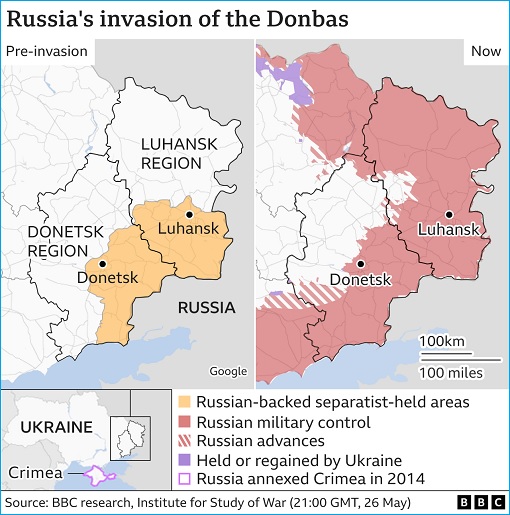
Slow, solid Russian gains in recent days point to a subtle momentum shift in the war, now in its fourth month. The invading forces appear close to seizing all of the Luhansk region of Donbas, one of the more modest war goals the Kremlin set after abandoning its assault on Kyiv in the face of Ukrainian resistance.


Russia’s defence ministry said yesterday its troops and allied separatist forces were now in full control of Lyman, the site of a railway junction west of the Siverskyi Donets River in the Donetsk region that neighbours Luhansk.


However, Ukraine’s deputy defence minister, Hanna Malyar, said the battle for Lyman continued, the ZN.ua website reported.


Sievierodonetsk, some 60 km (40 miles) from Lyman on the eastern side of the river and the largest Donbas city still held by Ukraine, was under heavy assault from the Russians.


“Sievierodonetsk is under constant enemy fire,” Ukrainian police posted on social media yesterday.

Russian artillery was also shelling the Lysychansk-Bakhmut road, which Russia must take to close a pincer movement and encircle Ukrainian forces.

“There was significant destruction in Lysychansk,” the police said.

The governor of Luhansk, which along with Donetsk comprises the Donbas, said on Friday Russian troops had already entered Sievierodonetsk. Ukrainian troops may have to retreat from the city to avoid capture, Governor Serhiy Gaidai said.

It was not clear whether they had begun to pull out yesterday.

Ukrainian presidential adviser and peace talks negotiator Mykhailo Podolyak yesterday repeated a call for deliveries of US-made long-range multiple-rocket launchers. US officials tell Reuters such systems are actively being considered, with a decision possible in the coming days.

“It is hard to fight when you are attacked from 70 km away and have nothing to fight back with. Ukraine can return Russia behind the Iron Curtain, but we need effective weapons for that,” Podolyak posted on Twitter.

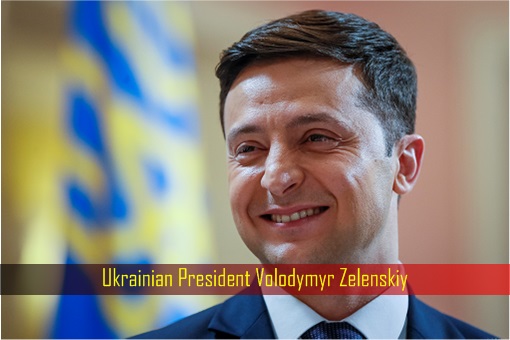
President Volodymyr Zelenskiy voiced hopes in a late-night video address that allies would provide needed weaponry and added that he expected “good news on this next week.”

Buildings destroyed

Ukrainian forces in the Donbas region said in a brief Facebook post they had been on the defensive all day, fending off seven Russian attacks and destroying a tank.

Some 90% of buildings in Sievierodonetsk were damaged, Governor Gaidai said, with 14 high-rise buildings destroyed in the latest shelling. Several dozen medical staff were staying on in Sievierodonetsk, but they faced difficulty just getting to hospitals because of the shelling, he said.

Reuters could not independently verify the information.

Analysts at the Washington-based Institute for the Study of War said that while Russian forces had begun direct assaults on built-up areas of Sievierodonetsk, they were likely to struggle to take ground in the city itself.

“Russian forces have performed poorly in operations in built-up urban terrain throughout the war,” they said.

Zelenskiy said the military situation in the Donbas was very complicated, adding that defences were holding up in a number of places, including Sievierodonetsk and Lysychansk.

“It’s indescribably difficult there. And I am grateful to all those who withstood this onslaught,” he said in his late-night video address.

The British defence ministry said in its daily intelligence report that if Russia succeeded in taking over those areas, the Kremlin would likely view it as a “substantive political achievement,” one it could use to justify its invasion to the Russian people.

In a television interview, Zelenskiy said he believed Russia would agree to talks if Ukraine can recapture all the territory it has lost since the invasion began on Feb 24.

Still, Zelenskiy ruled out the idea of using force to win back all the land Ukraine has lost to Russia since 2014, which also includes Crimea, which Moscow annexed that year.

“I do not believe that we can restore all of our territory by military means. If we decide to go that way, we will lose hundreds of thousands of people,” he said.

Russia says it is waging a “special military operation” to demilitarise Ukraine and rid it of nationalists threatening Russian-speakers there. Kyiv and Western countries say Russia’s claims are a false pretext for war.

Thousands of people, including many civilians, have been killed and several million have fled their homes, either for safer parts of Ukraine or to other countries.

Ukraine’s General Staff said yesterday that multiple Russian strikes had hit communities and infrastructure near Kharkiv, the country’s second largest city. A solar power station in the region was badly damaged after an apparent missile strike, a Reuters photographer said.


Guns and grain

Pushing diplomatic efforts to find a solution to a conflict that has myriad ramifications beyond Ukraine’s borders, French President Emmanuel Macron and German Chancellor Olaf Scholz spoke to Russian President Vladimir Putin in a joint phone call yesterday.

They urged him to lift the Russian blockade of the port of Odesa to allow Ukrainian grain exports, France said. The Kremlin said Putin told them Moscow was willing to discuss ways to make it possible for Ukraine to resume shipments of grain from Black Sea ports.

Ukraine is a major grain exporter and the blockage of its exports threatens to result in food shortages in a number countries, including in Africa.

Meanwhile the supply of weapons to Kyiv from its allies continued. Ukrainian Defence Minister Oleksiy Reznikov said it had started receiving Harpoon anti-ship missiles from Denmark.

Still, Deputy Prime Minister Olga Stefanishyna said the North-Atlantic Treaty Organization (NATO) had shown itself incapable of mounting a united response to the Russian invasion.

“We have to talk clearly about the catastrophic consequences for the future of all Europe if Ukraine is defeated,” she said in a Facebook post. – May 29, 2022

What’s with you and Indian movie stars, Ramasamy criticises Anwar - - - [C'mon lah Prof, Anwar has always liked Indian movies and songs 😁😂😅😆😊]


What’s with you and Indian movie stars, Ramasamy criticises Anwar


PENANG Deputy Chief Minister II Prof P Ramasamy launched a broadside against PKR president Datuk Seri Anwar Ibrahim for his penchant for endearing himself to Indian film stars.

“Anwar is basically a populist politician. He thinks by associating or meeting up with these superstars, he might endear himself to the Indian community.


“Indians might be poor and in need of assistance but they are no fools. Of course, there might be segments in the community who might want suck up to these superstars but the majority of the community are not naïve,” he said in a statement.


Yesterday, Anwar posted on Twitter on his meeting with Tamil movie icon, Kamal Hassan, who arrived in Malaysia to promote his latest film, Vikram.


(Today, I met icon and superstar Kamal Hassan. I had a long discussion with him over Indian history and good governance, in addition to our firmness against corruption)

It is to note that Anwar often mimics Indian stars such as the late MGR and Kamal’s contemporary, Rajinikanth whenever he attends events involving the Indian community.


His antiques, while usually greeted with cheers by the crowd, often courted criticism for using “old-school politics” in an attempt to pander to the Indian community.

Indians not naïve


On that note, Ramasamy reminded the Opposition Leader that what Malaysian Indians wanted from him was to ensure the community’s rights are protected; free from discrimination and marginalisation.

“This is not asking too much from politicians like Anwar who have promised benefits for the community,” he stated.

While he was not against Anwar meeting anyone, Ramasamy urged the latter to ascertain whether these film stars are here to do anything to benefit the Indian community in Malaysia.

He also reminded the Port Dickson MP that Kamal was only here to promote his latest movie and nothing more.

“Apart from Kamal’s money-making venture in the release of his new movie, was there discussion about the sad fate of the Indian community?

“Did Anwar ask Kamal to contribute from the financial success of his movie to the Indian community? Or the meeting was more about rubbing shoulders with prominent actors and failed politicians?” Ramasamy queried. – May 30, 2022


Gloom & Doom Views From World’s Financial Elite At World Economic Forum – Russia Appears Winning Ukraine War


Gloom & Doom Views From World’s Financial Elite At World Economic Forum – Russia Appears Winning Ukraine War


George Soros, arguably the most outspoken liberal billionaire financier, went berserk at the world’s financial elite gathering in Davos, Switzerland. Speaking at the World Economic Forum this week, the man who broke the Bank of England in 1992 has raised concerns over not only economic meltdown, but also has warned the possibility of an end to civilization on planet Earth.


As expected, Soros blames two countries – Russia and China. Warning that the current inflation could lead to a global depression as a result of Russia’s invasion of Ukraine, he also said the World War III could have begun, and “our civilization” may not survive it. The best and perhaps only way to preserve our civilization is to defeat Russian President Vladimir Putin, says him.


The billionaire then trained his gun at Chinese President Xi Jinping, blaming his “Zero-Covid” policy and the continuing lockdowns as the trigger that have pushed the Chinese economy into a “freefall” since March. China’s declining economic activity would disrupt supply chains, feeding the global inflation, which will turn into global depression – unless the Chinese leader makes a U-turn.


Citigroup CEO Jane Fraser said the world is facing problems caused by “three R” – Russia, Recession and Rates. She said Europe will definitely see a recession. IMF Managing Director Kristalina Georgieva said skyrocketing food prices and economic problems are due to Russia-Ukraine war, tightening financial conditions, dollar appreciation and a slowdown in China.


Interestingly, Henry Kissinger, who celebrates his 99th birthday this week, has suggested that Ukraine should cede territory to Russia to help end the Ukraine war. The former U.S. Secretary of State and National Security Advisor under the presidential administrations of Richard Nixon and Gerald Ford told the West to stop trying to inflict a crushing defeat on Russia.


Lecturing participants at the World Economic Forum, Kissinger said Russia had been an essential part of Europe for 400 years and had been the guarantor of the European balance of power structure. He warned of disastrous consequences for the long term stability of Europe if the war drags on, which would not be about the freedom of Ukraine, but a new war against Russia itself.


Despite conflicting opinions from Soros and Kissinger, with both trying to defend the Western civilization in their own ways, the gloom and doom views offer the answer that Ukraine is not winning the war as widely reported by almost every single Western news media since the invasion started on February 24. If Russia is losing, why did Soros whine and bitch about the end of the world?


Of course, Ukrainian President Volodymyr Zelensky was not impressed with Kissinger’s proposition. Mocking the old man who served as the 56th Secretary of State until 1977, Zelensky said Kissinger’s calendar appeared stuck in 1938, the year Munich Agreement was signed by Britain, France, Italy and Germany that paved the way for Nazi Germany to annex western Czechoslovakian territory.


Zelensky insisted his leadership will not give up an inch of Ukraine territory, let alone Crimea or two eastern regions occupied by Russian forces. In his latest criticism, Zelensky told the West to stop playing around with Russia and impose tougher sanctions on Moscow to end its “senseless war” in Ukraine. He was complaining about disagreements within the E.U. on more sanctions against Russia.


But not only some members of the European Union, including Hungary and Slovakia, are against a total sanction on Russian oil, the application by Finland and Sweden to join NATO has been blocked by Turkey. Even within the U.S., sign of a split was glaring when 11 Republican senators and 57 congressmen voted against the massive US$40 billion aid package for Ukraine.


For more than 3 months since the conflict started, not only the West had shut down Russian media from offering an alternative news, they have been spreading propaganda that the brave and courageous Ukrainians are winning the war against the Russian. The Western media kept reporting that thousands of Russian helicopters, aircrafts, drones and whatnot were dropping from the sky every day.


Even NATO reported up to 40,000 Russian troops have been killed, wounded or taken prisoner in Ukraine. Putin was also said to have lost thousands of tanks, armour vehicles and other war machines. The Ukrainian forces reportedly have attacked the Russian military so fiercely that not only Ukraine suffers zero lost, but also saw Russian forces surrendering without a fight.


In fact, tons of American and British tabloids said Vladimir Putin had gone mad, mentally ill, dying of cancer or even so terrified of losing the war that he had gone hiding under some secret bunkers. Yet, despite the perception that Ukraine is winning the war, Ukrainian President Zelensky concedes that his country will not join NATO and agreed to engage in peace negotiations.


Despite Washington’s US$40 billion new package in additional military, economic and humanitarian aid to Ukraine – on top of US800 million weapon package rushed in April – Russia is still alive and kicking. Inclusive of US$13.6 billion (including US$3.4 billion in military aid) pledged earlier, the US$40 billion new aid would bring the total aid to Ukraine to a whopping US$53.6 billion.


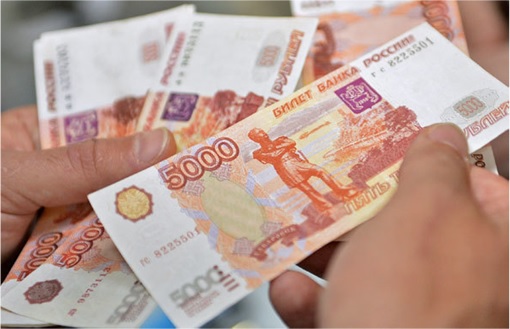
In fact, the Russian currency – ruble – has so far strengthened to 65.75 to a dollar, more valuable than pre-war level. That’s an incredible performance considering that ruble plunged to its record low of 151 to a US dollar on March 7. The currency has appreciated so much that the Russian central bank has cut its interest rate to 11% from 14% (in April), after it hiked the rate to 20% from 9.5% when sanctions were first imposed.


There was a wise saying from Lao Tsu that goes – “Those who know do not talk. Those who talk do not know”. It means people who talk too much are usually empty vessels. Backed by the U.S., whose agenda was to use Ukraine to engage a proxy war with Russia, the gullible Zelensky spoke too much about easy victory, made worse by the Western media’s propaganda.


Embarrassingly, after weeks of blowing his own horn, the Rambo of Ukraine reluctantly surrendered Mariupol on May 20. To save face, some western analysts called the loss of the major strategic city as merely “symbolic victory” to Russia, despite the fact that it was the largest city in the Ukrainian-controlled portion of Donetsk Oblast, not to mention Mariupol is a major industrial hub.


Crucially, Mariupol is the home of the Azovstal Iron and Steel Works and is the largest city on the Sea of Azov. Mariupol is located between Crimea, which Russia annexed from Ukraine in 2014, and the region of Eastern Ukraine called Donbas. The loss means Ukraine no longer controls its port on the western shore of the Sea of Azov, allowing Moscow complete control of the Sea of Azov and a land route to Crimea.


By preventing Ukraine’s access to the Sea of Azov, Putin can easily cripple Ukraine’s trade and economy. Mariupol has been one of Russia’s major goals from the beginning of the invasion. For months, the Western media and analysts had been laughing at Moscow’s failure to capture Kyiv. When Putin’s forces shifted away from Kyiv, Zelensky foolishly popped champagne and claimed victory.


The earlier onslaught on Kyiv was to damage – not destroy – the capital of Ukraine. Call it a distraction or one of the Sun Tzu’s Art of War strategy to “appear weak when you are strong, and strong when you are weak” or whatever you like. After 3 months of assault, Russia pushed Ukrainian forces farther and farther back until they were pinned inside the Azovstal plant, their backs to the coast, with nowhere else to retreat.


At the end, at least 1,730 complacent or over-confident Ukrainian troops have surrendered in Mariupol. Russia called the operation a mass surrender. The Ukrainians, to save face, said its garrison had completed its mission. Analysts were speechless at how devastatingly effective direct fire from Russian tanks during the battle of Mariupol, after the same tanks were initially ridiculed.


But the invasion did not end with Mariupol. Now, Western military analysts see the battle for Sievierodonetsk and Lysychansk as a turning point in the war. When Russia captures these two big twin cities, then all of Luhansk would be under its control. Just before he launched the special military operation, President Putin recognised all of Luhansk and Donetsk as independent of Ukraine.


Russians have already occupied the city of Kherson in southern Ukraine since the early days of the invasion, which is important to guarantee the security and water security of Crimea – suggesting that Moscow knew what it was doing all along. After liberating Donetsk People’s Republic (DPR) and neighbouring Luhansk People’s Republic (LPR) – an area collectively known as the Donbas, Russian forces may move west.


Next, Russian forces may push to the Dnieper Valley. If the Russians capture the entire Zaporizhzhia, they will be well-positioned to cut the Dnieper, an important navigable waterway and a key economic transit corridor for Ukrainian shipping into the Black Sea. With Mariupol and the Kherson region effectively under Russian control, Moscow could assault Mykolaiv.


Mykolaiv is not only a major shipbuilding centre east of Odesa, but also Ukraine’s third-largest city and major port hub. From here, Russian forces will definitely move on to secure the Black Sea port of Odessa. U.S. military intelligence has expressed fear that Odessa could fall in July, essentially cutting Ukraine from access to the Black Sea, after having cut off from the Azov Sea.


If Ukraine is reduced to a landlocked state, with no access to sea ports whatsoever, it will force Zelensky to reach a settlement with Putin. The fact that the American and British press has reduced their propaganda substantially on how the Ukrainian forces were butchering Russian forces speaks volumes that Russia – not Ukraine – is winning the war.


That explains the abrupt decision by President Biden to send the Multiple Launch Rocket System (MLRS) or the High Mobility Artillery Rocket System (HIMARS) to Ukraine. If Ukraine has been winning, exactly why does the U.S. need to hurriedly send such advanced long-range rocket system to fight the Russians, a move that risk serious escalation from Moscow?


It’s worth noting that on May 13, U.S. Secretary of Defense Lloyd Austin called Russian Defense Minister General Sergei Shoigu, urging his counterpart to consider a ceasefire in Ukraine. It was the first call initiated by Washington since Russia’s invasion of Ukraine. However, the call, lasted an hour, had failed to solve any specific issues.


A week later (May 19), General Mark A. Milley, the chairman of the Joint Chiefs of Staff, called his Russian counterpart, General Valery Gerasimov. Again, this is the first conversation between the two since Russia’s invasion of Ukraine. It could be another attempt by Washington to push again for a ceasefire after U.S. Secretary of Defense Lloyd Austin’s failure.


The burning question is – why is Washington suddenly so eager to hatch a ceasefire how? From the military point of view, Pentagon could see clearly how Russians are luring Ukrainians into a trap in Donbas. Despite two phone calls, Moscow apparently refused to entertain any ceasefire – sending alarms to the White House that its game-plan in Ukraine could backfire.


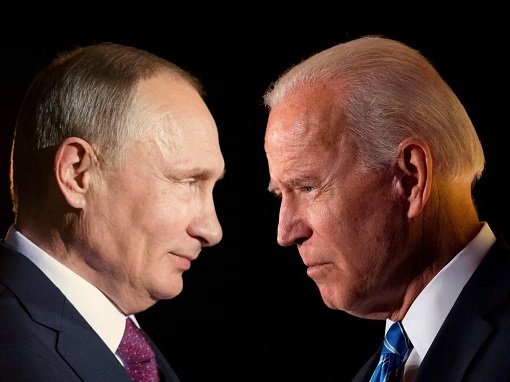
Biden had many reasons when he provoked Putin to start the war, ranging from covering his disastrous Afghanistan withdrawal to rallying NATO allies behind the U.S., and from shifting Europe’s gas dependency to selling weapons. If Ukraine could win the war, Biden would walk away a big hero and boost the Democrats midterm election this year and his re-election in 2024.


But even if Putin agrees to a ceasefire, which he won’t as nothing short of a grand victory will boost his ratings at home, it would be hard for Zelensky to cut loss at this moment. He had overplayed his hand. Even if he wanted to, he can’t. A survey conducted by the Kyiv International Institute of Sociology in May found that 82% of all respondents said they did not want to cede land to Russia.


Zelensky’s reputation would take a hit if he agrees to give away half of Ukraine land to the Russians. The former comedian might not be very bright, but he is smart enough to understand his political career is over if he accepts the terms and conditions that show a humiliating defeat. He will order his boys to fight as long as he could instigate the U.S. to send him weapons.


Kissinger could be right. Russia cannot and will not be humiliated. Putin still has many cards up his sleeve. If the U.S. continues to send more advanced weapons to Ukraine, Moscow could be forced to launch a surgical strike on NATO logistics hub identified to provide weapons to Ukraine in southeast Poland, turning the table and provoking NATO to retaliate.


Alternatively, Russia could quietly use chemical weapons along the border of Poland while simultaneously mobilizing troops to threaten the Baltic states. Already, Russian fighter jets had been sent to deliberately violate Swedish and Danish airspace. All these provocations could spook stock markets and worsen the current gloomy world economy.


Putin has nothing to lose but going full force if the U.S. shows signs of toppling him. Besides energy, Russia’s new tactic of threatening the world’s food supply by blockading Ukrainian ports is working very well. The inflation has skyrocketed around the world just because 20 million tonnes of grain is trapped inside Ukraine, which Moscow has blamed on Western sanctions.


As the world leader, it’s the responsibility of the U.S. – not Russia – to help other countries or allies when food shortages and even famines plagued the world if the war prolongs. The social unrest and political instability could be some collateral damages that the U.S. has not anticipated. Even the U.S., the E.U. and U.K. are struggling with inflation and high fuel prices.


Thanks to sanctions on Russia, the Kremlin earned roughly US$20 billion each month in 2022 from combined sales of crude and products amounting to about 8 million barrels a day. Hence, Putin is well prepared for a long war, but the same cannot be said about the U.S and Europe. How many US$40 billion aid packages are Congress prepared to pass, before Zelensky asks for more?

PKR polls: Rafizi’s win is sign that Anwar’s is losing influence, UMNO says


PKR polls: Rafizi’s win is sign that Anwar’s is losing influence, UMNO says


RAFIZI RAMLI’s victory as the new PKR deputy president shows that party supremo Datuk Seri Anwar Ibrahim is losing his influence within the party, said UMNO.

“Rafizi’s massive win is surprising. It looks like PKR members are rejecting Anwar and he is losing his clout internally and externally.


“Perhaps, this may even pressure him to retire from politics,” its supreme council member Datuk Puad Zarkashi opined.


Yesterday, Malaysiakini reported that as of 8:30pm, Rafizi has garnered 67,895 votes for the PKR deputy presidency. His rival, Datuk Seri Saifuddin Nasution Ismail garnered 48,797 votes.


The lead of 19,098 votes is unmatchable, given the number of votes in Sarawak – the last state which has yet to be announced – may not be enough to bridge the gap.


Saifuddin, who is speculated to be favoured by Anwar, had magnanimously conceded defeat and congratulated Rafizi for his victory.

“Even though the results are not yet official, I would like to convey my congratulations to Rafizi, Nik Nazmi Nik Ahmad, Chang Lih Kang and other winners.

“My attitude is simple, respect the decision made by the party members. It is the democratic practice for there to be those who are elected and those who are not. Do not spoil our camaraderie,” the former minister was reported as saying.

Rafizi, a “spin doctor”

Touching on the matter, Puad said that it is time Anwar realised that he is no longer the party’s “poster boy” or the Prime Minister’s candidate, given that many of his allies got defeated at the divisional levels.


Training his guns against Rafizi, the Johor state assembly speaker said that while loyal Saifuddin was a man of substance, PKR members had voted for a “spin doctor” to lead them instead.

“In essence, the Anwar-Rafizi combo will ensure PKR remains a party full of rhetoric. Both are experts when it comes to creating perceptions.

“Both are made for one another but that doesn’t mean PKR will continue championing reforms,” Puad mentioned. – May 30, 2022

“Press the button” if you have the numbers, Najib ridicules Muhyiddin


“Press the button” if you have the numbers, Najib ridicules Muhyiddin


WITH more leaders claiming that Parti Pribumi Bersatu Malaysia (Bersatu) president Tan Sri Muhyiddin Yassin had sought their help to make him prime minister again, ex-prime minister Datuk Seri Najib Tun Razak took to Facebook to mock the former.

“If Muhyiddin already has the numbers, he should be ‘pressing the button’ immediately. Don’t be shy,” he said.


Earlier today, The Star reported Parti Warisan Sabah (Warisan) Datuk Seri Shafie Apdal as saying that Muhyiddin had approached him two months ago to get support to become prime minister again.


Shafie alleged that Muhyiddin had informed him that he has 119 MPs backing his bid. He also claimed that the Pagoh MP had stated that PKR president Datuk Seri Anwar Ibrahim was in support of his bid.


“I told him (Muhyiddin) if you have the numbers, you go ahead, I won’t follow you,” the former Sabah chief minister was reported as saying.


It is to note that last month, Anwar acknowledged that while he and Muhyiddin had several meetings, it did not discuss anything about making the latter prime minister again.

This came after Parti Pejuang Tanah Air chairperson Tun Dr Mahathir Mohamad revealed that Muhyiddin has met him to secure support for the 15th General Election.

On that note, Najib said that while Pakatan Harapan had signed a memorandum of understanding to support Prime Minister Datuk Seri Ismail Sabri Yaakob, the Opposition was plotting to unseat the latter behind his back.

“In the public, both Pakatan and Bersatu say they support Ismail Sabri. However, they quietly garner MPs support to dislodge him.

“And Muhyiddin claims he has 119 MPs backing him. I don’t think Shafie is lying about this,” the Pekan MP remarked. – May 30, 2022

The politics of not abandoning Muafakat Nasional By Prof Ramasamy Palanisamy


The politics of not abandoning Muafakat Nasional
By Prof Ramasamy Palanisamy


WITH so much bad blood between UMNO and PAS, some leaders from the latter are refusing to admit that Muafakat Nasional (MN) is dead and gone.

Both parties might not have officially declared that MN to be a thing of the past, but it is clear that UMNO and PAS might not band together in MN.


MN was a marriage of convenience formed to oppose the Pakatan Harapan government on grounds of race and religion.


It was never a serious attempt to cement the solidarity of both parties who are political enemies for a long period.


When both parties came together in MN, the question was how long the marriage was going to last because given the traditional enmity between the both, it was just the question of time before they fell apart.


It hardly took few years with the ascendancy of UMNO for the pact to dissipate.

UMNO might be over-ambitious, but that does not mean PAS had no role in the withering away of MN.

PAS’ close association with Bersatu and its leader Muhyiddin Yassin was the contributing factor as to why UMNO and PAS distanced themselves from one another in the last few years.

Of course, the attacks and counter-attacks by the leaders of both parties hardly provided a conducive environment for the survival of MN and so it was just a matter of time before the pact was rendered null and void.

If it is dead, then it is dead – I don’t understand why some PAS leaders are giving the impression that MN is alive until officially declared non-existent.

The idea to keep MN alive might not have anything to do with PAS’ rift with UMNO but perhaps it has got something to with the internal politics in PAS.

I understand that there are some in PAS who prefer to maintain their ties with UMNO. They might be a minority but nonetheless are not happy with the dominant faction that is loyal to party president Tan Sri Hadi Awang.

Maybe there are individuals in this faction who are keen in maintaining ties with UMNO through MN.

They look at MN as a bridge.

The individuals in PAS who want to maintain with MN are those who believe that chances of UMNO/BN coming to national power is very real.

Given this, why close off a window of opportunity that is present in MN to maintain at least minimal ties with UMNO?

Whatever you say about PAS’ leaders, they are first and foremost shrewd politicians – politicians who are not above using religion and race to seek political power.

In fact, the quest of political power has over the years overshadowed the often-stated lofty religious goals of the party.

The question is, why should some PAS leaders who believe in the supremacy of politics abandon something such as MN that might serve their political purposes later? – May 26, 2022


Prof Ramasamy Palanisamy is the state assemblyperson for Perai. He is also deputy chief minister II of Penang.


PKR Youth battle: Winner Adam, defeated Fahmi vow to work together


PKR Youth battle: Winner Adam, defeated Fahmi vow to work together


The battle between two former student activists in PKR’s party election has come to a head.

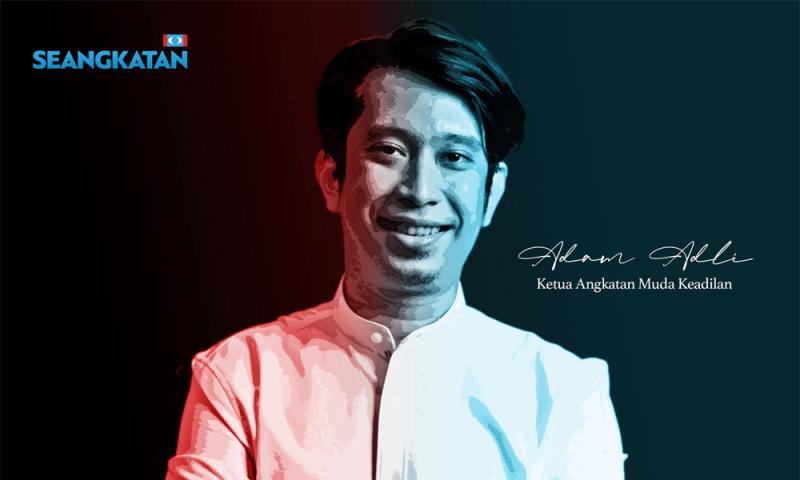
It is understood that Adam Adli Abdul Halim (above) has won the race to be PKR Youth chief by a lead of 1,762 votes, in an unofficial election tally sighted by Malaysiakini.

Although the results of the election will only be announced officially by the party next month, Adam’s win was confirmed by his opponent Fahmi Zainol when contacted today.

Fahmi - who garnered 11,888 votes - told Malaysiakini that he is in full support of Adam leading up to the upcoming 15th general election (GE15).

“I congratulated him yesterday and wished him all the best.

“Yes, we will give our full support to the (election) winners to ensure that GE15 will be a positive one for PKR,” he said.

This was echoed by Adam himself, who spoke briefly about his win.

Upon the discovery of his victory, he described himself as being “glad, grateful, relieved”.

Despite this, he said that his victory came with the realisation that winning the PKR Youth chief post was not a “win” - rather, it is a responsibility he must now carry well.

“I would like to emphasise that I am looking forward to working together with everyone.

“It is my wish to see better cooperation and teamwork within the team because we have to be prepared for upcoming challenges,” said Adam.


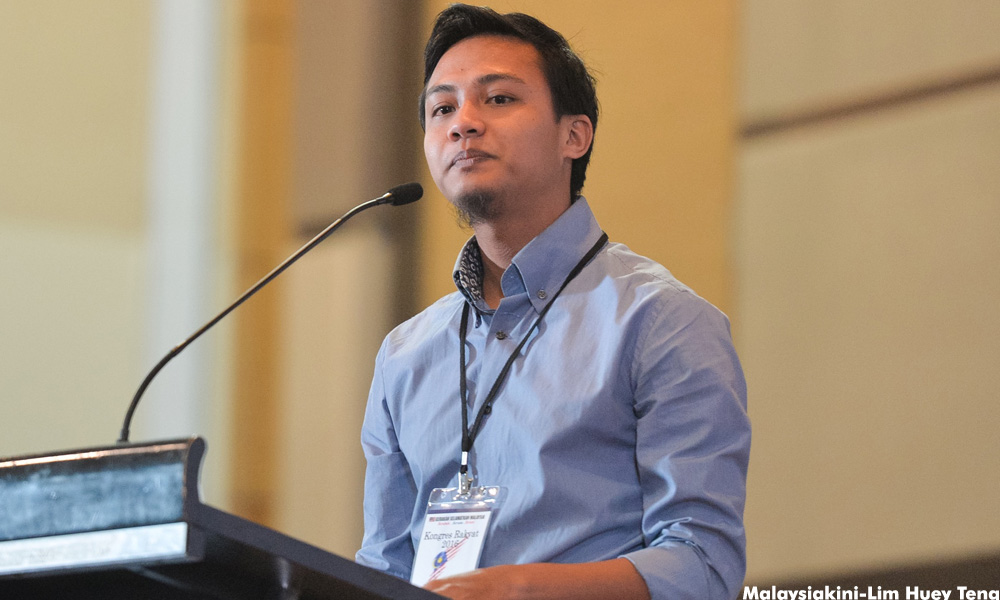
Fahmi Zainol, candidate for PKR Youth chief post


No faction wars

The elections saw former Pandan MP Rafizi Ramli making a big sweep upon his return to politics - with three out of four appointed vice-presidents being in his camp as well as Rodziah Ismail making it as PKR Women’s chief.

Notably, however, Adam and Women’s deputy chief Juwairiya Zulkifli are not aligned with Rafizi’s camp.

When asked, Adam dismissed concerns about the possibility of faction wars.

“We have all agreed to respect the process and respect the democratic rights of members. It is our responsibility as the elected leaders to fulfil the will of the voters.

“To me, from day one, I’ve been encouraging and promoting teamwork,” he said, adding that it was ultimately a non-issue.

Adam, 32, is famed for his student activism, which led to several arrests and sedition charges. He was accepted into PKR last September alongside 19 other activists.

Like Adam, Fahmi, 31, is known for his student activism during his time at Universiti Malaya. He had once faced disciplinary action after inviting PKR president Anwar Ibrahim to speak on campus in 2014.

Fahmi joined PKR in 2015.

The call to close ranks is a necessary one given the fallout from the previous PKR election in 2018 which exacerbated fault lines within the party and laid the groundwork for the catastrophic Sheraton Move which brought down the elected Pakatan Harapan government.

I am down but not out, says Tian Chua


I am down but not out, says Tian Chua


Tian Chua does not believe his association with former party deputy president Azmin Ali has any bearing on his loss in the party polls.


PETALING JAYA: PKR vice-president Tian Chua, who was defeated by protege-turned-rival P Prabakaran for the post of Batu division head in the party polls, is confident of being fielded in the constituency in the next general election (GE15).

“It’s not true that my loss means I will not be fielded in the Batu parliamentary seat by PKR. I am quite sure I will return to contest there in GE15,” he told FMT.

“I believe that I will be able to defend the seat for the party.”

He was asked if his loss had effectively put paid to his aspirations of re-contesting the seat which he had won in the 2008 and 2013 general elections. In 2018, his nomination was controversially rejected on the grounds that he had been fined RM2,000 by a court in 2010.

He endorsed independent candidate Prabakaran, then a 22-year-old law student, who won the seat and joined PKR as the country’s youngest parliamentarian.

Tian Chua said he had to back Prabakaran in GE14 as he had no choice after being disqualified.

In the unofficial party election results announced yesterday, Prabakaran garnered 517 votes while Tian Chua, an incumbent vice-president, received 306.

Asked if his alleged association with former party deputy president Azmin Ali, who left PKR to join Bersatu, had any bearing on the result, the party veteran said: “I don’t think Azmin has anything to do with this.

“Prabakaran won in the division because he has the resources as an MP in the constituency. I will continue to be in PKR to help the party. I have no reason to quit the party,” he said.

The right to be neutral amid a war in the West – Ranabir Samaddar

theVibes.com:

The right to be neutral amid a war in the West – Ranabir Samaddar

The perspective of the Global South – covering countries in Asia, Africa, Latin America and Oceania – leads to uncomfortable questions about ‘good’ and ’bad’


Many in the Global South are watching the war in Ukraine, a European war that, while distant, is driving a rethink of what it means to be neutral. – AFP pic, May 28, 2022


FORMER Tanzanian president Julius Nyerere once said: “When the elephants fight, the grasshoppers die; when the elephants make love the grasshoppers die.”

It’s through this lens that many in the Global South are watching the war in Ukraine, a European war that, while distant, is driving a rethink of what it means to be neutral.

Historically, smaller nations have preserved their right to remain non-aligned. They did so from the 1950s to the 1970s in the context of the Cold War when the Americans and the imperialist West demanded the rest of the world choose a camp.

In the neoliberal time, there is often no ‘just war’. Neoliberalism has fragmented identities, increased territorial wars, and sharpened insecurities. Military alliances have proliferated and seas, oceans, and the air have been militarised to an unprecedented degree.

All these have been in the background of extractive capitalism, which has turned water, precious metals, air, and sub-soil resources into fiercely competitive commodities. The conflicts produced from these geo-economic and geopolitical conflicts often have no ‘good’ sides and ‘bad’ sides.

To craft peace politics, the first requirement is to first refuse to take sides and then resist the pressure to take a side. But to do so means being against the Western tradition of transnational military alliances.

In the Global South, notwithstanding many other reasons for violence, there are no such military alliances and security apparatuses. It’s legitimate then for the non-aligned to ask: why is the North Atlantic Treaty Organisation (Nato) required at all? What does the postcolonial world have to do with military alliance? And who gave Nato the power to bomb Serbia or Libya or enter Afghanistan?

Policymakers the world over have to learn to appreciate and include non-European ways of looking at the questions of war and peace if they seriously want to work on transnational politics of peace. Hence the silence of the Global South on the Ukraine conflict is significant.

A conflict in the West is not necessarily a global conflict. Indeed, there are greater possibilities of reconciliation and resolution of such conflicts if they are kept local.

If a large section of the world says they have nothing to do with a war, such a stance should be welcomed. Not everything has to be globalised. The West does not take sides when, for example, two countries in sub-Saharan Africa or two countries in Asia go to war. They instead choose to become referees.

Imposing sanctions as a weapon

Though people often categorise conflicts and wars as ‘good’ or ‘bad’, a more pertinent question to ask would be about Europe and the United States taking a moralistic view of the war in Ukraine. Those nations did not take a position on, for example, the Balkan war in the 1990s, civil wars in many African countries, or the ethnic wars in other lands.

If in Ukraine the high moral ground is “democracy”, how did this not also pertain to other wars?

With its unilateral sanctions, the West has made the economy a part of warfare. It accuses Russia of killing civilians in Ukraine. Yet Western sanctions will impoverish civilian Russians as in the past they have impoverished Iranians, Iraqis and North Koreans.


To craft peace politics, the first requirement is to first refuse to take sides and then resist the pressure to take a side, but to do so means being against the Western tradition of transnational military alliances. – AFP pic, May 28, 2022


Thousands of children in Iraq became malnourished and many died in the wake of sanctions, according to a UN and other studies. Baby food did not reach them. Sanctions left Iraq and Iran completely stripped of their assets, unable to earn anything through exports.

Now Afghan assets in US banks have been impounded, and Afghanistan faces hunger, malnutrition, displacement, and destitution. Sanctions weaponise the living conditions of common people.

Sanctions are also discriminatory. Where, for instance, are the sanctions on Israel for killing thousands of Palestinians in Gaza or the West Bank? What about the manufactured charge that Saddam Hussein was developing weapons of mass destruction – both nuclear and chemical – the ‘rationale’ for the subsequent war against Iraq?

To think that the Global South does not understand the politics of sanctions is to hark back to the colonial way of thinking that the rulers know much better than the ruled.

To think from the perspective of the South means to think from the margins and interrogate what is being presented as the truth. That is why there is much to understand from the response from the Global South.

If the Global South is thinking in a ‘selfish’ way, is Western Europe’s view of the South also ‘selfish’? The Global South can refuse to be part of the global power game.

Ganging up as power play

In a multipolar geopolitical scenario, ‘ganging up’ will happen as big powers also pursue their own interests. America is trying to bypass what one might call ‘old Europe’ in pursuit of control over ‘new Europe’, which is eastern Europe.

The British have exited western Europe and are dancing to American tunes but at the same time trying to build new bridges with eastern Europe. And western Europe now seems to understand that it has to strike out on its own; that it has to emerge as an autonomous power. It cannot do so unless it is a military power.

Yet, ganging up will happen. This is the new reality, in which the financial power of the West plays a central role.

The Global South could not have had the Non-aligned Movement of 1961 without the presence of socialist China and the Soviet Union. However, China’s policy is no longer built around the Global South, and the Soviet Union is no more.

Indeed, China lacks any policy of organising or facilitating a separate voice of the South in global matters. China’s geopolitical approach seems to have become mercantilist – focusing only on trade and economy, as if politics were determined by commerce. However, politics is determined only partly by that.

Even the economic game is not completely managed by mercantile rules or by trade and logistics alone. China does not have any ambition to turn BRICS (Brazil, Russia, India, China and South Africa) into a political bloc.

And Russia cannot re-enact the Chinese way of development – it cannot become the factory of the world. China’s success came at a specific historical moment against the backdrop of specific national and global contexts.

As the East and the West are being remade in this economic environment, the South is also being reshaped. The Global South will also have to be reimagined or reconfigured. War is more likely to remake the South than the economy. War will continuously force the South to face some of the questions it wants to avoid.

In the remaking of national economies how will interests coalesce? How will a united front of the nations of the Global South emerge?

The Global South, by refusing to play the game of the North and being neutral, may be a pointer in that direction. – The Vibes, May 28, 2022


Ranabir Samaddar is Distinguished Chair in Migration and Forced Migration Studies, Calcutta Research Group, Kolkata, India. A theorist in the field of migration and forced migration studies, his writings focus on migration, forms of labour, urbanisation, and political struggles. Among his works are The Marginal Nation: Transborder Migration from Bangladesh to West Bengal (1999) and Karl Marx and the Postcolonial Age (2018). His most recent publication is written in the background of the Covid-19 pandemic, A Pandemic and the Politics of Life (2021).

Published under Creative Commons and in partnership with 360info.org


Pejuang hints at taking Rina Harun’s seat in GE15

theVibes.com:

Pejuang hints at taking Rina Harun’s seat in GE15

She has not been meeting her constituents of late, notes Datuk Seri Mukhriz Mahathir


Datuk Seri Mukhriz Mahathir says Pejuang has not finalised the list of candidates to be fielded in the 15th general election as it is still deliberating on the distribution of seats. – Bernama pic, May 29, 2022


KUALA LUMPUR – Pejuang president Datuk Seri Mukhriz Mahathir hinted that his party will be fielding a candidate in the Titiwangsa parliamentary seat, currently held by Datuk Seri Rina Harun, in the looming 15th general election (GE15).


Speaking at a press conference today, Mukhriz said it was Bersatu that put forth former party colleague Rina to contest in the constituency in the last general election, which saw her defeating incumbent Datuk Seri Johari Abdul Ghani with a comfortable majority of 4,139 votes.

“But I heard that she doesn’t come to meet the residents anymore and she hasn’t been carrying out her duties.

“So, there are rumours that she might be looking for another seat (to contest in),” he said.

In addition, he said Pejuang will be defending all the seats they have taken, including the Langkawi seat following Tun Dr Mahathir Mohamad’s decision to stay out of the upcoming election.

However, he said his party has not finalised the list of candidates to be fielded in GE15 as it is still deliberating on the distribution of seats.

“After the defeat in the Johor polls, we had learned that it is important to make our decisions based on our capabilities before making a decision.

“We have to look at our strengths in terms of membership, machinery, the best candidates, and whether we are suitable to contest that particular seat.

“So that is being considered. We haven’t decided the number of seats (that we will be contesting in) but rest assured that it will be a number that is suitable for a party like ours.”

On Pejuang’s readiness to work with other political parties from both sides of the divide, the Jerlun MP admitted that there are ongoing talks behind the scenes with different parties which are in line with their principles to form a potential alliance.

The infant party is ready to work with non-political organisations such as non-governmental organisations as long as they are “free from kleptocracy and abuse of power”.

“We are looking for similarities to allow us to face the general election together.” – The Vibes, May 29, 2022

Malaysia becoming a victim of policy complacency


Malaysia becoming a victim of policy complacency


Malaysia is currently suffering multiple crises, all at the same time.

Late last year, inflation reared its ugly head due to primarily international factors, leading to many analysts saying that inflation was only a short-term phenomenon.

Inflation has been exacerbated by the fact that Bank Negara Malaysia has been printing too much money, adding fuel to the fire. This has pushed the ringgit almost into a free fall, spurring on inflation even more. Forecasts made at the beginning of the year are being surpassed.

Rapid rises in food prices have followed,, given that 60% of Malaysia’s food consumption requirements are imported.

Now interest rates are on the rise again, making credit even more expensive to already financially stressed families. Many more families will fall into relative poverty as the year progresses.

There will be a slowdown in growth and even recession, potentially placing Malaysia in a bout of classic stagflation.

Meanwhile, many food staples are in short supply all over the country, in what could most definitely be described as a food crisis, a claim denied by the ministry of agriculture and food industries as late as March 10.

The ministry has since then enacted a number of ineffective stop-gap measures, such as claiming to do away with APs (import permits) and banning poultry exports from June 1.

Malaysia is now in a deep policy malaise.

While Thailand is enjoying a food export boom, bringing wealth to rural communities, and Indonesia is facing a buoyant domestic recovery due to a massive local market, Malaysia is unable to quickly increase local food production.

This leaves Malaysia at the mercy of international supply, where many countries are beginning to ban the export of foodstuffs to protect their own populations.

Real economic reform has been neglected

Malaysia has a uniquely structured mixed economy. Government-owned companies reportedly make up a massive 42% of total equity on the Kuala Lumpur Stock Exchange. Government-linked investment companies make up a further 25.9%, representing RM440.4 billion in total assets.

However, these companies operate in the pursuit of profit for their shareholders, the government. GLCs like Petronas are a major source of government revenue. Khazanah is used to bail out other companies.

The announcement by the government recently, that GLCs must play a community role through CSR, based upon historical evidence, is just a token gesture.

GLCs have been able to maximise revenues through a hive of rent-seeking economic activities across various sectors of the economy.

Creativity and innovation are not part of the creed of GLCs. In fact, GLCs, through their massive sizes, stifle creativity and innovation in the economy.

Potential competitors are scared away from being innovators in several industries. They have special privileges, where regulation may be changed without warning to disadvantage the private sector.

The government’s soft spot for foreign investment over local non-Bumiputera investment is seeing Malaysian entrepreneurs taking their businesses offshore. Even new business concepts like Grab moved to Singapore, which has a more business-friendly environment.

Malaysia has been a net exporter of capital for a number of years.

The agricultural sector has been dangerously neglected since former prime minister Mahathir Mohamed’s push for industrial development back in the 1980s.

Crop diversity in Malaysia has actually decreased with the drastic shrinking of the cocoa industry, due to plant management issues that the country’s research institutes couldn’t solve.

Smallholders across the country have not been given much assistance, and are even harassed according to stories coming out of Cameron Highlands.

Politically connected cartels have been trying to take over the poultry industry, with supply today in dire shortage.

Market gardening, beef production, and fruit orchards have all been subject to absurd ideas within Industry 4.0, such as vertical farming, where there is no shortage of land in the country.

These initiatives just raise capital costs, have long learning curves, and are beyond the financial reach of MSME entrepreneurs.

New agricultural initiatives are celebrated with the creation of new agencies, where their directors have their own agendas, often ignoring and excluding the real industry. The performance of corridor and biotech agencies have been lacklustre.

The country’s business sector is strangled with APs, import permits, and other licensing, restricting markets and business operations.

Artificial monopolies are toxic for free markets and the general business environment, just forcing consumers to pay more. Malaysians pay some of the highest internet rates in the region.

Five-year plans are just glossy documents off which consultants have made millions of ringgit.

The objective of writing these plans is not to create new visions for the nation. It is just to make a profit from the creation of these documents.

New initiatives, like developing the aerospace industry, are just targeted at helping a few privileged companies.

Running the bulk of Malaysia’s administrative environment is a bloated civil service.

Unfortunately, the civil service is not a hotbed of creativity and innovative thinking. It’s a reflection of the nation’s poor education system, which has failed to deliver the skills of critical thinking on the part of graduates. Although new cohorts of civil service inductees want a professional work environment, they are corrupted by politicised leadership in the service.

When the country needs highly skilled technocrats to solve critical issues, they have been found wanting.

Where to, now?

A number of policy issues require hard decisions and reforms.

Malaysia’s health system needs to be enhanced after the recent pandemic. A national dental scheme is needed. Urban centres need deep consideration to make them sustainable, and land management is in crisis.

Education needs massive reform, from pre-school to post graduate education, where vocational and lifelong education need dramatic enhancement.

Malaysia’s pension and EPF schemes need massive overhauls.

Food production and poverty eradication are two important areas that need immediate attention before these crises become chronic.

While the nation is facing the biggest crisis since Merdeka, the politicians are bickering and maneuvering for power.

As we have seen, from Barisan Nasional to Pakatan Harapan, Perikatan Nasional and whatever the latest hybrid government is called, it doesn’t really matter who is in government.

What Malaysia needs more than ever is a government that will take on the problems facing the rakyat now, in a transparent manner, and which is directly answerable to the people.

Malaysia now needs a people’s champion who can manage the economy and reform it. Who can do this job?

Ab Rauf denies rumours of change in Melaka Umno leadership


Ab Rauf denies rumours of change in Melaka Umno leadership


Ab Rauf Yusoh (left) with Ismail Sabri Yaakob and former prime minister Najib Razak at the Melaka Umno liaison committee Hari Raya open house last night. (Bernama pic)


ALOR GAJAH: Melaka Umno liaison committee chairman Ab Rauf Yusoh has denied rumours that there will be a change in the state party leadership in the near future.

The Tanjung Bidara assemblyman said there were no issues related to the state Umno leadership at this time.

“No issue. The party is in great shape,” he said when met by reporters at the Melaka Umno liaison committee Hari Raya open house at his residence in Kampung Pulau, Masjid Tanah, last night.

Yang di-Pertua Negeri Melaka Ali Rustam and Prime Minister Ismail Sabri Yaakob also attended the open house.

Ab Rauf, who is also the state’s investment, industry, entrepreneur development and cooperatives committee chairman, described the rumours as “just another test one has to face in politics”.

“I don’t consider such claims or rumours as a threat to the position of the state Umno leadership. Everyone is free to express their feelings,” he said.

In latest case, High Court again finds vernacular schools constitutional


In latest case, High Court again finds vernacular schools constitutional


In a similar case last December, the High Court in Kuala Lumpur also ruled in favour of the constitutionality of Malaysia’s vernacular schools. — Picture by Hari Anggara


KUALA LUMPUR, May 30 — The High Court in Kota Baru yesterday dismissed a lawsuit by a Muslim teachers group I-Guru that sought to declare vernacular schools in Malaysia unconstitutional.

According to Malaysiakini, judge Roslan Abu Bakar said that while vernacular schools could be considered public authorities, the constitutional requirement for these to use Bahasa Melayu must not be taken in isolation.

“The High Court judge today said vernacular schools are public authorities. Nevertheless, he said it is constitutional because, looking at the history behind Article 152, it guarantees the use of the mother tongue,” lawyer T. Gunaseelan was quoted as saying.

Gunaseelan said he has been informed that the plaintiff intends to appeal.

In a similar case last December, the High Court in Kuala Lumpur also ruled in favour of the constitutionality of Malaysia’s vernacular schools.

The suit brought by the Federation of Peninsular Malay Students, the Islamic Education Development Council, and the Confederation of Malaysian Writers Association is now pending appeal at the Court of Appeal.

“The High Court in Kuala Lumpur threw out the other case, saying that the vernacular schools are not public authorities, and also went on to say that even if you were to interpret Article 152 using a historical perspective, the vernacular schools were there long before the Federal Constitution.

“And therefore, the Federal Constitution actually recognises vernacular schools and guarantees the use of mother tongue,” Gunaseelan said.

In the December decision, Justice Datuk Mohd Nazlan Mohd Ghazali said the Federal Constitution expressly protected teaching in mother tongues other than Bahasa Malaysia.

Nazlan further said that vernacular schools are educational institutions under the Education Act 1996 and are not public or statutory authorities.

As such, he said it is not considered an offence if another language than Malay is used as a medium of instruction, adding that this is safeguarded under Article 152 (1) (a) of the Federal Constitution.

Wong Chen says he will seek another term as Subang MP because there’s still more to be done


Wong Chen says he will seek another term as Subang MP because there’s still more to be done


Subang MP Wong Chen speaks during an interview with Malay Mail at his office in Puchong May 14, 2022. — Picture by Yusof Mat Isa


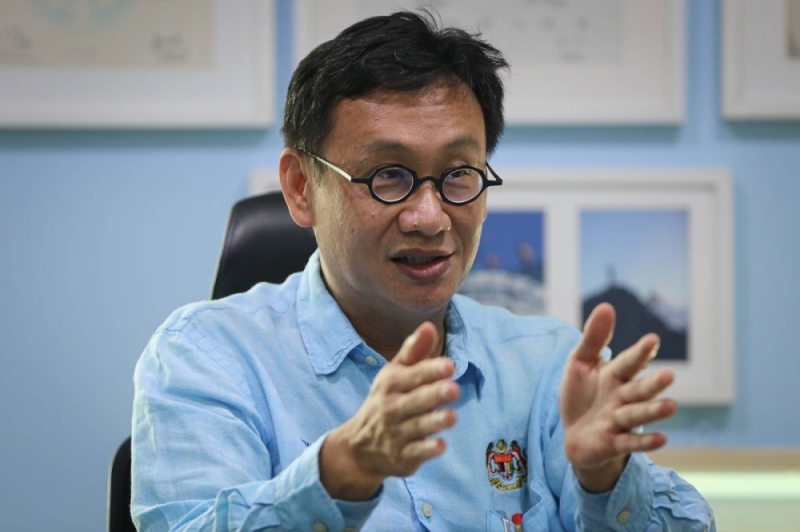
KUALA LUMPUR, May 30 — Should he get his party’s blessing, Wong Chen has expressed his willingness to serve a third term in his constituency.

The PKR MP for Subang said this is because he felt his work was not yet done.

“As long as corruption persists in Malaysia, as long as there are non-transparent dealings and the government is not accountable (for its actions) the work is never done,” Wong told Malay Mail during an interview recently.

He considers his second, and current, term as an MP as being less combative, which in turn has allowed him to tick more boxes on his to-do list.

“I have been less combative in my second term. As a result, I think I have achieved more, because there is a middle ground where reform must happen.

“You can never get consensus in Parliament. But if you can get majority agreement, then with a bit of concession here and there, compromising here and there, you can actually see results and some transformation,” he said.

Parliamentary select committee success

One of Wong’s achievements, among others, is creating full-fledged parliamentary select committees (PSCs).

Based on his observations and involvement, he said the select committees are on good footing today.

“I won’t say this is a result of us negotiating with Prime Minister Datuk Seri Ismail Sabri Yaakob on the Memorandum of Understanding (MoU) but has actually been in development since Tan Sri Ariff’s (former Dewan Rakyat Speaker Tan Sri Mohamad Ariff Md Yusof) time, under Pakatan Harapan (PH). It is nice that after we lost power, there was a plan for continuity.

“Empowering select committees is so crucial; a lot of people don’t understand this.

“But now, the select committees are there, permanent, equally divided: 50 per cent government MPs and 50 per cent Opposition — and they even have a budget,” he said.

This, Wong said, would be one of the legacies of his second term as an MP: Getting the select committees up and running and respected was something he had always been involved in — apart from his daily responsibilities as an MP serving his constituents.

“I am quite happy to — I don’t mind standing for another term. Of course, it is up to the party to decide who stands where,” he said.

Wong recalled being offered the chance to contest Kelana Jaya in the 13th general election (GE13), but said he was unsure, and in fact, had asked to take up a senator post instead.

PKR first won Kelana Jaya in the 11th general election (GE11) when the party’s candidate Loh Gwo Burne defeated Barisan Nasional’s (BN) Datuk Lee Hwa Beng with a slim majority of almost 53 per cent of the vote.

GE13 was Wong’s first general election, standing in Kelana Jaya, and he defeated BN’s Loh Seng Kok and Independent candidate Toh Sin Wah by a landslide, taking nearly 67 per cent of the vote.

In the 14th general election (GE14), he also won by a landslide, when he stood in the Subang parliamentary seat. He won with a 92,353 majority against BN candidate Tan Seong Lim who only received 12,077 votes.

Repairing the country’s fiscal position

With a background in economics and corporate law, Wong is examining the challenges faced by the country, including monetary issues.

“The financial situation of the nation is such that the fiscal space is limited.

“You have to start repairing the fiscal situation first, as you may have policies but you need money to run them.

“So the main challenge next term for the future government will be how it cleans up the country’s financial situation.

"Otherwise, policies will be forced to take a backseat as there is no money to see them through,” he said.

Wong added that the first thing that the government must do is to adopt a transparent financial system.

“Your revenue has to be more stable. You must eliminate corruption as much as possible at this stage.
“Once you have financial stability, then you can talk about how you carry out policies that cost money,” he said.

He warned that it won’t matter who wins the next general election if the government coffers are empty.

“If you are Umno, but you have no money, it means nothing. If you are PAS and you win, it also means nothing.

“Even for PH, if we win, and there is no money, how to carry out policies?” Wong asked.

He suggested a bipartisan approach might be the answer to fixing the financial situation of the country over the next three years.

Then, in the final two years of the next government term, policies can be rolled out if the fiscal situation allows.

“If you do not engage in this way, the victor of any future election is going to end up with a government that is going to be dysfunctional in terms of finance.

“Then what is there left for us? How can we then build the country?

“So, if I get to run for a third term, my main focus will be trying to find more common bridges between the parties to sort out the big fiscal issue, and then support and challenge the government when questionable things come up from time to time.

“But we must call for a ceasefire. It is not going to go far if we keep fighting each other,” he said.

Sunday, May 29, 2022

Prabakaran unseats Tian Chua as Batu PKR chief


Prabakaran unseats Tian Chua as Batu PKR chief


PKR veteran Tian Chua has been unseated as the division chief in Batu, Kuala Lumpur.

He was defeated by former protege-turned-rival P Prabakaran who garnered 517 votes.

Chua, who is an incumbent PKR vice-president, managed to get 306 votes.

The tally does not include "doubtful votes", which number 82 for Prabakaran and 24 for Tian Chua.

Doubtful votes are segregated from the tally as they required further verification by the election committee before they can be confirmed.

However, in the case of the Batu division, the doubtful votes are not enough to change the outcome of the election.

Chua did not defend his position as a vice-president and was only going for a divisional post in the current party election.

Sheraton Move

In the 2018 general election, Chua backed Prabakaran after he was disqualified from contesting the Batu parliamentary seat.

The gulf between them grew after the Sheraton Move.

Chua was sidelined due to his association with former PKR deputy president Azmin Ali, who defected to Bersatu.

Notably, he was harassed and assaulted by angry party members after the Sheraton Move which saw the collapse of the Pakatan Harapan government due to defections.

Following the Sheraton Move, Chua announced the setting up of an NGO called Daya, which critics claimed was linked to Azmin, a claim Chua denied.

Ultimately, Chua remained with PKR and continued to back PKR president Anwar Ibrahim's leadership.

Meanwhile, Mohd Hafiz Solkapeli (458 votes) defeated Ramli Taha (310 votes) for the position of Batu PKR deputy chief.


PKR polls: Rafizi on track to make comeback as unofficial results point to him winning deputy presidency


PKR polls: Rafizi on track to make comeback as unofficial results point to him winning deputy presidency


PKR's Rafizi Ramli speaks during press conference after a debate with PKR vice president Datuk Seri Saifuddin Nasution in Shah Alam May 11, 2022. — Picture by Miera Zulyana


KUALA LUMPUR, May 29 — Rafizi Ramli appears set to become PKR’s new deputy president according to unofficial results of the party polls that showed him currently leading Datuk Seri Saifuddin Nasution by over 10,000 votes.

As of 5.35pm, the former PKR vice president has garnered 52,133 votes against Saifuddin’s 40,657 votes based on ballots counted in seven states — Selangor, Sabah, Kedah, Negri Sembilan, Melaka, Johor and Kelantan.

In Selangor, Rafizi reportedly bagged 25,449 votes to Saifuddin’s 22,101 votes, a significant lead considering Saifuddin is seen as a favourite to win the bellwether state where PKR heads the state administration.

Saifuddin, a former minister and the party’s secretary-general, had aligned with Selangor Mentri Besar Datuk Seri Amirudin Shari.

Rafizi had campaigned on a reform platform that rejects any attempts to form alliances with political parties that differ ideologically, a message that observers said is mainly aimed at quelling factions in PKR that favour “backdoor negotiations” to win elections.

President Datuk Seri Anwar Ibrahim is rumoured to be among those that prefers such a strategy. He has repeatedly dismissed it as speculation.

A win for Rafizi would suggest a major shift in thinking among PKR grassroots that once endorsed the idea for a broader coalition to include former rivals, observers have said.

To date, the unofficial tally suggests Rafizi has won in the other five states. In Negri Sembilan, Rafizi edged Saifuddin by 5,522 votes to 2,559 votes. In Melaka, Rafizi garnered 2,427 votes to Saifuddin’s 1,464 votes. In Johor, Rafizi received 3,967 votes to Saifuddin’s 1,117 votes.

Rafizi is also leading in Kelantan and Kedah with 3,107 and 4,847 votes against Saifuddin’s 2,107 votes and 2,724 votes in the respective states.

The official tally is expected to be announced later tonight.

“Chicken shortage: Leave politics out of this, Opposition” (Part 1)


“Chicken shortage: Leave politics out of this, Opposition” (Part 1)


ONE wonders why when there is a national issue like the current shortage of chickens, some Opposition politicians are still resorting to a confrontational stance against whatever solutions the Government has.

According to the Department of Statistics Department Malaysia (DOSM), our country is growing more dependent on imported food products and is running a trade deficit in the area.


The import dependency ratio (IDR) – the percentage of a country’s dependency on imports of food products to meet domestic needs – is on the rise.


A higher IDR means more supply of food products has to be imported. The IDR of the country as a whole rose to 13.7% in 2015, up from 7.4% in 1987.


Against this backdrop, it is indeed a blessing Malaysia is considered self-sufficient when it comes to poultry, producing some 98.2% of its domestic needs.


But the Achilles heel lies in that the poultry farming industry is highly reliant on imported chicken feed. Almost all of the grain needed to make chicken feed is imported from the America in US dollars and is vulnerable to currency fluctuations.

And fertilisers, which are needed to grow grains, are also experiencing an increase in price. This has resulted in a hefty increase in the prices of grain, making it costly for poultry farmers, who were already suffering from the weakening Ringgit.

The Federation of Livestock Farmers’ Associations of Malaysia (FLFAM) said supply of animal feed was disrupted due to adverse weather conditions in supplier countries, which the governments there attributed to climate change.

On that note, the Agriculture and Food Industries Ministry (MAFI) estimated that grain corn prices have gone up from RM500 per tonne to RM1,900 per tonne.

The Domestic Trade and Consumer Affairs Ministry said the sharp increase in the cost of corn and soybean feed resulted in a 70% hike in poultry farming costs.

Since the beginning of the year the cost of wheat has risen by more than 60%. In the 2021-2022 season that began in July last year, Russian suppliers accounted for 16% of global wheat exports and Ukrainian producers accounted for 10%.

Pandemic and war

But due to the conflict between both countries, wheat exports got banned. Anti-Russia sanctions forced international companies to sever long-standing business ties and leave Russia, which caused supply disruptions.

The situation was also exacerbated after Kazakhstan, another major grain supplier, largely banned exports to protect its domestic food supply.

Early last week, wheat prices reportedly soared by further 6% shortly after India prohibited all exports of the vital food commodity with immediate effect because of an alarming heatwave.

The above backdrop is a must-know in order to understand the issue of chicken shortage in Malaysia.

Aaprt from the problem of chicken feed import, FLFAM also said the heatwave currently affecting Malaysia had hampered chickens’ growth.

“The situation makes the chickens eat less, have no appetite, get tired quickly and drink a lot of water,” FLFAM adviser Jeffrey Ng said.

This means the chicks are growing slower, so poultry producers cannot supply at the same rate. It has also prompted some chicken factories to shut down temporarily while waiting for the chicken to grow to the size needed.

It was reported that in Jasin, Melaka, a factory closed temporarily to wait for the chicken to grow from 1.1kg each to 1.8kg, as demanded by the market.

All the factors mentioned above have contributed to a higher chicken price since last year, culminating in recent weeks in a shortage of chickens in the country.

It is as if a significant supply of chickens has “disappeared” from the market, affecting restaurants and eateries specialising in chicken food menu. Also affected are regular consumers, wet market chicken sellers and supermarkets.

Even fast-food outlets are feeling the pinch. In other words, it has become a national crisis! – May 29, 2022


Jamari Mohtar is the Editor of Let’s Talk!, an e-newsletter on current affairs.