Dennis Ignatius
~ Provoking discussion, dissent & debate on politics, diplomacy, human rights & civil society.
Britain Paid Off the Slave Owners. It Still Owes the Slaves
02MondayNov 2026
Posted in Human rights, International Affairs, justice
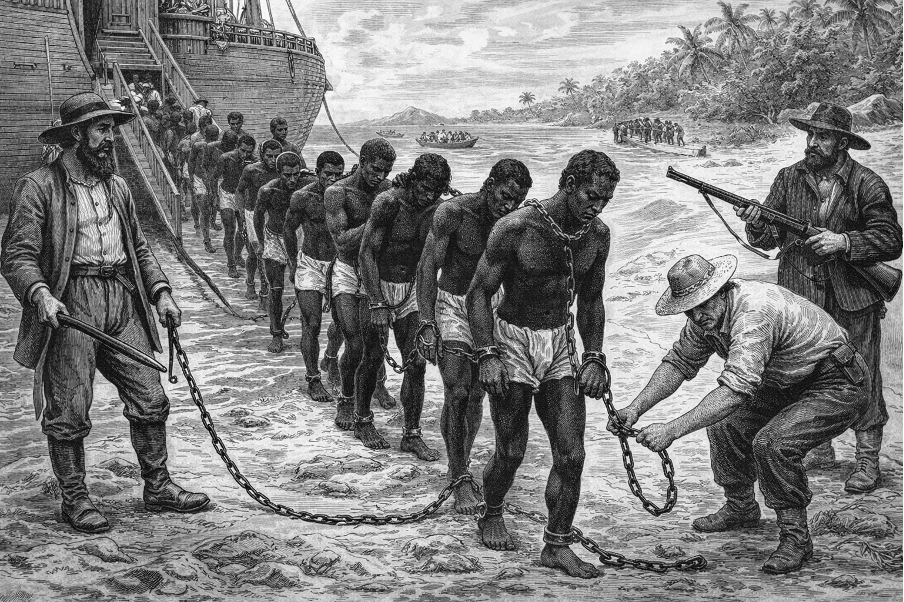
[1] British politicians seem perfectly comfortable acknowledging that slavery was an abomination. What they find considerably more difficult is accepting that Britain bears any responsibility for the consequences of an institution from which it profited enormously. The hypocrisy is difficult to miss.
[2] When Parliament abolished slavery in 1833, it paid £20 million in compensation to slave owners for the loss of their “property.” That was some 40 per cent of the government’s annual expenditure at the time, roughly £17 billion today. Not a penny went to the 800,000 enslaved men, women and children whose labour had enriched others. Worse, most were forced to keep working unpaid for their former masters for several more years under a so-called apprenticeship scheme.
[3] The loan raised to finance this compensation was not finally paid off until 2015. The British state honoured its debt to slave owners for 182 years. Living Britons, including descendants of the enslaved, helped pay it off through their taxes. Yet when Caribbean nations ask Britain to acknowledge slavery’s enduring consequences, Prime Minister Andy Burnham tells them that today’s Britons “played no personal part” and cannot be held liable.
[4] Apparently, historical obligations can be inherited when they concern money owed to slave owners, but not when they concern the moral consequences of slavery. Burnham says he is open to a formal apology and speaks of “sorrow and regret.” Fine words. But he insists this must not be read as accepting reparations. In other words: we regret what happened, but we will not repair it.
[5] Conservative leader Kemi Badenoch goes further. Earlier this year she said Britain should have voted against a UN resolution recognising the slave trade as the gravest crime against humanity. She now dismisses an apology as a distraction that would merely invite demands for compensation.
[6] She argues that slavery was practised everywhere and that African rulers also took part. It is a convenient but disingenuous argument. That others participated in an evil does not absolve those who organised, expanded, institutionalised and profited from it. No one excuses a crime because accomplices existed.
[7] Britain’s role was central. By the eighteenth century it was the world’s foremost slave-trading nation, and British ships carried more than three million Africans across the Atlantic. Bristol, Liverpool and London grew rich on the trade. British banks, insurers and manufacturers accumulated immense wealth, and Lloyd’s of London and the Bank of England have since apologised for their links. The proceeds helped finance Britain’s commercial and industrial rise.
[8] Nor did exploitation end with abolition. The wealth drained from India, Africa and Malaya, and the subordination of colonial economies to British interests, continued well into the twentieth century. Few nations owe as much of their present prosperity to the exploitation of others.
[9] The abolitionists were courageous, and the Royal Navy’s campaign against the trade deserves recognition. But one cannot claim moral credit for ending an evil while treating the profits accumulated from it as a separate matter. The arsonist does not earn a medal for calling the fire brigade.
[10] Nobody is suggesting that a schoolteacher in Manchester should personally compensate anyone. The issue is not individual guilt but the responsibility of a state that continues to exist, inherits the assets and enjoys the accumulated advantages of its history. Britain celebrates its imperial achievements though no living Briton built them. It cannot inherit the glory while disowning the consequences.
[11] Nor is compensation unthinkable. In 2013 Britain paid nearly £20 million to Kenyans tortured during the Mau Mau uprising. Germany has committed €1.1 billion to Namibia for colonial-era genocide. The Netherlands has formally apologised for slavery. Britain, which did more than most to build the transatlantic trade, is the laggard.
[12] The Caribbean nations are not asking Britain to wallow in shame. They seek reparative justice in education, healthcare, development and debt relief, not simply cheques. Burnham’s new Commonwealth debt initiative is welcome, but help offered while disclaiming responsibility is charity, not repair. An apology drafted by lawyers to avoid liability is not an apology at all; it is damage control.
[13] A country confident in its history should have no difficulty acknowledging its darkest chapters. The real test of Britain’s moral leadership is not whether it can remind the world that it eventually abolished slavery. It is whether it can acknowledge, without evasion, the suffering and wealth its participation produced. Britain spent 182 years honouring a debt to slave owners. Surely it can find the moral courage to acknowledge the debt it never paid to the enslaved.
[Dennis Ignatius |Kuala Lumpur |2 November 2026]


The Ishmael Slave Trade Dwarfs the Often Narrated Trans-Atlantic One:
ReplyDeleteMore Slaves, More Years and More Deaths.
Nah, Watch This Video To Learn....
https://youtu.be/irq7uprtKv4?si=fOupAmzlXtqVebSm
The Most Famous Descendant of White Slavery is Boris Johnson....
Boris Johnson is a descendant of a Circassian slave.
• The Ancestor: His great-great-grandmother (or great-great-great-grandmother, depending on generational counting) was Hanife Feride (or Hanife Fered), a blond Circassian girl.
• The Story: During the 19th-century Circassian genocide and displacement, she was brought to Istanbul as a young girl and sold into household servitude/slavery before marrying Ahmet Hamdi Kemal in Kalfat, Anatolia.
• The Lineage: Their son was Ali Kemal, a prominent Ottoman journalist and interior minister, whose descendants eventually adopted the surname Johnson.
• Verification: While family lore and television genealogy research (such as Channel 5's 1000 Years a Slave and BBC's Who Do You Think You Are?) documented the family descent from Ali Kemal and oral history regarding Hanife, direct archival paper trails for the slave trade transaction itself remain part of family tradition rather than complete official records.
https://www.theguardian.com/politics/2008/mar/09/boris.localgovernment
It Was The British Who Pushed Old Malayans To Stop This Cruel Practice, Which Was Allowed By Ishmael Teaching.....
ReplyDeleteSlavery and debt bondage were deeply rooted economic and social pillars in pre-colonial and colonial Malaya, before being systematically phased out by the British administration by 1915.
Types of Slavery
• Chattel Slaves: Enslaved people were viewed as property. Sources included non-Muslim Orang Asli captured via raids, individuals taken in coastal or maritime piracy, captives from regional wars, and foreign individuals purchased through trade.
• Debt Bondsmen (Hamba Utang): A more common form in traditional Malay society where an individual (and often their family) became the bondsman of a creditor until a debt was settled. Over time, interest and restrictions made it nearly impossible to pay off the debt, turning it into a form of hereditary servitude.
• Impacted Groups: Non-Muslim indigenous populations—such as the Orang Asli in the Malay Peninsula and various tribal groups in Borneo—frequently suffered from slave raiding by local chiefs, traders, and regional immigrant groups.
Sources and Origins
According to historical accounts like those by Sir Stamford Raffles and modern historians Barbara and Leonard Andaya, the primary origins of slavery in the region included:
• Piracy at sea (capturing vessel crews and selling them in markets)
• Captivity in local warfare (retained by chiefs for labor or prestige)
• Coastal and jungle raiding (targeting vulnerable settlements or the Orang Asli)
• Customary debt penalties
British Abolition
• Early Steps: The British moved gradually against the institution after taking control of territories like Malacca in 1811 and the Straits Settlements.
• Interference and Conflict: Active British efforts to free slaves and curb the power of local chiefs met fierce resistance. Most famously, the opposition to slavery and the sheltering of fugitive debt-slaves by British Resident J.W.W. Birch triggered his assassination in 1874 and led to the Perak War.
• Full Eradication: The British phased out chattel slavery and debt bondage across the Malay States incrementally from the 1870s until complete abolition was achieved around 1915. Later colonial legislation also targeted practices like the mui tsai system (bonded female domestic servitude) through the 1920s and 1930s.
https://en.wikipedia.org/wiki/Slavery_in_Malaysia
How Brutal was the Islamic Slave Trade?
ReplyDeletehttps://youtu.be/t6Gv2hLuv-E?si=3R-IbA79HCjOQMz-