

Ameena Siddiqi
Published: Sep 4, 2026 7:00 AM
Updated: 11:30 AM
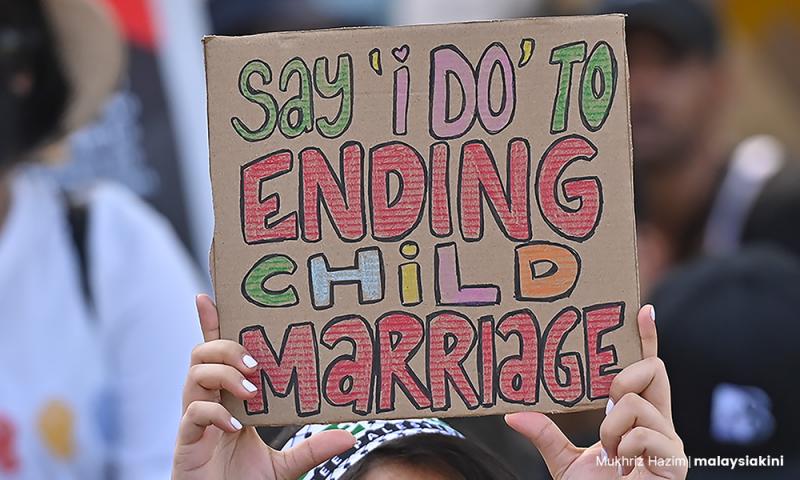
COMMENT | In 2018, Malaysia was outraged by the marriage of a 41-year-old Malaysian man to an 11-year-old Thai girl.
He was a father of six. She had never attended school. She became his third wife. The marriage was solemnised in southern Thailand without the Syariah Court’s permission. The man was eventually fined RM1,800 for marrying and practising polygamy without court approval.
The country demanded answers. The government announced that laws would be amended to raise the minimum marriage age for girls from 16 to 18.
We were outraged. We promised reform. Then we moved on.
Eight years later, Malaysia still has no uniform law establishing 18 as the minimum marriage age for everyone, without exception. Now the issue has returned in another form.
Perak is considering a RM500 first-marriage incentive for youths aged between 15 and 35. Perak youth assembly unanimously approved the proposal and may be considered under the state’s 2027 budget.
The age range was reportedly adopted because the Youth Development and Sports Act defines “youth” as beginning at 15.
Fifteen.
Somebody took a definition used for youth development and applied it to marriage. The proposal was discussed and approved unanimously. Did nobody stop to ask what it means to place a 15-year-old within a government marriage incentive?
A child hidden inside the word ‘youth’
At 15, someone may be called a youth for sports, leadership or entrepreneurship. Under Section 2 of the Child Act 2001, that same person is a child.
We are not discussing a football programme or business grant. Marriage creates lifelong legal, emotional, physical and financial responsibilities. A definition suitable for one programme cannot be transferred to another without examining its possible harm.
I have a 14-year-old son. I cannot imagine allowing him to marry next year. He is still discovering who he is and beginning to understand relationships, consequences and responsibility. He should be thinking about school, friendships and his future, not whether he is ready to support a spouse or raise a child.
I look at him and see what he is: a child.
If I cannot imagine my own son being ready, how can policymakers imagine that somebody else’s child is?
I also think of a woman I once met. She married at 15. When I met her, she was 31 and raising seven children alone. She had studied only up to Form Three, had no career and did not know where her husband was.

The adults who allowed or encouraged that marriage may have believed they were solving an immediate problem. Perhaps poverty. Perhaps family pressure. Perhaps fear of social shame.
But where were they when the marriage failed? Who ensured that her children were maintained? Who was accountable when her husband disappeared?
She lived with the consequences. Her children did too.
I married at 19. Even then, I struggled with the responsibilities and pressures of marriage despite having family support.
Marriage is difficult even for adults with education, employment and life experience. What makes us believe a 15-year-old is equipped to carry its burdens?
Is this sakinah, mawaddah and rahmah?
In Islam, marriage is associated with sakinah, mawaddah and rahmah: tranquillity, love and mercy. (Surah al-Rum, verse 21)
These ideals do not materialise through a marriage certificate. They require maturity, compassion, responsibility and the capacity to understand and fulfil another person’s rights.
Can a marriage involving a child realistically offer tranquillity, love and mercy when she may have to leave school, become financially dependent, experience an early pregnancy and enter a relationship in which she has little power?
A marriage certificate cannot manufacture maturity. It cannot transform dependency into security. It cannot turn vulnerability into meaningful consent.
If adults are delaying marriage because of insecure work, low wages, unaffordable housing or expensive wedding expectations, address those problems. But do not draw children into that policy.

Marriage cannot be used to manage teenage pregnancy, poverty, family pressure or society’s discomfort with adolescent sexuality. It should not become an exit route when adults and institutions do not know how to protect a vulnerable child. A marriage certificate is not a child-protection policy.
Where was the harm test?
Before adopting a law, policy, programme or budget decision affecting children, governments should examine its potential effect on their rights.
Human-rights practice provides a mechanism for this: the Child Rights Impact Assessment.
It asks which children may be affected and examines direct and indirect consequences for their education, health, safety, development and autonomy.
It considers whether girls, children living in poverty or other vulnerable groups will bear greater harm, whether children have been consulted, and whether the intended benefit can be achieved through a safer alternative.
Article 3 of the Convention on the Rights of the Child requires that “the best interests of the child shall be a primary consideration” in actions undertaken by administrative authorities and legislative bodies.
The UN Committee on the Rights of the Child says assessments should begin as early as possible and result in recommendations for amendments, alternatives and improvements.
Was any child-rights impact assessment conducted before 15-year-olds were included in the Perak proposal? If so, where is it? Which children were consulted? What risks were identified? What alternatives were considered?
If no assessment was conducted, how did a proposal affecting children receive unanimous approval without anyone first examining the possible harm?
The Children Commissioners of Suhakam have warned that including those aged 15 to 17 could send the message that marriage during childhood is accepted, supported or encouraged.
They called for eligibility to begin at 18 and for assistance to reach economically vulnerable children before marriage is considered.
Islamic jurisprudence offers an equally compelling test.
The Prophetic teaching la darar wa la dirar means: “There should be neither harming nor reciprocating harm.” From it, Muslim jurists developed the legal maxim that harm must be removed. (Hadith 32, Forty Hadith of Imam al-Nawawi)
Good intentions are not enough. Those exercising authority must look beyond a proposal’s immediate benefit and examine the damage it could create.
What is the proposed benefit? RM500 to reduce the cost of beginning married life.
What is the foreseeable harm? A government appearing to legitimise marriage during childhood, with the risks of interrupted education, early pregnancy, financial dependence, isolation and abuse. Can RM500 outweigh that?
Protection cannot remain selective
Changing the Perak incentive age to 18 is necessary, but it will not resolve Malaysia’s larger failure.
Section 8 of the Islamic Family Law Enactment (Perak) 2004 sets the minimum marriage age at 18 for males and 16 for females, while permitting marriage below those ages with the written permission of a syariah judge. The Children Commissioners have called for 18 to become the minimum for both Muslim males and females.
Why is a girl considered ready for marriage two years before a boy? Why should judicial permission allow marriage even earlier?
A judge’s signature does not return a child to school. It does not remove the risks of pregnancy, dependency or abuse. It cannot give her the maturity or bargaining power of an adult.
A child is a child in Perak, Selangor, Kelantan, Sabah, and Sarawak. Her protection should not depend on her gender, religion or postcode.
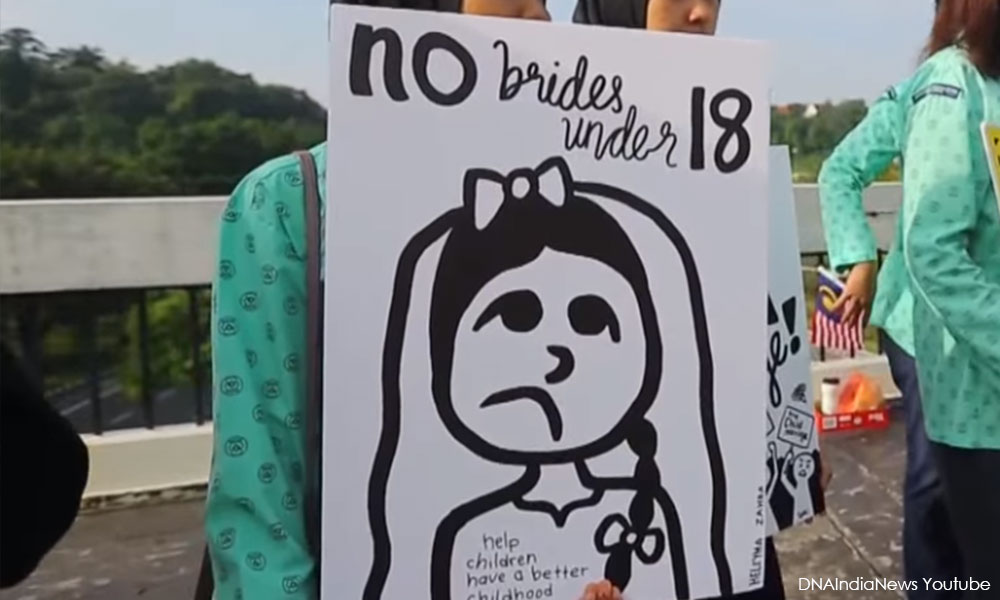
In 2018, an 11-year-old became the third wife of a 41-year-old man, and Malaysia promised change.
In 2026, a proposal involving marriage reached the Perak Youth Assembly with an eligibility range beginning at 15 and received unanimous approval.
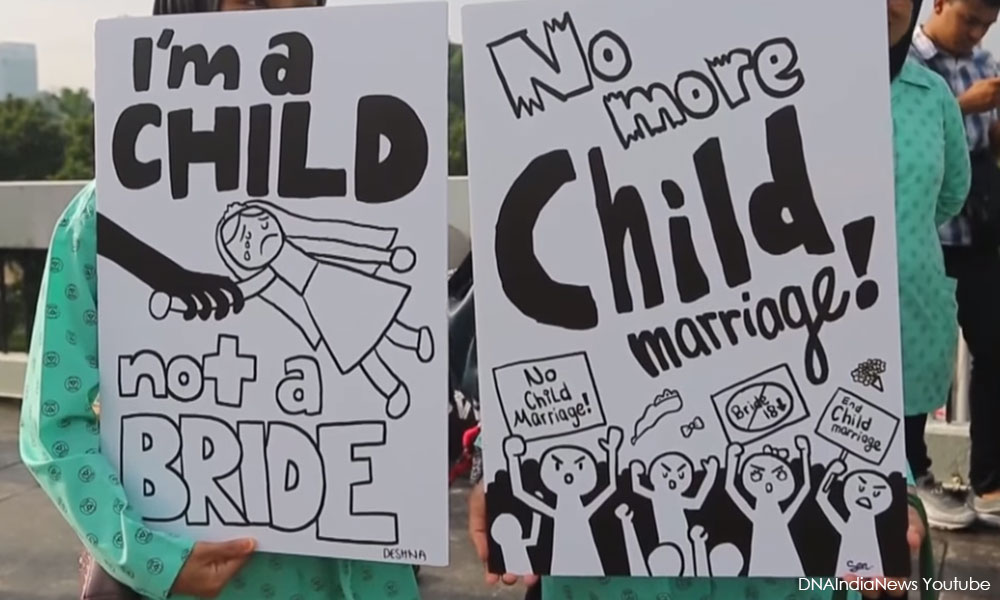
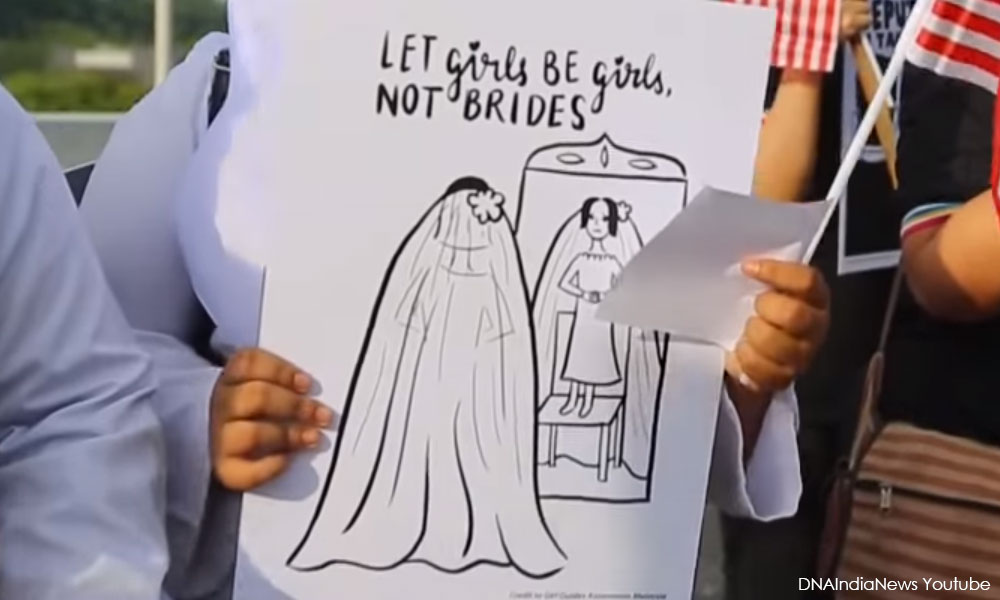
How many more times must child marriage return before we end it? Perak must remove everyone below 18 from the proposed incentive.
Malaysia must then confront the question it has postponed for far too long: why do our laws still permit child marriage?
Set 18 as the minimum marriage age for everyone, regardless of gender, religion or location. Remove the exceptions. Require child-rights impact assessments for laws and policies affecting children. Publish the findings. Support vulnerable children and their families before marriage is ever considered.
We were outraged in 2018. We promised reform. Eight years later, we are still asking the same questions. The harm is foreseeable. The child is visible. The excuse is gone.
AMEENA SIDDIQI is the Communications Manager at SIS Forum (Malaysia). With a strong background in publishing, media, and communications, she plays a pivotal role in advancing SIS’s mission to promote women’s rights within the Islamic framework in Malaysia. Her work is driven by a commitment to amplifying voices, fostering dialogue, and advocating for meaningful change.
No comments:
Post a Comment