
New Report Highlights Western Tanks Have Become Near Useless in Ukraine’s War Effort
Military Watch Magazine Editorial Staff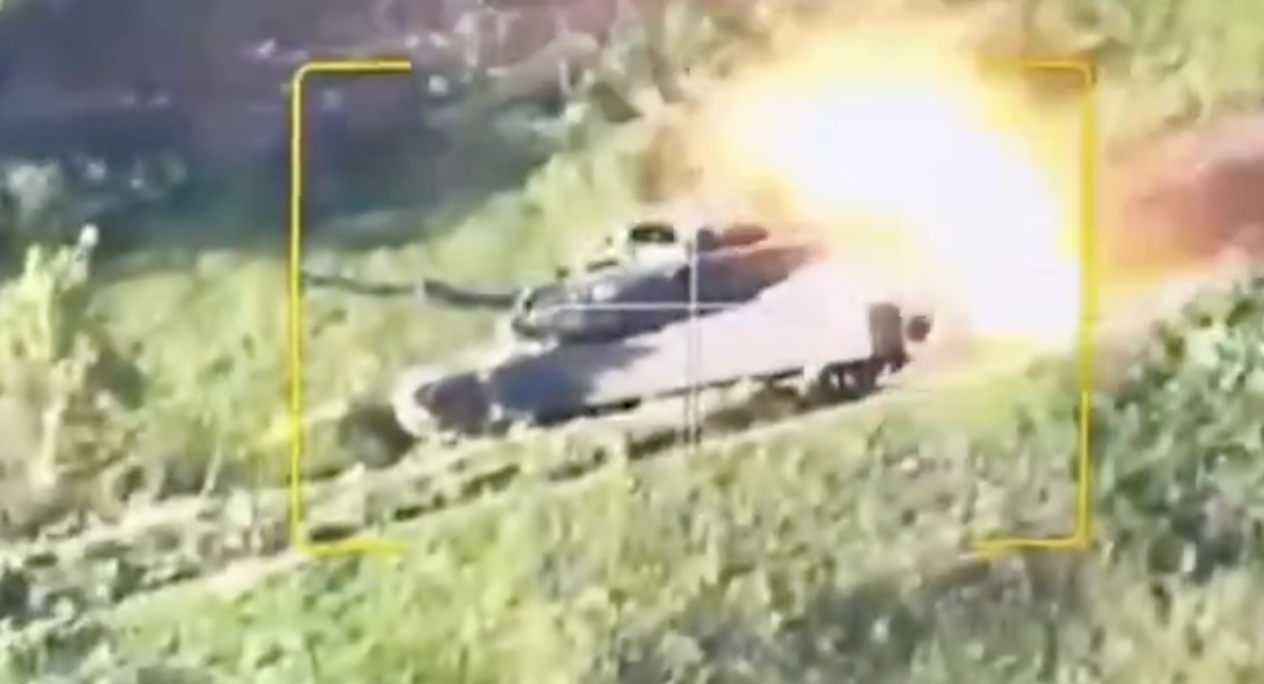
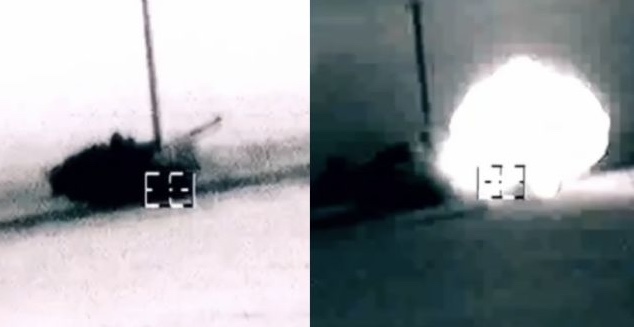
Ukrainian Abrams Tank Hit By Precision Guided Artillery in Early May 2024
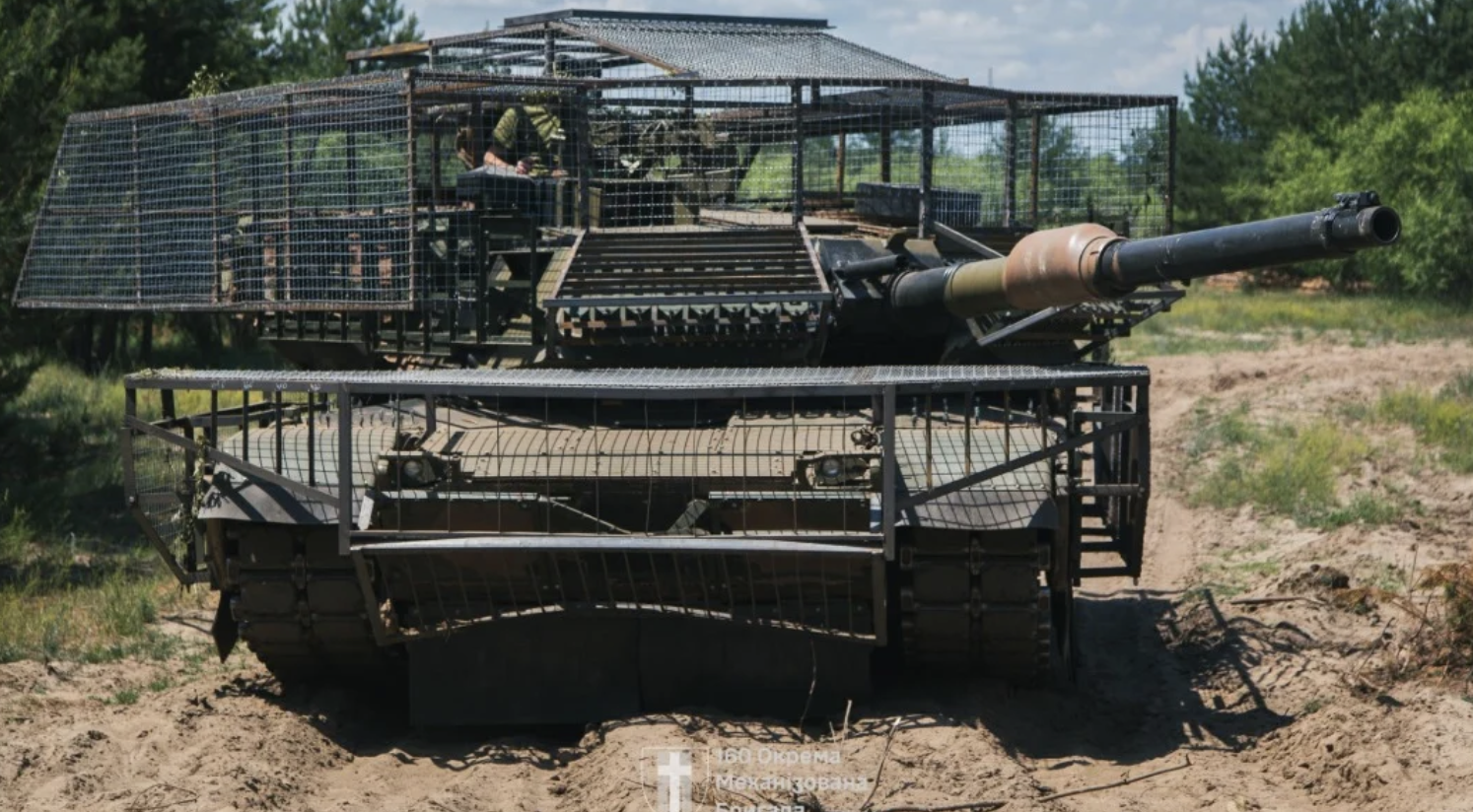
Western-supplied tanks that Ukraine once regarded as among its most important battlefield assets are increasingly being kept out of direct combat due to their very limited survivability. A New York Times report on Ukraine’s 33rd Separate Mechanised Brigade found that German-built Leopard tanks are spending much of their time concealed beneath camouflage netting in forest positions in the Kharkiv region. Instead of spearheading assaults, some are now primarily used to recover damaged vehicles. This follows years of reports pointing to the limited usefulness of Western tanks in the high intensity conflict.
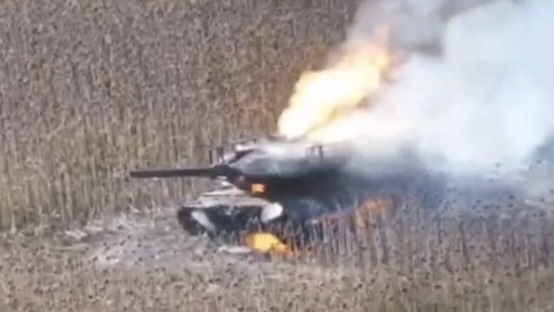
Ukraine began receiving large numbers of Western tanks in 2023, including the German Leopard 2s, British Challenger 2s and U.S. M1 Abrams, which Western analysts widely asserted would be a game changer that would allow the country to conduct large-scale armoured offensives. These tanks’ viability for modern warfare has been widely questioned, as their emphasis on heavy armour protection is considered far from optimal in an era of drone warfare. The German Leopard 2, which was the first to be used in combat, has taken very high losses, while several of the tanks have been captured and analysed in detail at Russian facilities.
The Leopard 2 tanks operated by the 33rd Brigade reportedly cost around $10 million each, creating a striking mismatch with the inexpensive drones that can threaten them. According to The New York Times’ report, crews venture out primarily to tow damaged equipment, with poor weather sometimes providing the safest conditions because rain, fog and low visibility reduce drone activity. The brigade has also adapted by changing what its tank crews do. About half of one tank battalion has reportedly retrained as drone operators, reflecting the growing importance of unmanned systems even among personnel originally trained for armoured warfare. Some younger recruits have joined the unit without ever operating a tank and instead work with ground drones and other unmanned systems.
After the underperformance of the Leopard 2, Western analysts widely projected that the U.S. M1 Abrams would provide more capable. The vehicles quickly began to take heavy losses after their first combat operations in April 2024. In June 2025 87 percent of the Abrams were assessed to have been lost. The U.S. Army subsequently cancelled plans for further modernisation of the M1A2 to deeply revise the Abrams’ design, and instead financed the development of the very deeply revised and much lighter M1E3 Abrams next generation variant.
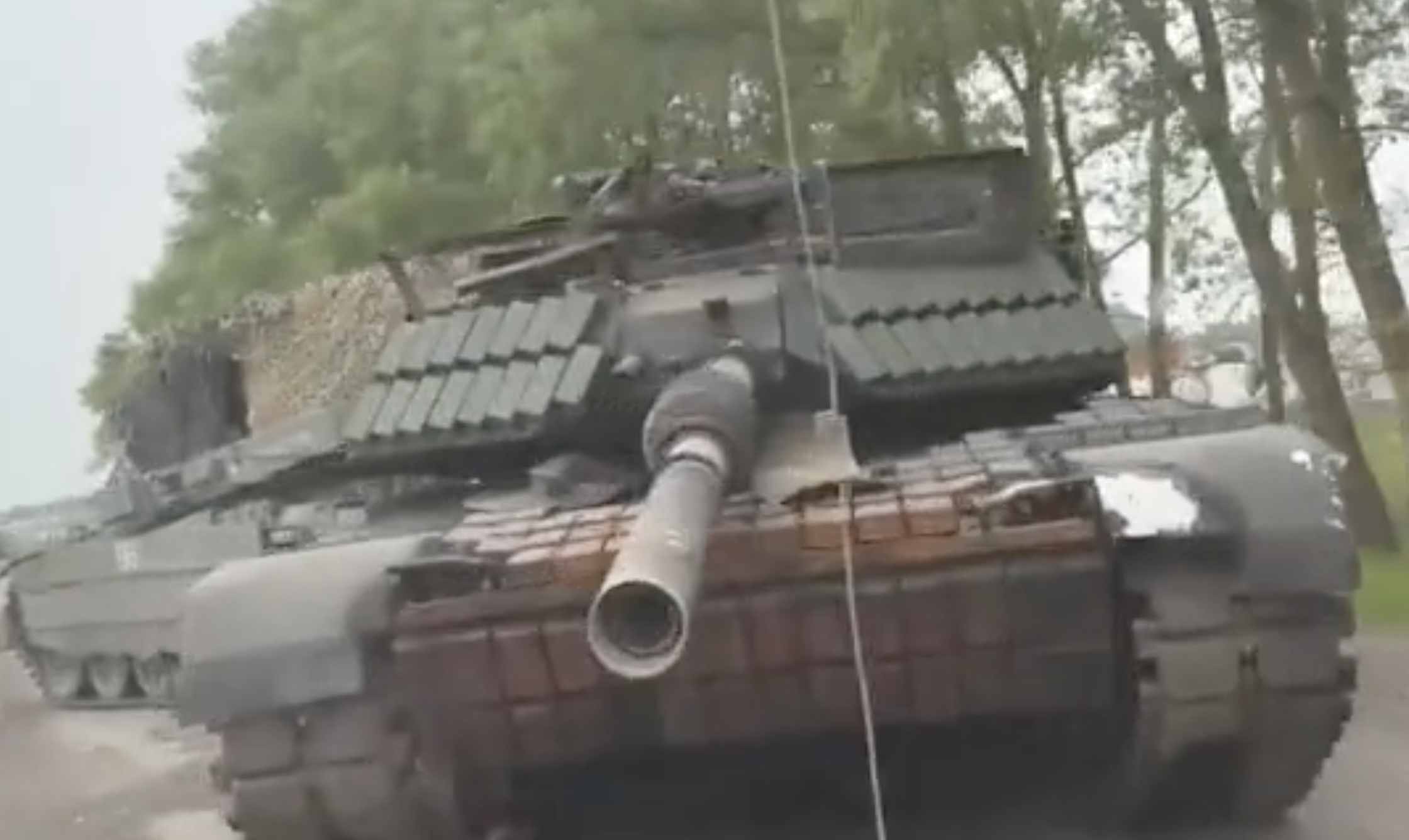
The capture of significant numbers of Abrams and German-supplied Leopard 2 tanks, which have often been filmed being towed away from the frontlines by Russian units, has allowed Russian experts to study the vehicles in detail. Footage released in October 2024 confirmed that at least one captured Leopard 2A6 had been sent to Russia’s main tank manufacturing facility, Uralvagonzavod, in order “to assess the actual military-technical level of various systems and the captured vehicle itself.” It was subsequently reported by multiple Russian sources in December 2024 that at least one Abrams tank would also be studied at Uralvagonzavod. It is notable that a significantly lower proportion of the British Challenger 2 tank fleet has been lost in combat, largely due to its lack of frontline deployments relative to other tanks in the Ukrainian fleet.
BREAKING
ReplyDeleteSeveral Ukrainian long-range drones have struck the oil refinery in Kstovo in the Nizhny Novgorod region of Russia
The 4th-largest refinery in Russia and 2nd-largest in gasoline production is now engulfed in flames. Very bad news for Russian drivers
https://x.com/visegrad24/status/2092522908631408657?s=46&t=8K6fzabO3g6uaj4KxwSSjg
AGAIN, Ukrainian long-range drones of non existence!
DeleteThe massive burning Russian refinery at Kstovo is an objective fact, with multiple videos documented.
DeleteEither Ukraine successfully attacked the facility, or they burst into massive flames by themselves.
Either way looks very bad for Russia.
You don't get to pretend d it didn't happen.
mfer, first prove the refinery was been hit by Ukrainian long range drone!
DeleteNone of the NATO allies have any stockpile of this so called long range drones. Sad to say, it's beyond their current industrial bases of manufacturing.
Ballistic missiles, maybe. But then, they can be easily detected & intercepted!
Wakakaka...so...it appears your beloved Russia's oil refineries keep exploding into massive fireballs by themselves....
DeleteRussia really, really, really need to train their refinery workers to stop smoking on the job, and stop drinking vodka before clocking in to work
if what u have farted r a common phenomenons within the Russian refineries, there wouldn't be any workable Russian refineries left for the Ukrainian long range drones to do their works long long time ago, mfer
Delete