

Landslide or knife-edge? Pollsters split on N Sembilan outcome
Published: Jul 31, 2026 5:30 PM
Updated: 10:18 PM
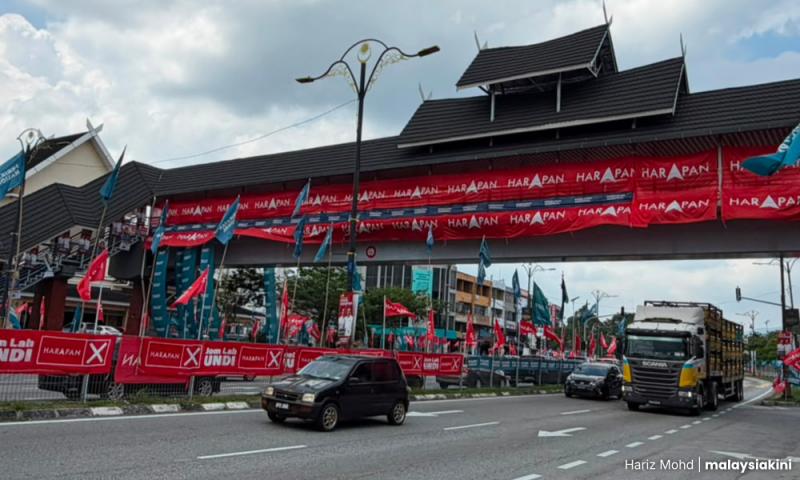
N SEMBILAN POLLS | Two pollsters have painted starkly different pictures of the outcome of tomorrow’s state election.
While research firm Ilham Centre projected a comfortable BN-Perikatan Nasional sweep on the back of a Malay-Muslim unity wave, Institut Darul Ehsan Research Centre (IDERC) insists the race remains open, citing a bloc of undecided voters large enough to swing the results either way.
Ilham Centre’s survey, based on 1,002 quantitative respondents alongside 28 focus group informants and 38 in-depth interview subjects gathered between July 18 and 30, projected that BN and PN together will capture 22 of the 36 state seats.
In a statement today, Ilham Centre detailed that Pakatan Harapan’s share in the state legislative assembly could be reduced to a minimum of nine - a far cry from the 17 state seats it previously boasted.
The firm also named five seats - Chennah, Linggi, Nilai, Repah, and Temiang - as too close to call, noting that if BN sweeps enough of them, the BN-PN pact could even breach a two-thirds majority in the state assembly.
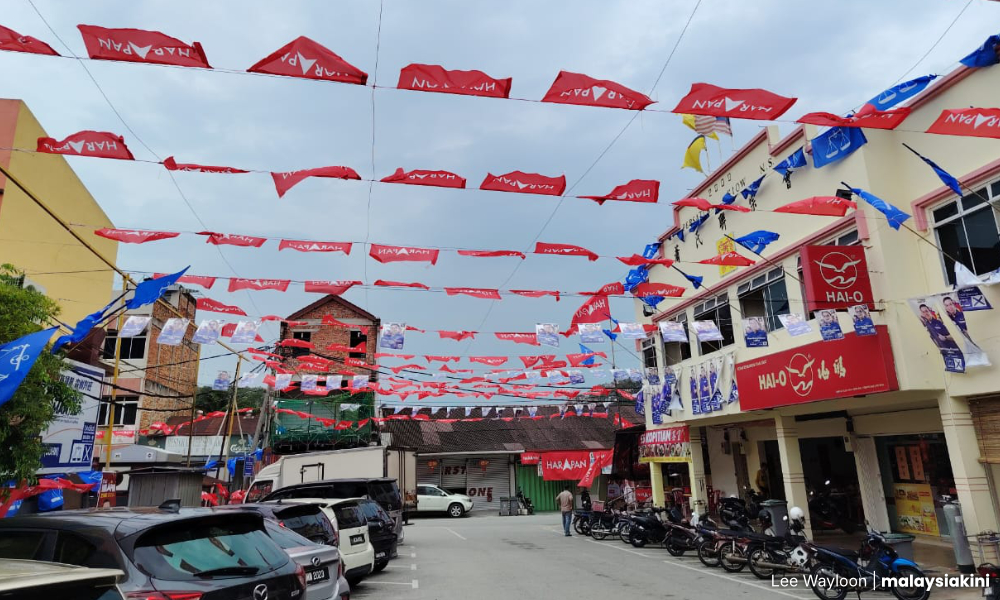
However, IDERC's own fieldwork, conducted from July 16 to 19 among 1,225 voters across all 36 seats with a margin of error of 2.8 percent, reached a more cautious conclusion, with its findings indicating that no party holds a “comfortable path” to controlling the assembly.
Estimating that between 12 and 18 percent of voters remain on the fence, IDERC also identified eight “marginal” seats, which it did not name, where a swing of just a few hundred votes or a shift in turnout could tip the balance of power.
“The contest stays neck-to-neck… the party most effective at boosting turnout, convincing fence-sitting voters, and offering solutions to the cost of living and local issues stands the best chance of forming the government,” IDERC said.
Its polling also found that 66.7 percent of Malay respondents said they would definitely vote, compared with just 56.1 percent of Chinese and 56.6 percent of Indian respondents, hinting at a race-based turnout gap that “could have a major impact” on results in mixed and semi-urban seats.
IDERC added that age further compounds the problem, with only 51.8 percent of voters aged 18 to 30 affirming that they will cast their ballots, against 67.4 percent among those aged 31 to 60 and 63.4 percent among voters 61 and above.
Ilham Centre’s statement described Indian voters, who make up roughly 15 percent of the Negeri Sembilan electorate and are concentrated in seats such as Jeram Padang (33 percent), Seremban Jaya (28 percent), Sri Tanjung (27 percent) and Rantau (27 percent), as being increasingly disillusioned with Harapan.
The firm noted that complaints from Indian voters centred on localised grievances, including enforcement action against overloaded vehicles and the state's handling of temple relocation issues.
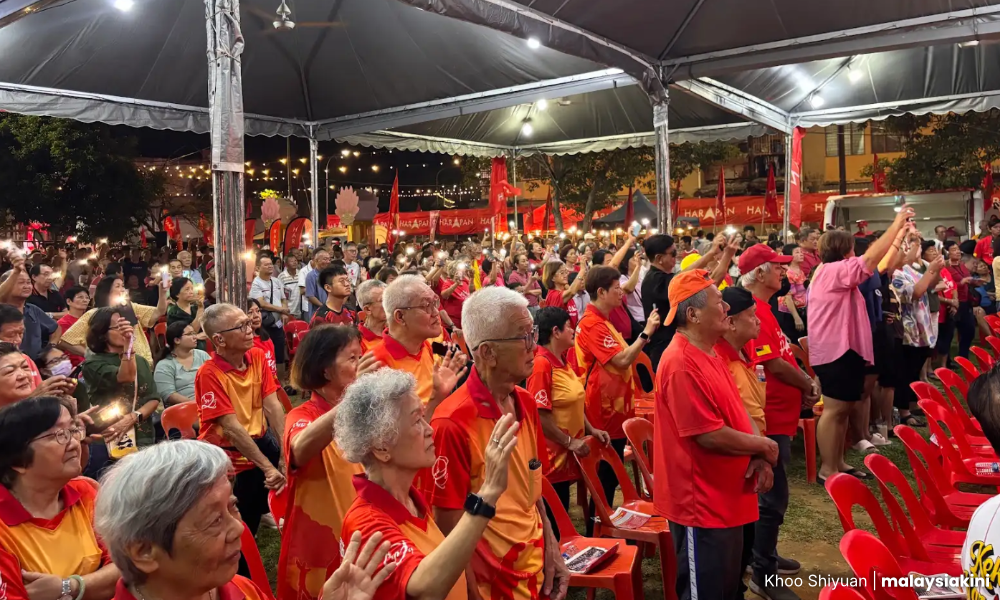
It also described Chinese support for Harapan as no longer “automatic,” with many voters now backing the coalition out of an absence of trusted alternatives rather than enthusiasm, amid lingering frustration over tax policy, subsidy adjustments, and the rollout of e-invoicing.
Identity politics
Both reports, however, agree that the state election campaign has focused more on questions of identity rather than administrative record.
Ilham Centre found that a shared Malay-Muslim political narrative built around preserving Malay political power and religious standing is now jointly championed by BN and PN grassroots supporters alike.
READ MORE: PN set to gain two seats in Seremban, but can Harapan pull surprise win in Labu?
Such a situation has been perceived as a departure from the previous state election in 2023 and the 15th general election, when such messaging was largely confined to PN.
Harapan's campaign, which centred on caretaker menteri besar Aminuddin Harun's governance record, struggled to match the emotional pull of identity politics, with IDERC's fieldwork pointing to a countervailing, if late, effort to drag the conversation back toward performance.
Its research described Prime Minister Anwar Ibrahim's campaign appearances in the state as having "given new momentum" to voter engagement in the campaign's final stretch, with his messaging emphasising administrative record, political stability, and warnings against parties exploiting royal institutions or the Federal Constitution for political gain.
While IDERC further suggested such messaging might nudge some fence-sitters and late deciders toward fact-checking and seeking clarification, it cautioned that heightened attention might not automatically translate into support and will depend on how effectively campaign machinery can turn such engagement into votes.
Aminuddin’s approval rating
On Aminuddin, IDERC found that the Port Dickson MP, who made the “suicidal decision” to contest in the Umno stronghold of Linggi, carries clear personal goodwill.
READ MORE: Questions remain over Aminuddin's 'suicidal' move to contest in Linggi
IDERC’s survey detailed that more than 40 percent of respondents rated Aminuddin positively on three traits: being close to the people, having a good administrative track record, and being free of corruption or abuse of power.
Ilham Centre’s numbers put his personal approval rating even higher, at around 75 percent, crediting his understated, accessible image, and relatively controversy-free record.
However, the firm argued that Harapan’s campaign never converted that personal popularity into an electoral advantage.
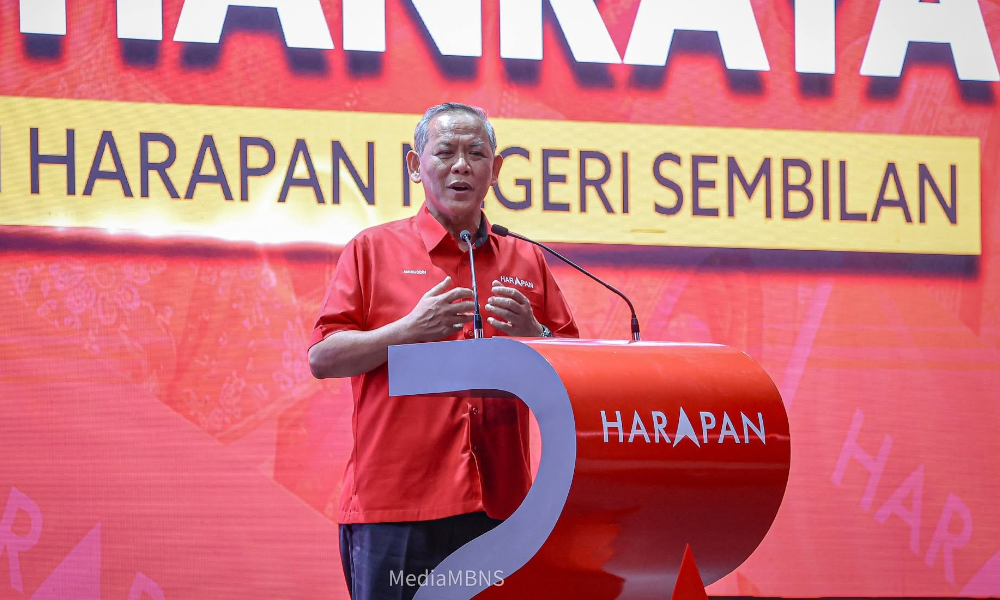
Aminuddin Harun
According to its report, Aminuddin's decision to contest in Linggi rather than his previous seat of Sikamat forced him into a tighter, more localised fight for his own survival.
This limited the time and resources he could devote to campaigning statewide as Harapan’s leading face, particularly in the marginal seats where his standing might have counted for more.
IDERC similarly flagged that Aminuddin's leadership image could be “a differentiating factor” in a close race, provided the campaign could link his “close to the rakyat” branding to visible, local problem-solving.
Additionally, some 33.8 percent of respondents told IDERC they only determined their support for a party after candidates were nominated or later still, including 12.3 percent who decided after nomination day, 6.7 percent in the final week, and 14.8 percent who said they would only make up their minds on polling day itself.
The bloc, IDERC noted, is especially sensitive to candidate credibility, cost-of-living messaging and last-minute controversies.
According to its report, Aminuddin's decision to contest in Linggi rather than his previous seat of Sikamat forced him into a tighter, more localised fight for his own survival.
This limited the time and resources he could devote to campaigning statewide as Harapan’s leading face, particularly in the marginal seats where his standing might have counted for more.
IDERC similarly flagged that Aminuddin's leadership image could be “a differentiating factor” in a close race, provided the campaign could link his “close to the rakyat” branding to visible, local problem-solving.
Additionally, some 33.8 percent of respondents told IDERC they only determined their support for a party after candidates were nominated or later still, including 12.3 percent who decided after nomination day, 6.7 percent in the final week, and 14.8 percent who said they would only make up their minds on polling day itself.
The bloc, IDERC noted, is especially sensitive to candidate credibility, cost-of-living messaging and last-minute controversies.
Flashpoints
Both IDERC and Ilham Centre flagged the same flashpoints, namely the government’s decision to release the royal commission of inquiry’s report on Tabung Haji, intensifying “anti-DAP” rhetoric, and controversial remarks by PN election director Sanusi Nor.
IDERC's focus group data found that 3R (race, religion, and royalty) issues, along with unity-related rhetoric, misinformation, and fact distortion, remain deeply embedded in everyday political conversation in the state.
Ilham Centre suggested that Harapan tried, and largely failed, to weaponise both the Tabung Haji RCI report and Sanusi's remarks as attack lines in the campaign's second phase, after an initial strategy built around Aminuddin's record failed to gain traction.
“(Sanusi’s) remarks were found to have some effect on non-Malay voter sentiment, but the impact was not large enough to neutralise the wave of Malay-Muslim identity politics that BN-PN systemically mobilised,” the firm said.
Ilham Centre suggested that Harapan tried, and largely failed, to weaponise both the Tabung Haji RCI report and Sanusi's remarks as attack lines in the campaign's second phase, after an initial strategy built around Aminuddin's record failed to gain traction.
“(Sanusi’s) remarks were found to have some effect on non-Malay voter sentiment, but the impact was not large enough to neutralise the wave of Malay-Muslim identity politics that BN-PN systemically mobilised,” the firm said.
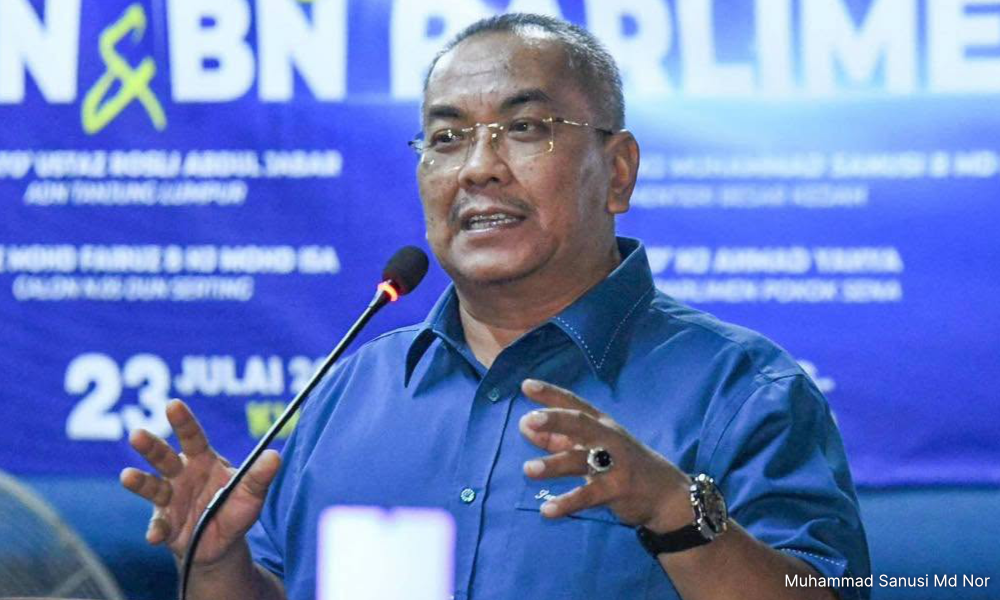
Sanusi Nor
“At the same time, the Tabung Haji RCI issue, which Harapan had hoped would be one of its main weapons to break the campaign deadlock, ultimately failed to generate the surge in support that was expected.
“This failure was not because the issue lacked political value, but because the communication strategy built around it did not align with the psychology and priorities of Malay voters at the time,” it added.
Earlier this week, former DAP MP Ong Kian Ming predicted that BN will win between 23 and 25 state seats, and Harapan will win between 11 and 13 state seats, with PKR likely to pick up one state seat and the rest by the DAP.
In an interview with Malaysiakini, he warned that Harapan’s potential defeat in the state polls could be the final nail in the coffin for the Madani federal government.
“At the same time, the Tabung Haji RCI issue, which Harapan had hoped would be one of its main weapons to break the campaign deadlock, ultimately failed to generate the surge in support that was expected.
“This failure was not because the issue lacked political value, but because the communication strategy built around it did not align with the psychology and priorities of Malay voters at the time,” it added.
Earlier this week, former DAP MP Ong Kian Ming predicted that BN will win between 23 and 25 state seats, and Harapan will win between 11 and 13 state seats, with PKR likely to pick up one state seat and the rest by the DAP.
In an interview with Malaysiakini, he warned that Harapan’s potential defeat in the state polls could be the final nail in the coffin for the Madani federal government.
No comments:
Post a Comment