
Drug seizures at KLIA jump nearly six-fold as syndicates target airport
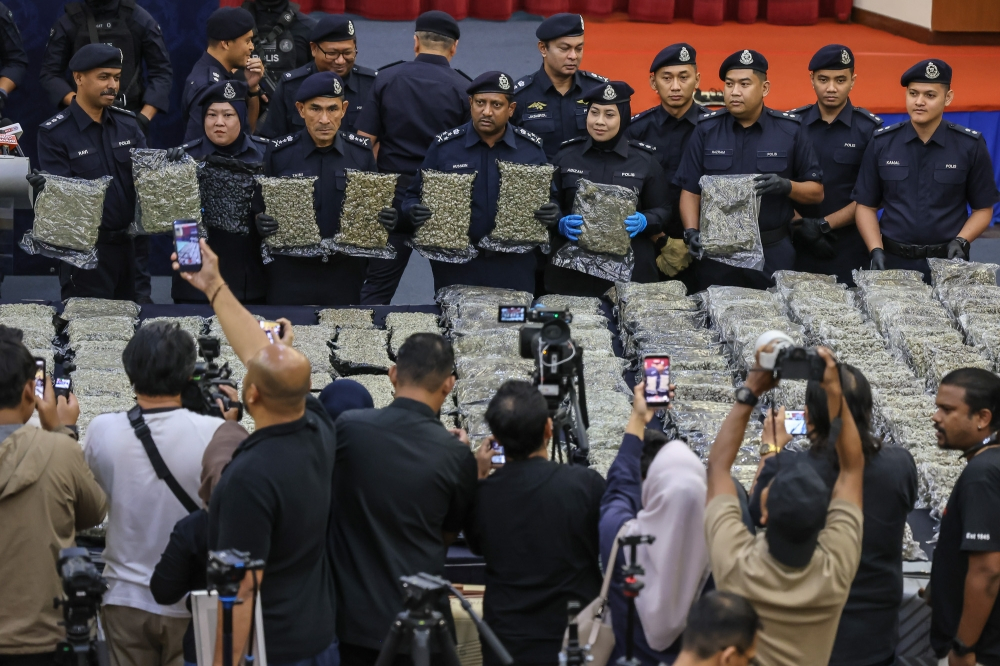
Bukit Aman Narcotics Crime Investigation Department director Commissioner Datuk Hussein Omar Khan, however, said the number of arrests and drug seizures indicated that KLIA remained a preferred transit point for syndicates attempting to smuggle drugs overseas. — Picture by Yusof Isa
Summary
- Federal narcotics police in Malaysia have identified Kuala Lumpur International Airport (KLIA) as a favored transit hub for drug syndicates, potentially due to less stringent security scrutiny compared to other regional airports.
- Bukit Aman Narcotics Crime Investigation Department has reported a significant rise in drug-related arrests and seizures at KLIA, indicating persistent narcotics trafficking activities aimed at meeting increased European demand.
- In recent operations, police apprehended 13 suspects, including both locals and foreigners, seizing substantial quantities of cannabis and cocaine valued at over RM21 million.
- Despite ongoing enforcement efforts, syndicates continue to exploit perceived security gaps at the airport.
By Kenneth Tee
First Published: Tuesday, 04 Aug 2026 2:09 PM MYT
SHAH ALAM, Aug 4 — Federal narcotics police said today that drug syndicates may be favouring Kuala Lumpur International Airport (KLIA) as a transit hub because flights from the airport are not prioritised for security screening over those from other regional airports.
Bukit Aman Narcotics Crime Investigation Department director Commissioner Datuk Hussein Omar Khan, however, said the number of arrests and drug seizures indicated that KLIA remained a preferred transit point for syndicates attempting to smuggle drugs overseas.
“There are several reasons why it is a preferred transit hub, one being the demand for narcotics in Europe, among other factors.
“As for the other reasons, maybe, just maybe, flights from KLIA receive less priority (are subjected to a lower level of security scrutiny) compared with those from other airports.
“That is just a possibility as to why other airports around Kuala Lumpur are not the preferred choice,” he told a press conference at the Selangor police contingent headquarters here.
From January to July this year, Hussein said a total of 108 drug bust cases were recorded at KLIA, compared with 54 cases during the same period last year.
“The number of arrests has also increased to 121 individuals, compared with 57 during the same period previously,” he said.
He added that the total amount of drugs seized had also risen nearly six-fold, from 235.36kg in 2025 to 1,353.41kg (1.3 tonnes) this year.
“The estimated value of the drugs seized in 2026 is RM108.35 million, compared with RM18.46 million last year,” he said.
Most recently, Hussein said a special operation aimed at preventing drug syndicates from using KLIA as a transit hub resulted in the arrest of 13 individuals allegedly used as drug mules to transport cannabis flower buds between July 27 and 31.
The suspects comprised five Malaysians and eight foreigners aged between 18 and 53, he added.
Police also seized 260.08kg of cannabis flower buds and 1.01kg of cocaine, with a combined estimated value of RM21.26 million, which could have supplied about 525,000 users.
“With a fee of a few thousand ringgit, depending on the risk of the travel destination and the weight carried, these suspects arrive in Malaysia with no definite purpose.
“They then stay near the airport and await further instructions from the syndicate before travelling to another destination with the drugs,” he said.
Despite continuous police crackdowns, Hussein said syndicates had continued attempting to smuggle drugs through KLIA by exploiting potential security gaps, with several attempts having succeeded in the past.
“The increased demand in Europe has also driven more aggressive attempts by the syndicates,” he said, adding that the drugs could fetch at least three to four times their value in Europe.
No comments:
Post a Comment