
Tok Mat warns UNHCR: Cooperate on refugee screening in Malaysia or face exit
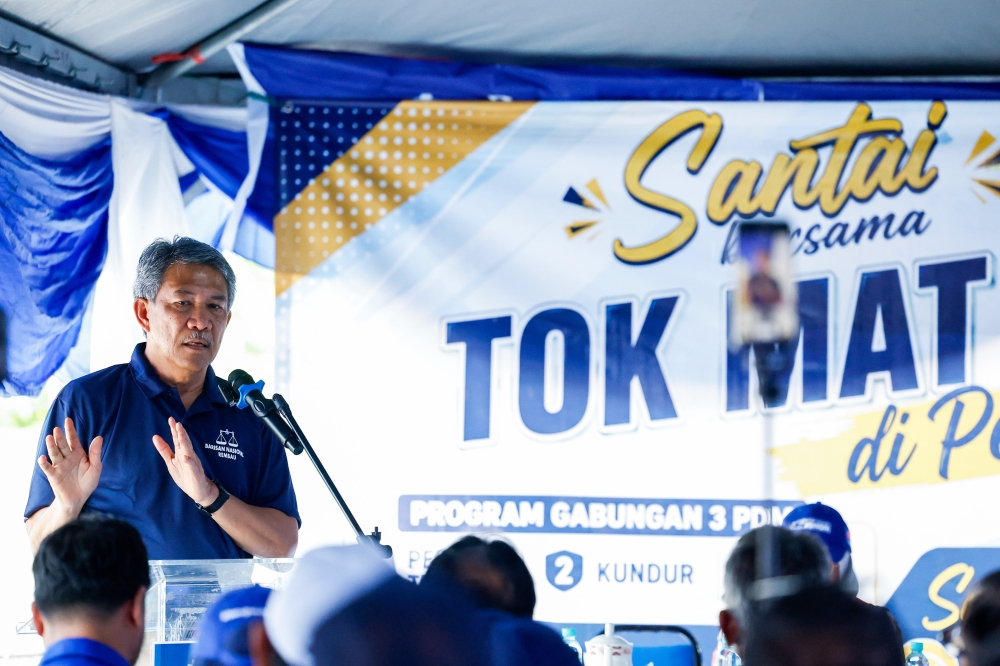
Barisan Nasional deputy chairman Datuk Seri Mohamad Hasan speaks during a community gathering at Kampung Pedas Tengah in Rembau on July 23, 2026. — Bernama pic
Summary
- Malaysia's Foreign Minister Datuk Seri Mohamad Hasan suggests reevaluating the United Nations High Commissioner for Refugees' (UNHCR) presence in the country due to insufficient cooperation in refugee management.
- He stresses that stringent screening processes are necessary, criticizing the current system that allows asylum seekers to apply online and collect refugee cards upon arrival, thereby bypassing security checks.
- Opposing views highlight that UNHCR's role is vital due to Malaysia's lack of a national refugee management system, and argue that closing the UNHCR office would not resolve existing refugee issues but would instead impose hefty financial burdens on the state.
- The debate underscores the complexity of managing approximately 215,600 refugees and asylum seekers in Malaysia, with significant numbers from Myanmar, including many children, challenging both humanitarian and security dynamics.
First Published: Wednesday, 29 Jul 2026 8:59 AM MYT
SEREMBAN, July 29 — Malaysia should review the United Nations High Commissioner for Refugees’ (UNHCR) formal presence in the country if the agency continues to resist cooperation on refugee management, said Datuk Seri Mohamad Hasan.
The foreign minister warned that stringent screening must be a prerequisite before any UNHCR refugee cards are issued, arguing that the current lack of coordination has turned Malaysia into a “magnet” for asylum seekers, NST reported.
“If they are unwilling to cooperate, then it is time for us to reconsider UNHCR’s presence in the country. That is my view, so that we are not continually burdened,” Mohamad said after inspecting early voting for the Negri Sembilan election at the Sendayan Air Base yesterday.
The minister highlighted a critical flaw in the current process: the ability of applicants to submit requests online while still in Myanmar and simply collect their cards upon arrival in Malaysia.
He argued that this bypasses proper security screening and leaves the country vulnerable.
“We must have an international agreement specifying what they can and cannot do. At the moment, there appears to be nothing. They do not have a standard operating procedure,” he added, stressing that the Home Ministry is now tightening its oversight to ensure every applicant is thoroughly vetted before approval.
However, this hardline stance has sparked a debate over the systemic vacuum that UNHCR currently fills.
Wan Mimi Zarina Wan Azmin, a former UNHCR head of education and current CEO of Muslim Aid Malaysia, argued that the agency’s presence is merely an interim measure because Malaysia lacks its own refugee management system.
“UNHCR is in the country because Malaysia does not have a system to handle and manage refugees. If Malaysia had its own system, UNHCR would not need to be here,” Mimi said.
She cautioned that shuttering the office would not solve the crisis, as refugees already within the country would remain. Furthermore, she pointed out the immense financial burden the state would inherit, estimating that a national registration and documentation system could cost tens of millions of ringgit annually.
“The question is, who will take over the cost and responsibility? At the moment, taxpayers are not involved because it is supported through UN funding,” Mimi noted.
Drawing a parallel to the arrival of Vietnamese refugees in the 1970s, she argued that Malaysia has had five decades to perfect a national framework. She urged the government to stop framing the issue as a binary choice between protecting citizens and protecting refugees.
The stakes are significant. According to UNHCR data, Malaysia hosted approximately 215,600 refugees and asylum seekers as of February. The vast majority — 193,824 — are from Myanmar, including 126,144 Rohingya. The remaining 21,776 hail from over 50 countries, including Syria, Afghanistan, and Palestine.
Of this population, 64,680 are children under the age of 18, adding a complex humanitarian layer to the security concerns raised by the government.
Why Didn't the UN form a Spesial Agency for Rohinya Refugees like they did for Falastinos 80 years ago. Why Are Falastino Refugees So Spesial but Rohingya Refugees are managed by UNHCR, which is also responsible for Refugees Globally, except for pampered Falastinos?
ReplyDelete