
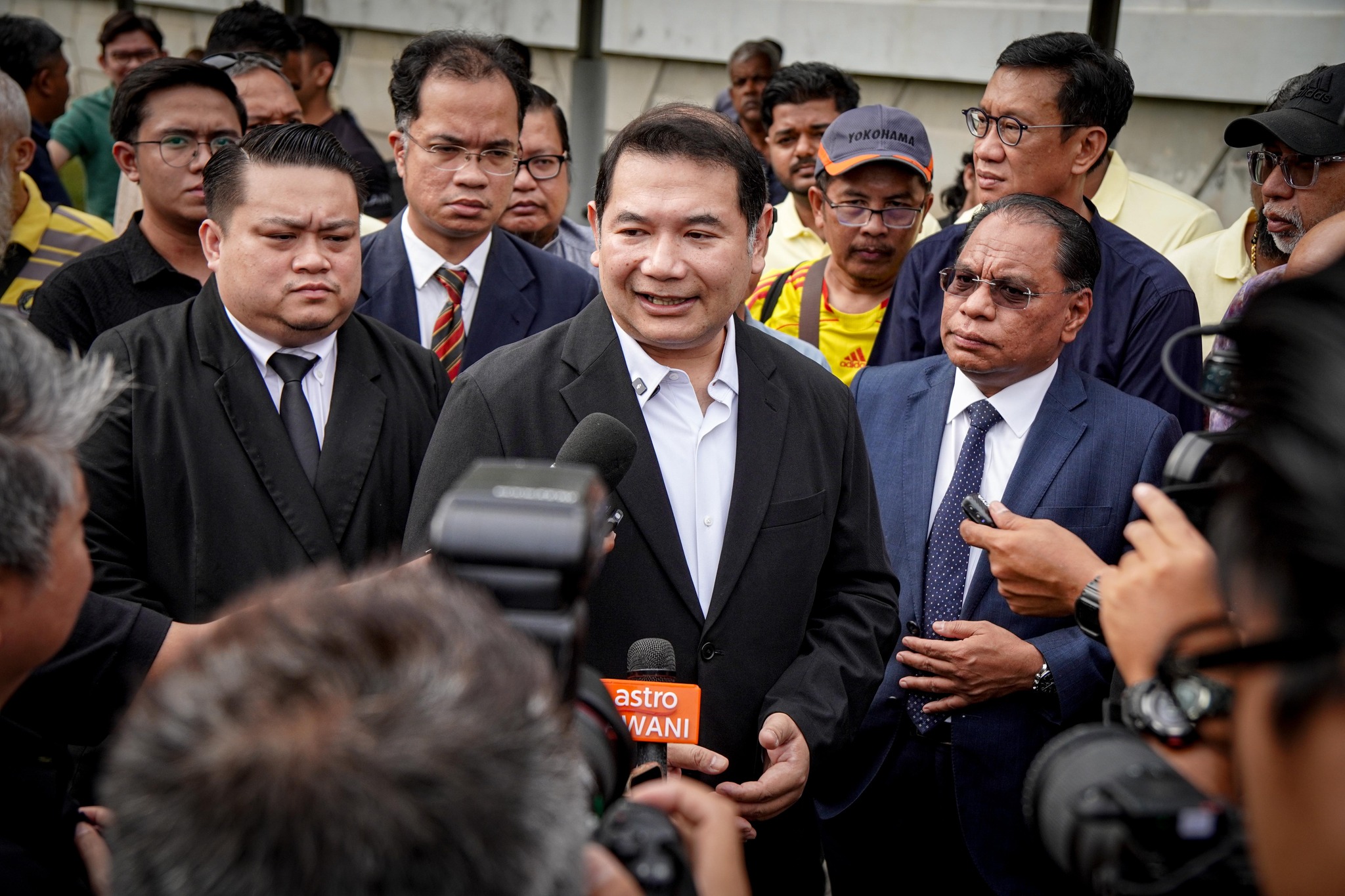
Datuk Seri Rafizi Ramli as the MACC investigation draws public attention. - Rafizi Ramli Facebook pic, May 5, 2026
Rafizi’s political noise: A distraction Malaysia doesn’t need – Stephen Ng
Rafizi’s theatrics risk political irrelevance as MACC follows standard procedure
Updated 51 minutes ago
5 May, 2026
9:53 AM MYT
The Unnecessary Rumblings Surrounding Rafizi
I thought this title may attract readers more, but I decided to use the other topic in view of my desire to see this country coming back together again, and nothing else.
Someone sent me a message that made me fume. It accused the Malaysian Anti-Corruption Commission (MACC) of exercising selective investigations.
To me, this kind of message is baseless. And the way former Minister of Economy Rafizi Ramli’s former aide, James Chai, staged it over a few weeks showed that both Rafizi and Chai were very determined to create drama out of something that is normal for MACC or the police to conduct an investigation when a report is lodged.
Often, the authorities are accused of sidestepping the investigation; the truth is the evidence provided is not strong enough to be produced in court, or at the very least, convincing the officers that there could be a case.
The public must understand that an investigation may be carried out, but it is not “selective” investigation, as alleged by certain quarters. In fact, I was surprised that Rafizi did not immediately advise Chai to appear before the MACC to provide the full story of what transpired. He allowed Chai to prolong the case for a few weeks. Chai only complied after the MACC offered to pay for his air ticket to return home; otherwise, the MACC would apply through Interpol to have Chai arrested and brought home.
Usually, an investigation is initiated when a report to the MACC is lodged. It is not often that the MACC would start an investigation unless it has reasons to be suspicious that some form of corruption had taken place. However, it does not mean that the investigation will always end up with a person being charged in court. Chai knew that he could thereafter face another charge for not cooperating with the investigator.
Meanwhile, Rafizi had threatened right from the beginning to sue the MACC if the investigation did not find fault with him or Chai.
Personally, I think Rafizi was too presumptuous when he made that statement. What the public must realise is that Rafizi is good at saying things that will attract attention to himself as though he is now the victim of a regime that is seeking to silence him.
To clear the air, an investigation by the police or the MACC may not necessarily end up with a prosecution. There are many instances where, after a statement is made, the case is given the “No Further Action (NFA)” status unless some fresh evidence emerges. So, please do not be deceived by this kind of empty talk by Rafizi just to hype up his case.
Observe this with me, won’t you? While Rafizi is creating the perception that Prime Minister Anwar Ibrahim is victimising him, Anwar has not uttered a word against Rafizi. Although Anwar is well-known for his slogan, “Lawan Tetap Lawan,” I think so far, Anwar still has a soft spot for Rafizi. Of course, he would have wished that Rafizi bury the hatchet and work together with the Madani government and the people of Malaysia to rebuild the nation.
And when I say that Anwar may still have a soft spot for Rafizi, the relationship may not necessarily be reconcilable, especially if the rift is too big between the two. Ultimately, Rafizi risks political irrelevance, as an increasing number of observers except those who are aligned with him, feel that he is risking overplaying his hand.
Anwar’s focus now is on the country’s economy, something which Rafizi himself had not been very actively working to bring the local business community together to boost the country’s economy. I wonder within the tenure that Rafizi had served as Economy Minister, how many meetings did he have with the business associations to discuss how the government could help their businesses to thrive.
The game that Rafizi and James Chai were playing all along shows that they have a personal agenda: to attack the Prime Minister and Azam Baki. To put it bluntly, I have mentioned that James Chai was only a “man of interest” to the MACC. He wasn’t even a suspect, but Chai’s political gimmicks were to discredit the MACC and Azam Baki. A “man of interest” is because he was the main person who was expediting the process of obtaining approval. Before the MACC could get a statement from Rafizi, they had to establish the background facts first on what transpired.
No one is saying that Rafizi signed the agreement in a hurry with ARM Holdings, a chip design company. It was signed by Tengku Zafrul in his capacity as Minister of International Trade and Industry (MITI). Tengku Zafrul may be called for an investigation. I am not saying that Anwar would be questioned. His role as the one launching the agreement is too remote from the way this deal was struck within the shortest time possible.
The bottom line is whether Rafizi and Chai followed the standard procedures for any procurement. If yes, they are safe. If not, and if any form of gratification was received, then, they will surely face the music.
The MACC can charge Chai if his hotel accommodation in London, and all the expenses incurred, were paid for by ARM Holdings but at the end of the day, the prosecution will have to prove that ARM provided all this kind of support in return for the contract. It is not easy for the Prosecution to prove it unless the MACC can provide strong evidence that the accommodation and pocket money was all part of the gratification package promised by ARM Holdings.
Conclusion
Ultimately, whether the matter proceeds to court will depend on the strength of the evidence gathered by the MACC and forwarded to the Attorney-General’s Chambers (AGC). I believe this is why some cases which were rushed through back in 2018–2020 had to be dropped. Such evidence must meet the legal threshold required to prove bribery beyond reasonable doubt. If it falls short, the court is duty-bound to acquit. This is an inherent feature of our justice system, and it inevitably leads to situations where even serious offenders escape conviction. Bottom line: do not let yourself be led into the bonfire. – May 5, 2026
Someone sent me a message that made me fume. It accused the Malaysian Anti-Corruption Commission (MACC) of exercising selective investigations.
To me, this kind of message is baseless. And the way former Minister of Economy Rafizi Ramli’s former aide, James Chai, staged it over a few weeks showed that both Rafizi and Chai were very determined to create drama out of something that is normal for MACC or the police to conduct an investigation when a report is lodged.
Often, the authorities are accused of sidestepping the investigation; the truth is the evidence provided is not strong enough to be produced in court, or at the very least, convincing the officers that there could be a case.
The public must understand that an investigation may be carried out, but it is not “selective” investigation, as alleged by certain quarters. In fact, I was surprised that Rafizi did not immediately advise Chai to appear before the MACC to provide the full story of what transpired. He allowed Chai to prolong the case for a few weeks. Chai only complied after the MACC offered to pay for his air ticket to return home; otherwise, the MACC would apply through Interpol to have Chai arrested and brought home.
Usually, an investigation is initiated when a report to the MACC is lodged. It is not often that the MACC would start an investigation unless it has reasons to be suspicious that some form of corruption had taken place. However, it does not mean that the investigation will always end up with a person being charged in court. Chai knew that he could thereafter face another charge for not cooperating with the investigator.
Meanwhile, Rafizi had threatened right from the beginning to sue the MACC if the investigation did not find fault with him or Chai.
Personally, I think Rafizi was too presumptuous when he made that statement. What the public must realise is that Rafizi is good at saying things that will attract attention to himself as though he is now the victim of a regime that is seeking to silence him.
To clear the air, an investigation by the police or the MACC may not necessarily end up with a prosecution. There are many instances where, after a statement is made, the case is given the “No Further Action (NFA)” status unless some fresh evidence emerges. So, please do not be deceived by this kind of empty talk by Rafizi just to hype up his case.
Observe this with me, won’t you? While Rafizi is creating the perception that Prime Minister Anwar Ibrahim is victimising him, Anwar has not uttered a word against Rafizi. Although Anwar is well-known for his slogan, “Lawan Tetap Lawan,” I think so far, Anwar still has a soft spot for Rafizi. Of course, he would have wished that Rafizi bury the hatchet and work together with the Madani government and the people of Malaysia to rebuild the nation.
And when I say that Anwar may still have a soft spot for Rafizi, the relationship may not necessarily be reconcilable, especially if the rift is too big between the two. Ultimately, Rafizi risks political irrelevance, as an increasing number of observers except those who are aligned with him, feel that he is risking overplaying his hand.
Anwar’s focus now is on the country’s economy, something which Rafizi himself had not been very actively working to bring the local business community together to boost the country’s economy. I wonder within the tenure that Rafizi had served as Economy Minister, how many meetings did he have with the business associations to discuss how the government could help their businesses to thrive.
The game that Rafizi and James Chai were playing all along shows that they have a personal agenda: to attack the Prime Minister and Azam Baki. To put it bluntly, I have mentioned that James Chai was only a “man of interest” to the MACC. He wasn’t even a suspect, but Chai’s political gimmicks were to discredit the MACC and Azam Baki. A “man of interest” is because he was the main person who was expediting the process of obtaining approval. Before the MACC could get a statement from Rafizi, they had to establish the background facts first on what transpired.
No one is saying that Rafizi signed the agreement in a hurry with ARM Holdings, a chip design company. It was signed by Tengku Zafrul in his capacity as Minister of International Trade and Industry (MITI). Tengku Zafrul may be called for an investigation. I am not saying that Anwar would be questioned. His role as the one launching the agreement is too remote from the way this deal was struck within the shortest time possible.
The bottom line is whether Rafizi and Chai followed the standard procedures for any procurement. If yes, they are safe. If not, and if any form of gratification was received, then, they will surely face the music.
The MACC can charge Chai if his hotel accommodation in London, and all the expenses incurred, were paid for by ARM Holdings but at the end of the day, the prosecution will have to prove that ARM provided all this kind of support in return for the contract. It is not easy for the Prosecution to prove it unless the MACC can provide strong evidence that the accommodation and pocket money was all part of the gratification package promised by ARM Holdings.
Conclusion
Ultimately, whether the matter proceeds to court will depend on the strength of the evidence gathered by the MACC and forwarded to the Attorney-General’s Chambers (AGC). I believe this is why some cases which were rushed through back in 2018–2020 had to be dropped. Such evidence must meet the legal threshold required to prove bribery beyond reasonable doubt. If it falls short, the court is duty-bound to acquit. This is an inherent feature of our justice system, and it inevitably leads to situations where even serious offenders escape conviction. Bottom line: do not let yourself be led into the bonfire. – May 5, 2026
***Political observer and blogger Stephen Ng is a former journalist
No comments:
Post a Comment