


Mariam Mokhtar
Published: Jun 19, 2026 10:48 AM
Updated: 2:24 PM
COMMENT | By the time many Malaysian students sit for their examinations, they would have been dragged into arguments they never asked to inherit. Even before they were old enough to vote, their education had already become political property.
That is the tragedy of the Unified Examination Certificate (UEC) debate.
For decades, the UEC has moved in and out of public controversy like a recurring national ritual.
Politicians revive it when convenient. Nationalists warn of division. Supporters speak of recognition and equality. Social media fractures into predictable camps.
The same outrage returns, the same anxieties resurface, and the same unresolved arguments are recycled once more.
Published: Jun 19, 2026 10:48 AM
Updated: 2:24 PM
COMMENT | By the time many Malaysian students sit for their examinations, they would have been dragged into arguments they never asked to inherit. Even before they were old enough to vote, their education had already become political property.
That is the tragedy of the Unified Examination Certificate (UEC) debate.
For decades, the UEC has moved in and out of public controversy like a recurring national ritual.
Politicians revive it when convenient. Nationalists warn of division. Supporters speak of recognition and equality. Social media fractures into predictable camps.
The same outrage returns, the same anxieties resurface, and the same unresolved arguments are recycled once more.
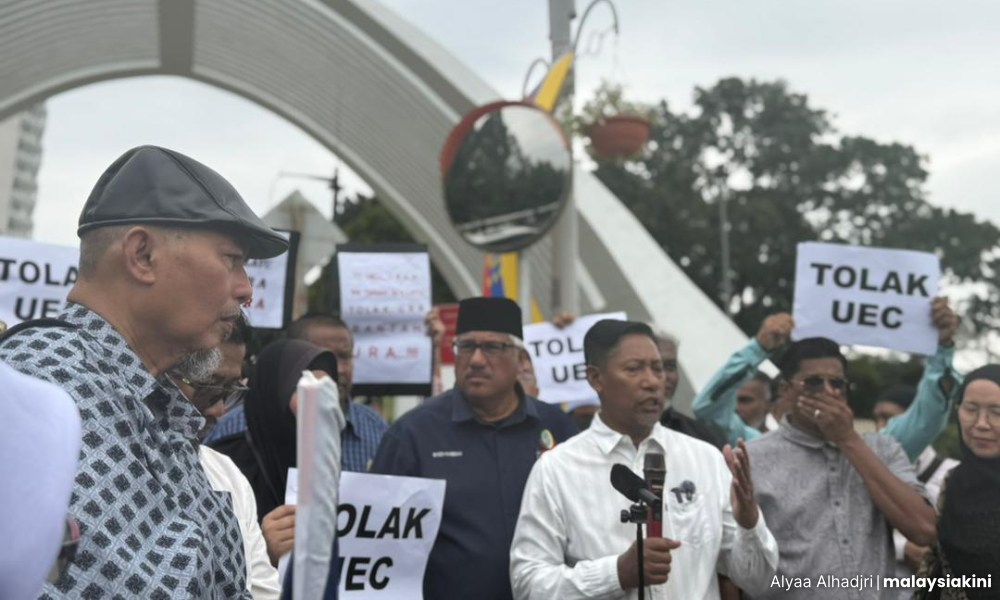
Activists protesting the UEC outside Parliament in January 2026
Meanwhile, students remain trapped in the middle, kicked back and forth like a political football in a game they never chose to play.
They are the collateral damage of a game played by adults who speak endlessly about education, while using the pitch of identity politics to score ideological points.
If the UEC were academically weak, the intensity of the hostility might at least make sense, but that is precisely where the contradiction begins.
The UEC is internationally recognised, academically rigorous, and accepted by universities across multiple countries. Its students routinely continue their studies abroad and contribute meaningfully across professions and industries.
So what exactly is the real fear?
Identity politics
Increasingly, even students themselves understand that the debate is no longer truly about academic standards.
It is about identity.
To some, the UEC symbolises educational plurality within a multicultural nation. To others, it symbolises fragmentation from a singular national framework.
Meanwhile, students remain trapped in the middle, kicked back and forth like a political football in a game they never chose to play.
They are the collateral damage of a game played by adults who speak endlessly about education, while using the pitch of identity politics to score ideological points.
If the UEC were academically weak, the intensity of the hostility might at least make sense, but that is precisely where the contradiction begins.
The UEC is internationally recognised, academically rigorous, and accepted by universities across multiple countries. Its students routinely continue their studies abroad and contribute meaningfully across professions and industries.
So what exactly is the real fear?
Identity politics
Increasingly, even students themselves understand that the debate is no longer truly about academic standards.
It is about identity.
To some, the UEC symbolises educational plurality within a multicultural nation. To others, it symbolises fragmentation from a singular national framework.

The examination certificate itself has therefore become something far larger than an educational qualification: it became a political proxy for unresolved anxieties about nationhood, identity, integration, and legitimacy.
And in the process, students are no longer treated simply as learners. They are treated like symbols in political arguments about race and nationhood, rather than being seen as real individuals with their own futures.
What makes this even more frustrating is the glaring inconsistency surrounding the debate.
Malaysia already operates with multiple educational pathways: international schools, religious schools, tahfiz institutions, private education systems, foreign syllabuses, homeschooling structures, and various language streams.
Educational plurality already exists as a lived reality across the country. Yet somehow, the UEC repeatedly becomes the national emergency. Why?
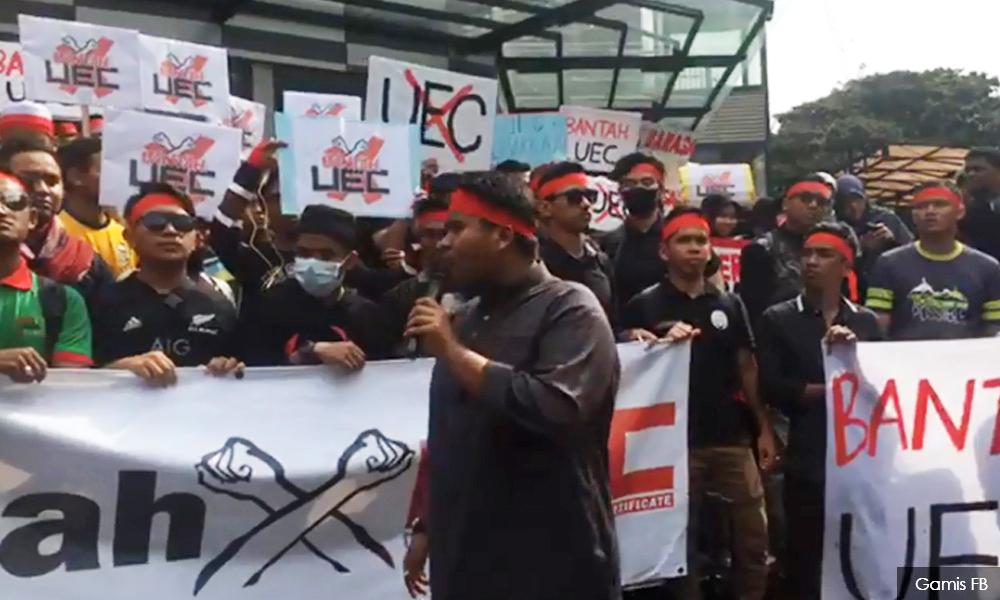
An anti-UEC protest, circa July 2018
Because, unlike many other educational models, the UEC sits directly inside Malaysia’s unresolved politics of identity. And that reality can no longer honestly be denied.
Multi-stream education existed before independence
The roots of this tension stretch far deeper than contemporary politics. In colonial Malaya, education developed through parallel streams rather than a single national system.
Malay education was largely centred on vernacular and religious village schools, Chinese communities established and sustained Chinese-medium schools, and many Indian children were educated within estate-based systems tied to plantation life.
Christian mission schools also played a significant role, often providing English-medium education in urban areas alongside government schools.
After independence, the nation inherited this fragmented educational structure while attempting to forge a national identity through a unified framework. But not all educational streams were fully absorbed into the national system.
Within the Chinese independent school network, the UEC later emerged in the 1970s as a standardised qualification system designed to unify assessment and provide students with recognised academic pathways, including internationally.
Multi-stream education existed before independence
The roots of this tension stretch far deeper than contemporary politics. In colonial Malaya, education developed through parallel streams rather than a single national system.
Malay education was largely centred on vernacular and religious village schools, Chinese communities established and sustained Chinese-medium schools, and many Indian children were educated within estate-based systems tied to plantation life.
Christian mission schools also played a significant role, often providing English-medium education in urban areas alongside government schools.
After independence, the nation inherited this fragmented educational structure while attempting to forge a national identity through a unified framework. But not all educational streams were fully absorbed into the national system.
Within the Chinese independent school network, the UEC later emerged in the 1970s as a standardised qualification system designed to unify assessment and provide students with recognised academic pathways, including internationally.
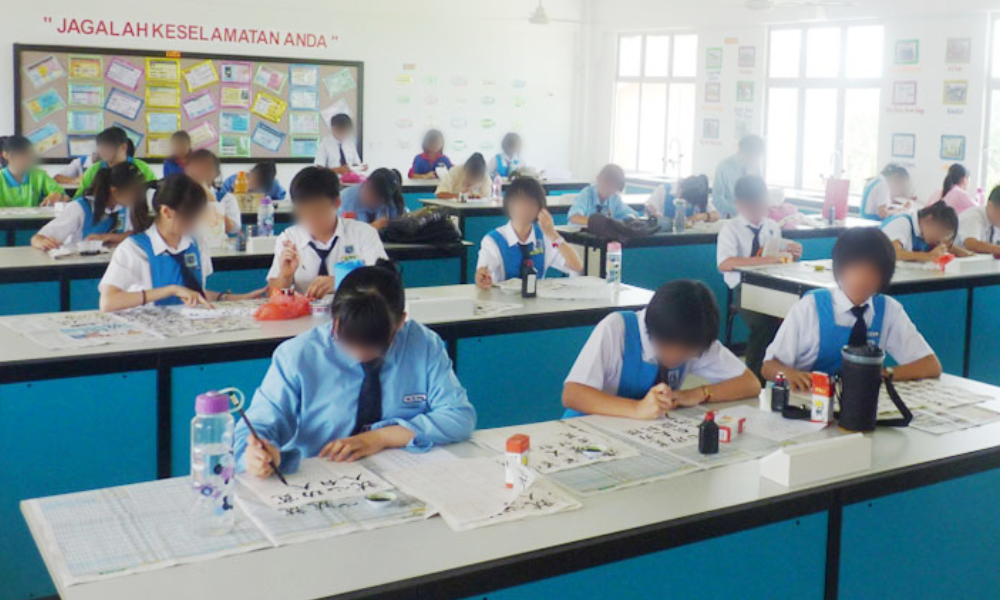
In other words, the UEC did not create Malaysia’s educational plurality. It inherited it.
And yet, decades later, the country still struggles to decide whether educational diversity should be treated as part of the Malaysian story, or as a threat to it.
Pugnacious and pussyfooting politicians
This unresolved contradiction has produced a cycle of half-measures and political hesitation.
Governments periodically attempt partial accommodation while avoiding full recognition. Conditional pathways are offered, limitations imposed, technicalities introduced, and compromises carefully managed.
The result is symbolic inclusion without genuine resolution.
The political system appears trapped between two competing instincts: acknowledging educational reality while simultaneously reassuring those who continue to fear what that reality symbolises.
And while this endless balancing act continues, the country quietly bleeds talent. Students leave. Families look elsewhere.
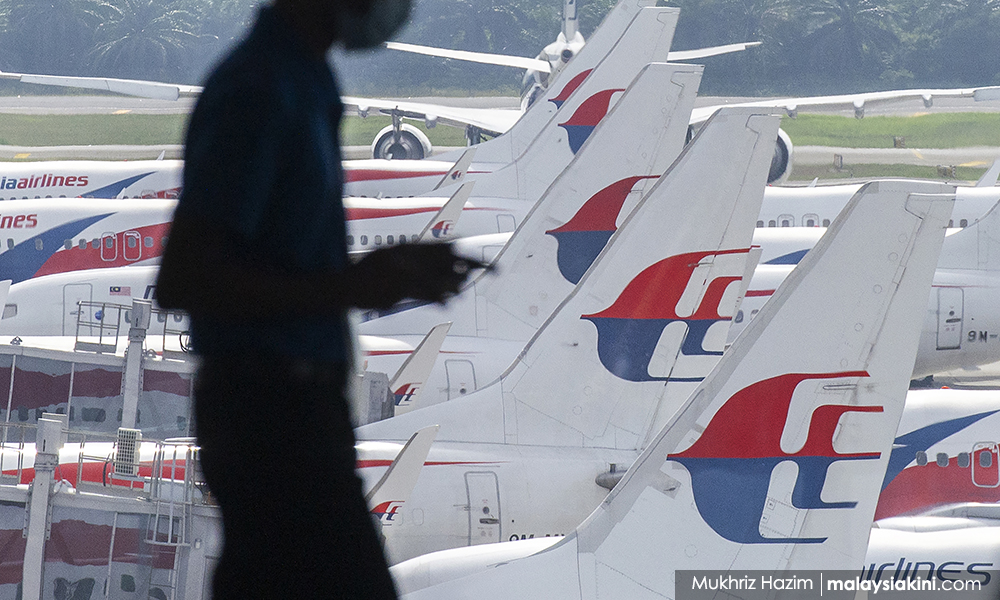
Young Malaysians who could contribute meaningfully to the nation increasingly build their futures abroad, not necessarily because they reject Malaysia, but because they no longer believe Malaysia fully recognises them.
That may be the cruellest irony of all. In trying so hard to control educational identity, the nation risks losing the very people it claims to be protecting.
A mature and confident nation should not fear educational plurality so long as students share common civic responsibilities, linguistic competency, constitutional understanding, and participation in national life.
Diversity within education does not automatically weaken nationhood. Insecure politics does.
Perhaps that is the uncomfortable truth sitting quietly beneath the entire UEC debate. The issue persists not because solutions do not exist, but because genuine political courage remains absent.
So the cycle continues. Politicians perform, nationalists react, communities defend themselves, and students continue carrying the emotional burden of a conflict they did not create.
The question is not whether differences exist, but whether they are accepted without becoming political problems.
At some point, Malaysia must finally decide: Is education meant to build citizens? Or merely preserve the appearance of unity?

Because while politicians continue playing their political flute, an entire generation’s faith in educational fairness risks burning in the background. They overlooked the human cost and the emotional burden carried by students caught in the middle.
Solutions exist. What is missing is the political will to act and the enormous courage required to reform the national education system.
MARIAM MOKHTAR is a defender of the truth, the admiral-general of the Green Bean Army, and the president of the Perak Liberation Organisation (PLO). Find her on her website and on X.
***
One 'man' has always stood against the UEC. Google AI explains:
- 1975 Education Ministry Stance: During his tenure as Education Minister in the 1970s, Dr Mahathir Mohamad refused to allow Dong Zong (the United Chinese School Committees' Association of Malaysia) to hold and conduct the UEC examination, fundamentally rejecting its integration into the national public education system.
- Malay Sensitivities: When the UEC issue was revived during his second term as Prime Minister (2018–2020), Mahathir explicitly warned advocates that recognizing the UEC required carefully considering the feelings and concerns of the Malay community.
So, in the end, it's all about 'Malay Sensitivities'. 😡😡😡
Can we interpret that as "Malays being sensitive about Chinese educational progression"?
No comments:
Post a Comment