
Strategy Shift – Trump’s Decoupling Europe Rather Than China
January 25th, 2026 by financetwitter
He came, he saw, he mocked the European Union’s flagship Green New Deal climate policies as the “Green New Scam”. He then ridiculed Britain for failing to tap more North Sea oil, before laughing at the “catastrophic energy collapse which befell every European nation” in recent years. It was a wild day, with Trump berating Europe even as he said he won’t invade Greenland after all.
After plunging nearly 900 points as President Trump threatened extra tariffs and Greenland invasion, U.S. stock indexes soared Wednesday (January 21) on news that he won’t invade. And they climbed again when several hours later Mr. Trump announced he won’t impose the tariffs after he had reached a “framework of a future deal” on Greenland with the North Atlantic Treaty Organization (NATO).
But the damage is done. The U.S. president has humiliated Europe, openly pointing out that incompetent Denmark and other European allies would struggle to defend Greenland. His insults and bullying threats over Greenland have alienated Europe, sending Russia into cheering and celebration mode. The Davos crowd could only keep quiet because they know they depend on the U.S.
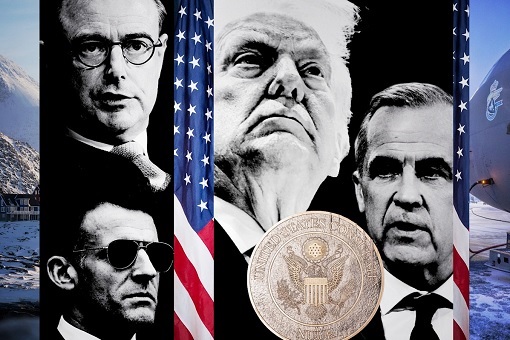
Watching with popcorn, China and Russia can see how easily Mr. Trump can be goaded into antagonizing staunch allies such as NATO partners, and how vulnerable those allies are. Trump’s threat to grab Greenland has pushed European officials and diplomats to toughen their views on the need for Europe to curb its dependence on the U.S., from tech to defense to trade.
The European Parliament on Thursday quickly passed a “technological sovereignty” resolution that supports public procurement in favour of European products where possible. Security risks posed by American technology have been openly discussed, something unthinkable just six months ago. Officials and lawmakers said the bloc’s focus on tech sovereignty is about boosting European companies.
A potential “decoupling” of Europe and U.S. tech was a hot topic of discussion among business leaders and policymakers at the World Economic Forum in Davos, Switzerland, this week. But many admitted that it would be a complex undertaking given the breadth of American tech used, from chips and cloud services to AI models and other software.
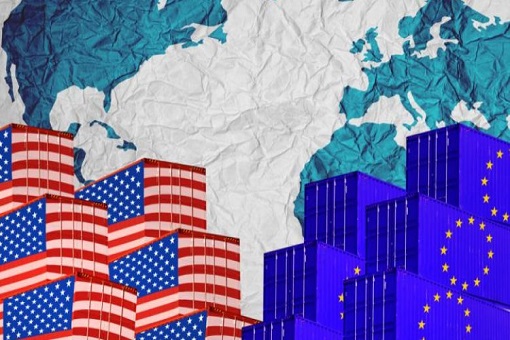
The scope and scale of Europe’s dependence on U.S. tech has never been so large, particularly for cloud-computing services from companies including Amazon.com, Google and Microsoft. In 2024, European customers spent nearly US$25 billion on infrastructure services from the top five U.S. cloud companies, or 83% of the total market in Europe.
On top of that, American tech companies exported more than US$360 billion in so-called digitally deliverable services – including advertising and artificial-intelligence tools – to Europe in 2024 alone. Google parent Alphabet, for example, generated 29% of its nearly US$30 billion in third-quarter revenue from Europe, the Middle East and Africa.
But while Europe is still warming up to the idea of decoupling from the U.S. tech, the Pentagon has stunningly unleashed a new defense strategy that appears to be decoupling from Europe’s defense. The U.S. latest “national defense strategy”, which was issued on Friday night, will focus attention on Western Hemisphere while reducing military role in Europe, South Korea and Middle East.
The Pentagon document says – “As U.S. forces focus on Homeland defense and the Indo-Pacific, our allies and partners elsewhere will take primary responsibility for their own defense with critical but more limited support from American forces.” Essentially, it means the Trump administration is moving away from defending Europe, leaving the E.U. to fend for itself eventually.
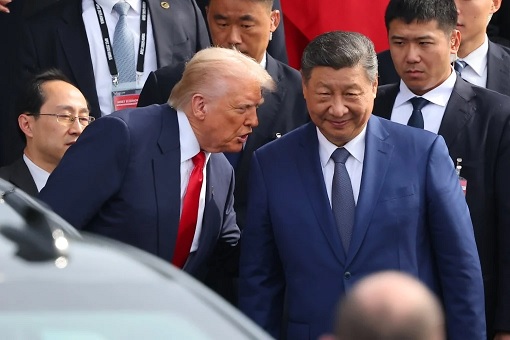
On the contrary, the U.S. is moving closer to China, striking a conciliatory tone toward Beijing in its new defence strategy, stating that its overarching goal is to establish “strategic stability” in the Indo-Pacific region and de-escalate tensions with the Chinese military. The new strategy comes as Trump is preparing for a summit meeting in April with Chinese president Xi Jinping.
This is a 180-degree U-turn compared to Trump’s first term in the White House. In 2018, Trump administration’s National Security Strategy (NSS) officially branded China (alongside Russia) a “revisionist power” and “strategic competitor,” accusing it of challenging U.S. influence, values, and prosperity in the Indo-Pacific by using predatory economics and military intimidation to alter the international order in its favour.
This rhetoric was followed with the imposition of tariffs in 2018 under the guidance of anti-Chinese officials like Peter Navarro and Robert Lighthizer, who viewed the trade deficit as a national security threat. The U.S.-China trade war, which began in July 2018, eventually led to tariffs on some US$550 billion of Chinese goods and US$185 billion of American goods.
In contrast, the Pentagon’s new strategy document underscores the administration’s interest in opening more military-to-military communications with the Chinese military and reducing tensions to establish a balance of power in the Indo-Pacific. The goal would be to establish “a decent peace, on terms favorable to Americans but that China can also accept and live under.”
Coincidentally, the document was released a day after Trump praised Xi for helping to negotiate a deal to enable TikTok to keep operating in the U.S. The document comes in the midst of a general dialing-down of tensions in advance of the meeting between the two leaders, which the White House hopes might lead to more economic cooperation.

The Pentagon’s new national defense strategy – issued every four years to guide decisions on deploying forces – doesn’t mention Taiwan, the democratically governed island that China claims as its territory. But it states that the U.S. military will “erect a strong denial defense along the First Island Chain,” a string of islands that includes Taiwan, Japan and the Philippines.
Unlike President Joe Biden, Trump hasn’t said whether he would use force to defend Taiwan. But the Trump administration has approved an US$11 billion arms package for Taiwan, and much of the Pentagon’s spending and its quest for cutting-edge technology has been touted in an effort to discourage Beijing from trying to take over the island and putting pressure on U.S. allies in the region.
In recent drills near Taiwan, the Chinese military rehearsed a potential quarantine of the island, and Beijing forces have also carried out naval manoeuvres in the South China Sea deemed aggressive. In December, Japan accused Chinese fighters of carrying out “highly provocative” operations by training their fire control radars on Japanese F-15s, an allegation Beijing rejected.
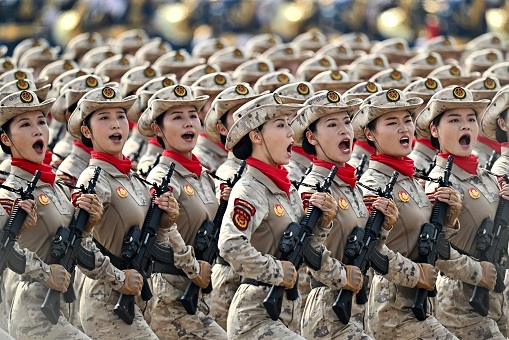
The Pentagon’s unexpected strategy said it seeks to “open a wider range of military-to-military communications with the People’s Liberation Army” to avoid inadvertent confrontations and ease tensions. However, some experts said that the Pentagon’s hope to draw the Chinese military into discussions of how to de-escalate tensions was unlikely to succeed.
The U.S.’ latest shift in national security also states that helping Ukraine is primarily the responsibility of European nations and casts Russia as a “persistent but manageable threat to NATO’s eastern members for the foreseeable future,” referring to the North Atlantic Treaty Organization. The national defense strategy treats Europe less as a strategic anchor and more as an inconvenience to be managed.
Amusingly, the U.S. is not the only Western nation that is trying to rub shoulders with China. This week, Mark Carney became the first Canadian Prime Minister to visit China since 2017, after years of strained ties. Carney hailed a new “strategic partnership” with China during a meeting with Xi Jinping, as the U.S. ally took steps to reset ties with Beijing in the face of historic friction with Donald Trump.
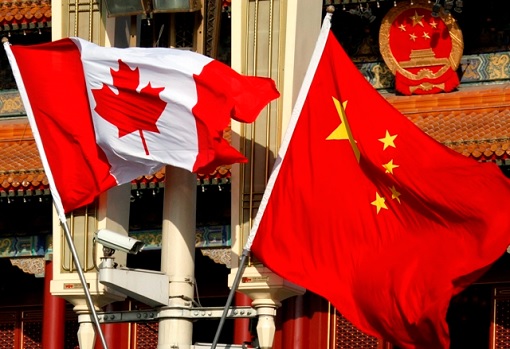
Canada would ease tariffs on Chinese electric vehicles and expected China to significantly reduce barriers tariffs on Canadian canola seed to 15% from 85% later this year. China had announced retaliatory tariffs on Canadian agricultural and food products last March, hurting Canadian farmers and effectively shutting Canada’s second-largest market for the crop.
“Together we can build on the best of what this relationship has been in the past to create a new one adapted to new global realities,” – Carney said. The language marks a sharp departure from rhetoric of recent years when Canada and its G7 partners raised concerns about Beijing’s activities on the global stage and interference in their democracies.
Hilariously, Trump, who wanted to befriend China again, was upset that Canada too wanted to befriend Beijing. President Trump threatened a major escalation in a brewing trade war against Canadian Prime Minister Mark Carney’s government, warning that the U.S. would impose 100% tariffs on all Canadian goods and products coming into the U.S. if “Canada makes a deal with China.”

Trump was upset that Carney refused to kiss his ring the same way European leaders did. Delivering a speech at the World Economic Forum in Davos, the Canadian leader urged smaller powers to unite against economic coercion from the world’s great powers, obviously referring to the U.S. In response, Trump revoked Canada’s invitation to join his Board of Peace.
Trump also accused Carney – who praised China as a more reliable trading partner than the U.S. – of not being grateful enough to the U.S., saying – “Canada lives because of the United States. Remember that Mark, the next time you make your statements.” The defiant Carney fought back, and said – “Canada doesn’t live because of the United States. Canada thrives because we are Canadian.”
Fuck is the stupidest US Leader in 100 years, single handedly self demolishing the unmatched network of allies that the US build up over 80-100 years.
ReplyDeleteThat is the real foundation of US hard and soft power, but idiot Fuck steers at it.
trump steers at those hardbuilt alliance pacts bcoz the Yanks at the current stage of nationhood evolution IS a pale shadow of its past might.
DeleteTrump is smart to know that. But those Yankee doodle dickhead DON'T!