
Why Russia Just Fired One of its Most Powerful Nuclear ICBMs After Visit from CIA Director
Military Watch Magazine Editorial Staff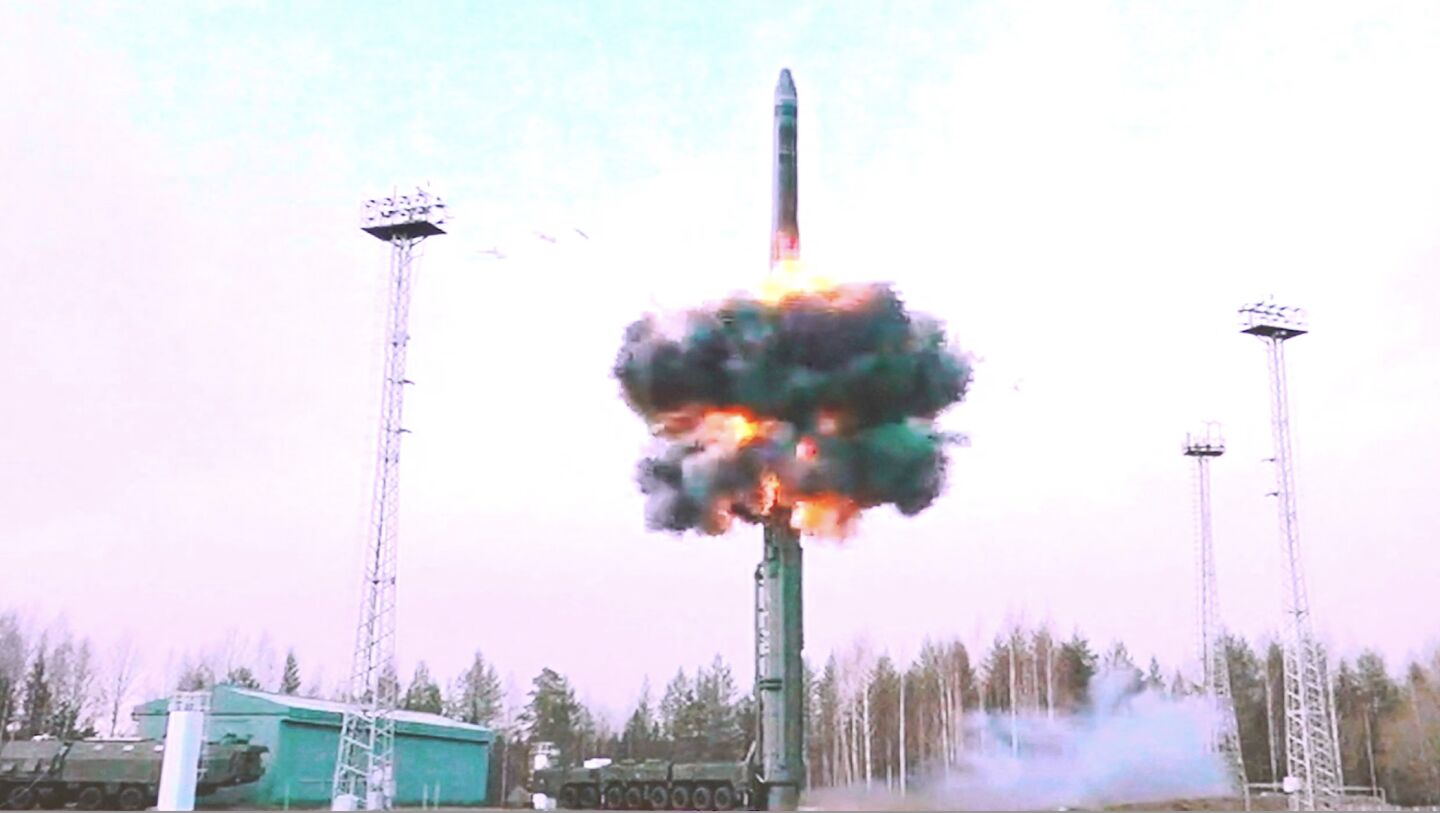
Russian Yars ICBM Launch
Russia has conducted a successful launch of an intercontinental ballistic missile (ICBM), launching a test warhead from the Plesetsk Cosmodrome in Arkhangelsk Region to the Kura training range on the Kamchatka Peninsula in Russia’s Far East. The Russian Defence Ministry said the launch was carried out as part of a Strategic Missile Forces exercise designed to test the deployment and operation of a mobile ICBM unit. The Defence Ministry did not identify the missile used, describing it only as a mobile-launched, solid-fuel system, although multiple local sources have reported that a Yars missile was fired.
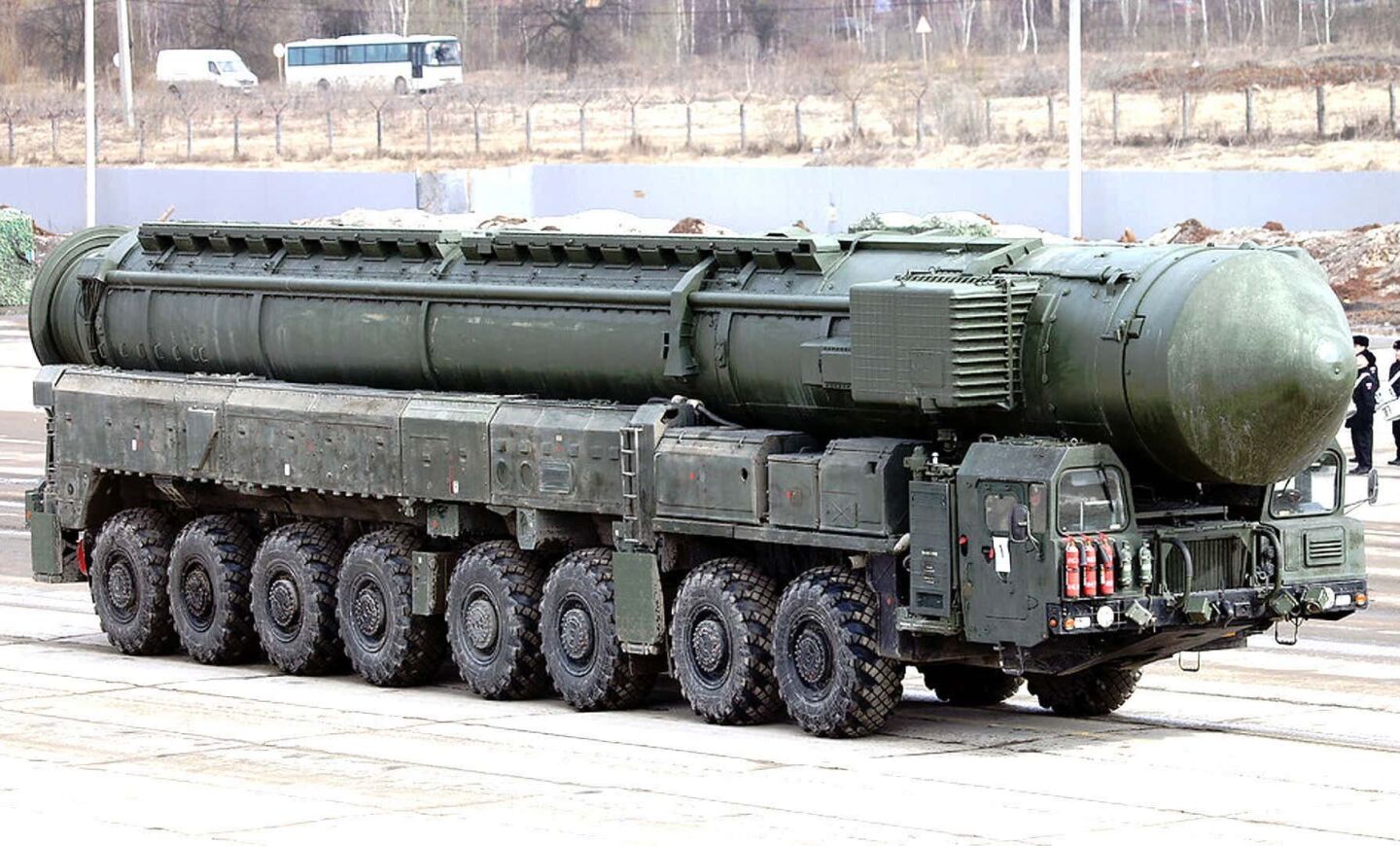
The exercise involved deploying a mobile missile-launch battery to a remote area, preparing it for launch and then conducting the test. The ministry said that “All of the assigned tasks were accomplished in full”, adding that the test confirmed the missile’s performance and flight characteristics. Russia fields by far the world’s largest ground-based ICBM arsenal, and relies on both silo-based and road-mobile systems. The large majority of Yars missiles are road mobile, allowing them to be dispersed and relocated, making them more difficult for an adversary to detect and target before launch.
The ICBM launch was announced on August 29, four days after a visit to Moscow by CIA Director John Ratcliffe, during which tensions between Russia and NATO were reportedly discussed. There have been growing concerns in the Western world that Russia may respond to escalating strikes on its cities and critical infrastructure from Ukraine by either attacking supply chains on NATO territory that are key to supporting these attacks, or by using tactical nuclear weapons against targets in Ukraine itself. Russia’s strategic nuclear arsenal built around systems like the Yars, combined with its robust tactical nuclear strike capabilities, have repeatedly been stated by NATO officials to be key to deterring Western Bloc states from launching a larger scale war against the country.
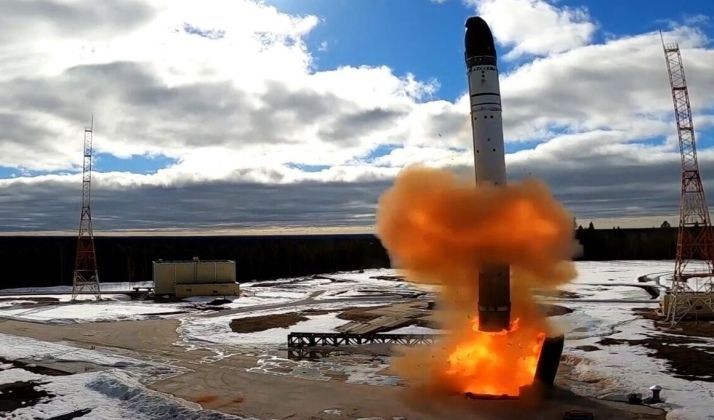
Russia’s nuclear forces are expected to be relied on heavily to deter NATO members from escalating to a full scale war should Russian forces stage a limited further escalation of the ongoing conflict. The latest Yars ICBM demonstration serves to strengthen its deterrence capabilities, and has occurred shortly after Russia conducted a test of its newer and much larger Sarmat silo-based ICBM in May. The Sarmat is designed to carry multiple warheads and is reportedly compatible with the Avangard hypersonic glide vehicle, which is intended to manoeuvre during atmospheric flight and complicate missile-defence efforts. Russia’s Strategic Missile Forces commander, General Sergey Karakaev, has said that the first missile regiment equipped with the new Sarmat system is scheduled to receive the weapon “by the end of the year.” If achieved, this would represent an important milestone in Russia’s transition toward a new generation of strategic missiles.
A Russian journalist told Russian Foreign Minister Sergey Lavrov that Moscow now effectively has only two allies, North Korea and Iran, and asked: "How did we get to this point, how did we end up in such company?" Lavrov responded: "What's wrong with such company?" #Russia
ReplyDeletehttps://x.com/NOELreports/status/2093794615048421797?s=20
BREAKING NEWS: 🇺🇸🇷🇺 "20-30 minutes of life", the shocking statement from the CIA director about Russian recruits
ReplyDeleteCIA Director John Ratcliffe states that U.S. intelligence estimates a Russian recruit arriving on the battlefield in Ukraine might have an average life expectancy of just 20 to 30 minutes.
This claim highlights the extraordinary lethality of modern warfare, where drones, artillery, surveillance, and precision strikes can turn the battlefield into an extreme hazard for newly deployed troops.
🇺🇦 Ukraine's extensive use of drones has transformed frontline combat, allowing troops to quickly detect and strike targets in exposed areas.
👀 If the U.S. intelligence estimate is accurate, it underscores just how perilous those first moments on the front lines can be for newly arrived Russian recruits.
Via @War_Radar2
https://x.com/isaacrrr7/status/2093834541328711819?s=46&t=8K6fzabO3g6uaj4KxwSSjg
Like West Berlin in Reverse.
ReplyDeleteMaybe we can learn something from Israel.
If Putin attacks a NATO member state, maybe we just adopt their Dahiya Doctrine. Effectively the idea of a ‘disproportionate response’.
If Russia send a missile into Romania, Poland or the Baltics, NATO takes Kaliningrad back for Germany. Takes Russian territory for punitive reasons whilst remaining squarely in and surrounded by the safety of NATO allies. Job done👍
https://x.com/mgp19_/status/2093684569614450996?s=46&t=8K6fzabO3g6uaj4KxwSSjg