Pages

Friday, July 31, 2026

Eleven Palestinians, including children, injured in Israel’s Nablus raids


Eleven Palestinians, including children, injured in Israel’s Nablus raids

Israeli settlers and soldiers storm occupied West Bank towns, make arrests days after intensified violence in town of Tal.

Israeli settlers escorted by soldiers have stormed the town of Tal and other areas southwest of Nablus in the latest escalation of violence and tensions in the occupied West Bank.

At least 11 Palestinians, including four children, were injured during a raid by Israeli settlers and soldiers in the Junaid neighbourhood of Nablus on Friday, medical sources told Al Jazeera.

Recommended Stories

list of 4 itemsend of list

Israeli forces fired bullets as well as stun grenades and tear gas canisters, residents said.

At least one of the injured was shot in the stomach, according to the Palestine Red Crescent Society.

Israeli soldiers detained at least 10 people across the occupied West Bank on Friday, including from Nablus, Tal, Salem and Bethlehem, Palestinian media reported.

Video published on Friday by multiple Palestinian online accounts and verified by Al Jazeera showed Israeli soldiers gathering in numbers in Tal.

Al Jazeera correspondents reported settlers and soldiers entering the Ain al-Mazrab area of Tal and the al-Ameriya area west of Nablus, then leaving.

In a statement on Friday, the Israeli military said “Israeli civilians” had entered Area A of the occupied West Bank, which is prohibited under Israeli law. All have since left the Nablus area, the statement added.

It also said the army received reports that a Palestinian cemetery was vandalised.


Spain PM to visit Ceuta after 19 migrants die breaching border from Morocco


Spain PM to visit Ceuta after 19 migrants die breaching border from Morocco

Tens of thousands reportedly cross from Morocco to Ceuta as France says it will tighten its borders with Spain.

People gather by a border fence at a beach.

Migrants try to cross the border fence by swimming from the Moroccan side into the Spanish enclave of Ceuta [Fabian Bimmer/Reuters]

At least 19 migrants trying to reach the Spanish territory of Ceuta have died after breaching the border from Morocco, authorities say, as tens of thousands of people are reported to have entered the enclave ⁠in the past 24 ⁠hours.

Thousands of people rushed by ‌sea and land ‌from ‌Morocco into the North African Spanish enclave on Thursday and overnight into Friday. According to reports from news agencies, citing unnamed police sources and officials, more than 40,000 people may have entered the territory.

Recommended Stories

list of 4 itemsend of list

Spanish Prime Minister Pedro Sanchez said his government was mobilising all available resources in response to the situation. Sanchez is expected to join Interior Minister Fernando Grande-Marlaska in a visit to Ceuta on Friday.

Rachid Sbihi, who leads a local workers’ association representing Civil Guard officers, called the situation a “serious humanitarian crisis”, saying thousands of migrants, including unaccompanied children, were sleeping on sidewalks, while others roamed the streets of Ceuta aimlessly.

“People are still entering. The reinforcements that have arrived are only helping the injured and other humanitarian efforts,” he told The Associated Press news agency. “It’s chaotic.”

Among the 19 who died, many drowned, Sbihi said, but some were also killed in a stampede to cross the breakwater fence at Tarajal beach, an urban beach near a border checkpoint with Morocco.

At the gates into Ceuta, Moroccan authorities had deployed water cannon trucks and pushed people back. The ⁠charred remains of a bus and seven cars could be seen nearby from clashes with the crowds.

Video footage on Thursday showed hoards of people, mainly Moroccans, walking around the breakwaters onto local roads. Most appeared to be young men, but there were also families with women and small children.

‘Step up controls’

Ceuta, together with Melilla – another autonomous ‌Spanish city in North Africa – represents the European Union’s only land border with Africa. Both cities often experience surges in attempted crossings by people seeking to migrate to Europe.

To reach Ceuta on the northern African coast, migrants often swim from the Moroccan town of Fnideq, covering about 5km (3 miles) to reach Spanish territory. Others attempt the crossing from the nearby town of Belyounech, where the distance is shorter.

Ceuta authorities have linked the surge in attempted crossings to a Spanish Supreme Court ruling earlier this month that barred authorities from immediately returning migrants who arrive by sea without due process. The ruling does not apply to migrants who enter Spain by land, including by climbing over the border fence.

But some activists in Morocco expressed doubt that the ruling was behind the surge, arguing most migrants would have been unaware of such legal decisions.

France has said it will tighten its borders with Spain after the recent developments.

Interior Minister Laurent Nunez said on X on Friday that he had “given instructions to immediately step up controls at the Spanish border” on Thursday night. He also announced the activation of the rapid intervention border force “for in-depth inspections”.

The border crisis has already had ripple effects in Italy, another key destination for migrants. Premier Giorgia Meloni threatened to suspend Italy’s open-border Schengen agreement with Spain “to defend our borders and ensure the safety of our citizens”, though Italy does not share a border with Spain.

Juan Jesus Vivas, the head of Ceuta’s regional government, had called for the national government to declare an emergency on grounds of national security, asking for more police and for the army to be deployed on the border “to guarantee the inviolability of the frontier and citizen safety”.

Spain’s Ministry of Interior rejected calls to declare a national emergency, saying such a measure does not cover migration crises, but promised additional resources.


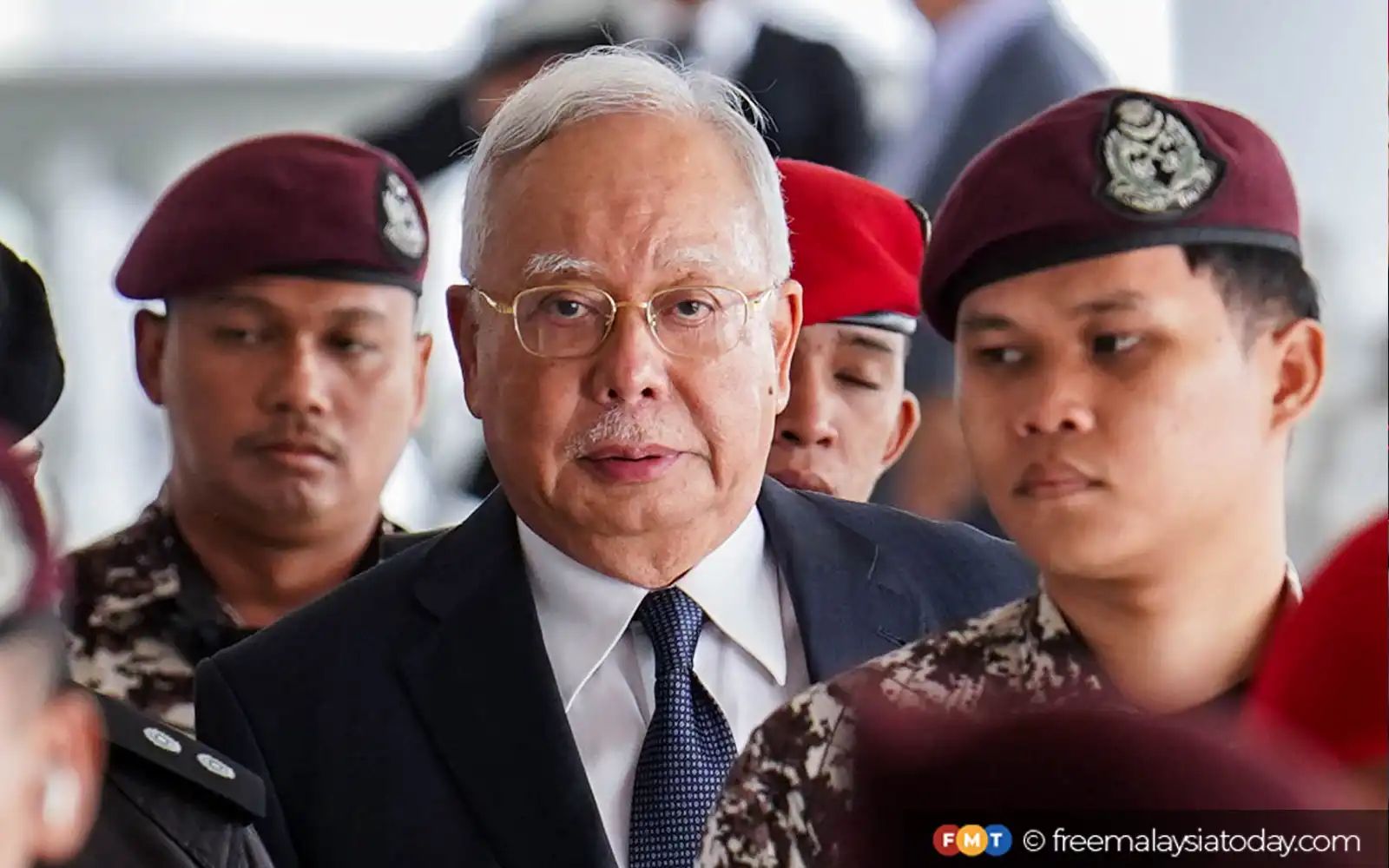
Najib’s pardon should be open to judicial scrutiny, says Bar


Najib’s pardon should be open to judicial scrutiny, says Bar


2 hours ago
V Anbalagan


Lawyers argue the pardons board must be accountable, while the AG says exercise of royal prerogative is beyond judicial review


Former prime minister Najib Razak is currently serving his SRC International jail sentence which will end on Aug 23, 2028.


PUTRAJAYA: The Malaysian Bar argues that it should be allowed to challenge the merits of the Federal Territories Pardons Board’s (FTPB) decision to halve former prime minister Najib Razak’s prison sentence and reduce his fine in his SRC International Sdn Bhd case.

Lawyer Yeo Yang Poh told a three-member Court of Appeal bench that accountability was a fundamental pillar of the justice system and that the board’s functions should be subject to judicial scrutiny.

“The FTPB must be held accountable to the people. As such, its decisions must be susceptible to judicial review, and the doors of the court must not be shut,” he said.


The Bar wants the appellate court to overturn a High Court decision in November 2024 refusing leave to commence judicial review proceedings to quash the FTPB’s reduction of Najib’s 12-year prison sentence to six years and his RM210 million fine to RM50 million.

The appeal is being heard by Justices Lim Chong Fong, Azhahari Kamal Ramli and Leonard David Shim.


The Bar is seeking a declaration that the board’s decision was unlawful, unconstitutional and void.

The FTPB and Najib are named as respondents, while the attorney-general is opposing the Bar’s application for leave.

Yeo submitted that the threshold for obtaining leave for judicial review was low and that the Bar has an arguable case which was neither frivolous nor vexatious.

He said the law, including constitutional law, should not be allowed to stagnate, and that it was appropriate for the superior courts to develop the law in an evolving society.


Another counsel for the Bar, Zainur Zakaria, argued that amendments to the Federal Constitution in 1994 had removed the Yang di-Pertuan Agong’s absolute discretion in granting pardons.

He said Article 40(1A) now requires the Agong to accept and act on advice in exercising his constitutional functions.

“Before the amendment, the king had absolute discretion to accept or reject a pardon,” said the former Bar president.

Zainur said the Agong may only act at his discretion in appointing a prime minister, withholding consent to a request to dissolve Parliament, and convening a Conference of Rulers meeting concerned solely with the privileges, position, honours, and dignities of the monarchs.


Lawyers Rajpal Singh Ghai, Amir Mahmood and Shahrul Aiman Zamzami also appeared for the Bar.

Opposing the appeal, senior federal counsel Ahmad Hanir Hambaly submitted that the High Court had correctly refused leave because the subject matter was non-justiciable.

He said the Bar’s application centred on the Agong’s prerogative under Article 42 of the Federal Constitution, which was not amenable to judicial review.

He also argued that the prohibition order sought by the Bar was akin to an injunction or stay order.

“If granted, it would prevent the FTPB from carrying out its constitutional functions as a public authority,” said Hanir, who appeared with senior federal counsel Nurhafizza Azizan and federal counsel Saffiyoah Omar.

Representing Najib, lawyer Shafee Abdullah adopted the attorney-general’s submissions and argued that the Agong, not the FTPB, makes the final decision on pardons.

“As provided by the constitution, the king presides over the FTPB but is not its chairman. The board members merely offer their opinions, while the final decision rests with the monarch,” he said.

Shafee also said the Agong has the sole prerogative to grant pardons, reprieves and respites for offences tried in the Federal Territories of Kuala Lumpur, Putrajaya and Labuan.

The court reserved judgment.


***


When Anwar was pardoned, some challenged the pardon as not being complaint with the full correct procedures - and they were quite right as the 'pardon' process was a wee rushed - but fortunately for Anwar, he had the general public's FULL favour, so in the end, it's who the 'pardoned' was/is.

Ask Lim Kit Siang who knows a bit about 'royal pardon' as he too was once a fortunate recipient of such a royal grace. Google informs us that:


  • His 1969 parliamentary win was initially declared void due to an issue involving his election agent, who had a past disqualification.
  • Royal Assent: Then-Prime Minister Tun Abdul Razak moved a motion providing time to seek royal clemency, and the Yang di-Pertuan Agong granted a pardon that allowed Lim to legally retain his seat and continue his parliamentary service

  • Salute to the late Tun Razak who had the graciousness to seek a 'royal pardon' for his parliamentary opposition.


    Court decision makes search for answers ‘increasingly impossible’, says Pastor Koh’s wife


    Court decision makes search for answers ‘increasingly impossible’, says Pastor Koh’s wife


    Susanna Liew says maintaining the stay order on investigations 'effectively prevents renewed scrutiny, accountability, and oversight'


    Susanna Liew, the wife of missing Pastor Raymond Koh, has appealed to the prime minister for help, saying the case involves ‘my life, my family, and my hope’.


    PETALING JAYA: Susanna Liew, the wife of Pastor Raymond Koh, who disappeared nine years ago, said the appellate court’s decision to maintain the stay order on investigations into her husband’s case effectively prevents renewed scrutiny, accountability, and oversight.

    Liew laments that with each passing day, those responsible for Koh’s disappearance are given more time, while her family is “left waiting for answers that may become increasingly impossible to obtain”.

    “What has caused me the greatest pain is that the stay was sought by parties who were themselves involved in the earlier investigative process,” she said in an open letter to Prime Minister Anwar Ibrahim to seek his intervention.


    The stay meant that the renewed investigation ordered by the court has been prevented from taking place and would also compromise the integrity of the investigative process, she said.

    Liew said any delay would mean witnesses may become unavailable, crucial leads disappear, and digital evidence may be lost or altered.


    “Everyday that the investigations remain halted is another day in which the truth becomes more difficult to uncover, evidence becomes more vulnerable, and the possibility of obtaining justice for my husband diminishes,” she said.

    Koh was abducted on Feb 13, 2017 while he was driving along Jalan SS4B/10 in Petaling Jaya. During the trial, the court heard that five masked men in black military outfits had pulled him out of his car.

    The Human Rights Commission of Malaysia (Suhakam) subsequently concluded that Koh was a victim of enforced disappearance by the state.

    Liew later filed a suit against the police and the government over the state’s involvement in his disappearance and the manner in which the authorities investigated the case.


    On Wednesday, the Court of Appeal maintained the stay order on Koh’s investigations.

    Justice Alwi Abdul Wahab also dismissed a bid by Koh’s family to set aside the suspension of a RM37 million-plus judgment awarded to them over his disappearance.

    Liew said the court’s decision favoured “those who seek to avoid accountability, and prejudices those who seek only the truth”.

    She pleaded with Anwar to prevent the case from “fading into silence” and ensure that the search for the truth continues.

    “For me, this is not a case file or a legal process – it is my life, my family, and my hope.”


    Iran targeting ‘staging grounds of future US operations’


    • 1h ago
      (08:25 GMT)

      Iran ‘cannot live under limited war’, pursuing ‘horizontal escalation’ strategy

      Ali Akbar Dareini, of the Center for Strategic Studies, says Iran wants a complete, permanent end to the war and cannot accept continued “limited US attacks”.

      “Iran cannot live under limited war and limited attacks by the US. That is gradual death for Iran,” Dareini told Al Jazeera.

      “Iran wants a complete, permanent end to war, or it’s going to be a widescale regional war,” he said.

      While Washington has been pursuing “vertical escalation” by ramping up military attacks against Iran, Tehran has sought “horizontal escalation” by expanding the conflict’s “geographical scope”, he said. This has pushed the US into an “escalation trap”, Dareini added.

    • 1h ago
      (08:05 GMT)

      Iran targeting ‘staging grounds of future US operations’

      Ali Akbar Dareini, a Tehran-based researcher at the Center for Strategic Studies, says Iran is trying to preempt any future attacks by the US in current targeting in the region.

      “Iran’s strategists have come to the conclusion that they need to increase the costs for Trump to end the war,” Dareini told Al Jazeera.

      Citing Iran’s recent claimed attack on a US military base in Jordan, Dareini said Tehran believed Washington was amassing equipment there in preparation for a major attack.

      He said Iran was unwilling to let the US dictate the terms of the war moving forward.

      Iran does not want to “allow the US to decide when to start the war, when to pause temporarily and when to restart the war”, he added. “Iran is now targeting the staging grounds of future operations.”

    Tabung Haji RCI report: Anwar questions 13-month bonus payout, calls it breach of trust


    Tabung Haji RCI report: Anwar questions 13-month bonus payout, calls it breach of trust


    Prime Minister Datuk Seri Anwar Ibrahim attends the launch ceremony of the Sahabat Usahawan Madani Carnival at Cycledios, Pantai Batu 1 in Port Dickson, July 31, 2026. — Bernama pic


    Summary

    • Prime Minister Datuk Seri Anwar Ibrahim has condemned the payment of 13 months' bonuses to Tabung Haji staff despite the institution incurring losses, describing it as a breach of trust.
    • This issue was highlighted in the Tabung Haji inquiry report, raising questions about the prudence of such financial decisions.
    • Anwar criticized the management for bringing disrepute to the religious institution and emphasized that the inquiry's findings should be thoroughly debated and not trivialized as an election issue.
    • He expressed personal dismay over the breach, labeling it as a form of treachery.


    By Malay Mail
    First Published: Friday, 31 Jul 2026 4:17 PM MYT


    KUALA LUMPUR, July 31 — Prime Minister Datuk Seri Anwar Ibrahim has described the alleged payment of 13 months’ worth of bonuses to Tabung Haji staff despite the institution recording losses as a breach of trust.

    The issue was among several concerns raised in the Tabung Haji inquiry report, The Star reported today.


    Anwar was responding to reports that the pilgrimage fund had paid staff bonuses amounting to 13 months’ salary.


    He said such payments were among the many issues highlighted in the report, questioning how a loss-making institution could justify rewarding employees in such a manner.


    “How could a company making losses report in that way? How could rewards be given without regard for the standing of the institution?” he said after Friday prayers at a mosque in Paroi near Seremban today.


    Anwar said he was personally upset by the findings, adding that a religious institution had been brought into disrepute by those entrusted with managing it.

    “I myself am upset,” he said.


    “A religious institution, an Islamic institution, brought to shame by Malays who were given the trust. To me, that breach of trust is treachery,” he said.

    He said the inquiry report should first be read and debated before conclusions were drawn, adding that the matter was too serious to be reduced to an issue surrounding the state election, which will be held tomorrow.

    “It is not a matter of votes, but this is too massive an issue.

    “Whether voters can grasp it in a short time is a separate matter. For me, win or lose, this cannot be tolerated,” he said.


    ***


    Sheer utter UN-HALAL-NESS - flabbergastingly HARAM

    NO SHAME AT ALL BY THOSE MUSLIMS INVOLVED


    Thanks to India, U.S. & China Remain Neck-and-Neck in Global Popularity. 1.4B People Keep The Balance Even


    Friday, July 31, 2026


    Thanks to India, U.S. & China Remain Neck-and-Neck in Global Popularity. 1.4B People Keep The Balance Even


    By Prakash Nanda
    -July 31, 2026


    There seems to be an emerging consensus among strategic circles all over the world that while the rising global popularity of China, evident from the latest survey from the Pew Research Center on July 15, may not equate to the real global strategic leverage that America still possesses, it is a critical warning signal for the U.S.

    In its survey, based on interviews with more than 42,000 people across 36 countries, Pew found that China is now viewed more favorably than the United States.

    Among the 20 economies with comparable data, the median share of respondents expressing favorable views of China reached 46 percent, compared with 36 percent for the United States.

    Similarly, during the first two years of his second term, President Donald Trump’s own ratings have also worsened significantly. Chinese President Xi Jinping now exceeds confidence posed in Trump by 10 (ten) points (31:21).

    More favorable views of Xi were noticed in 22 of 36 countries. More overall now say that they have confidence in Xi than in Trump.

    Pew says that more people have favorable views of China than the U.S. in 25 out of 36 countries, including Canada, Mexico, France, Germany, and Australia. Only 6 (six) countries still rate the U.S. more positively: India, Japan, South Korea, Philippines, Poland, and Israel.

    And, according to Pew, there has been a “historic shift” in the sense that in 20 countries with data back to 2023, nearly “50% held a positive view of China”, while only “36% regarded the US favorably”. In 2023 it was the reverse: U.S. 58% vs China 32%.


    Importantly, Pew cites worsening views of the U.S. since Trump’s second term began, and the US-led war in Iran where “people have less confidence” that the U.S. is contributing to peace. On the contrary, Beijing portrayed itself as a “stabilizing force”.

    Incidentally, Pew’s findings are far from an isolated case. Earlier this year (April), Gallup reported that global approval of China’s leadership had surpassed that of the United States by the widest margin in nearly two decades.


    “China surpassed the United States in global approval ratings in 2025, with a median of 36% approving of China’s leadership, compared with 31% for the U.S. China’s five-percentage-point advantage over the U.S. is the widest Gallup has recorded in China’s favor in nearly 20 years…..At the same time, disapproval of U.S. leadership rose to a record-high 48%, while China’s disapproval rating remained flat at 37%, Gallup said.

    Coming back to the Pew findings, many analysts have agreed with the think-tank that the Trump administration’s tariffs, aid cuts, disdain for allies, and his sheer transactional diplomacy are actively ceding the soft-power contest to Beijing.

    In other words, the volatility of American policy under Trump, which includes the use of force and the economic damage from tariffs, has hardened international sentiment against the United States. This has helped China build the perception that it is a more reliable entity.


    But then, the fact remains that China has also worked hard to earn its present position.

    Extensive Diplomatic Work is bringing the World to Beijing. Since December 2025, Xi and his foreign minister Wang Yi have hosted the political leaders of all the permanent members of the United Nations (UN) Security Council and met with all of the candidates for the UN’s next secretary-general, among an “endless stream” of foreign leaders in Beijing.

    The city hosted President Donald Trump in May, followed soon after by Russian President Vladimir Putin.


    Across roughly 500 diplomatic engagements in the first half of 26 conducted by more than 20 senior officials, Beijing has seized the opportunity to make its pitch to the world. Our survey results suggest that this work is paying off.


    Besides, as Arran Hope, editor of “China Brief” at the Washington-based Jamestown Foundation, observes, “at the regional level, Europe’s importance is reflected in its high volume of diplomatic engagements: no other region received as much attention between January and June, with the United Kingdom and Belarus receiving the most. ASEAN countries saw the next highest degree of engagement, which is in line with trends laid out above”.


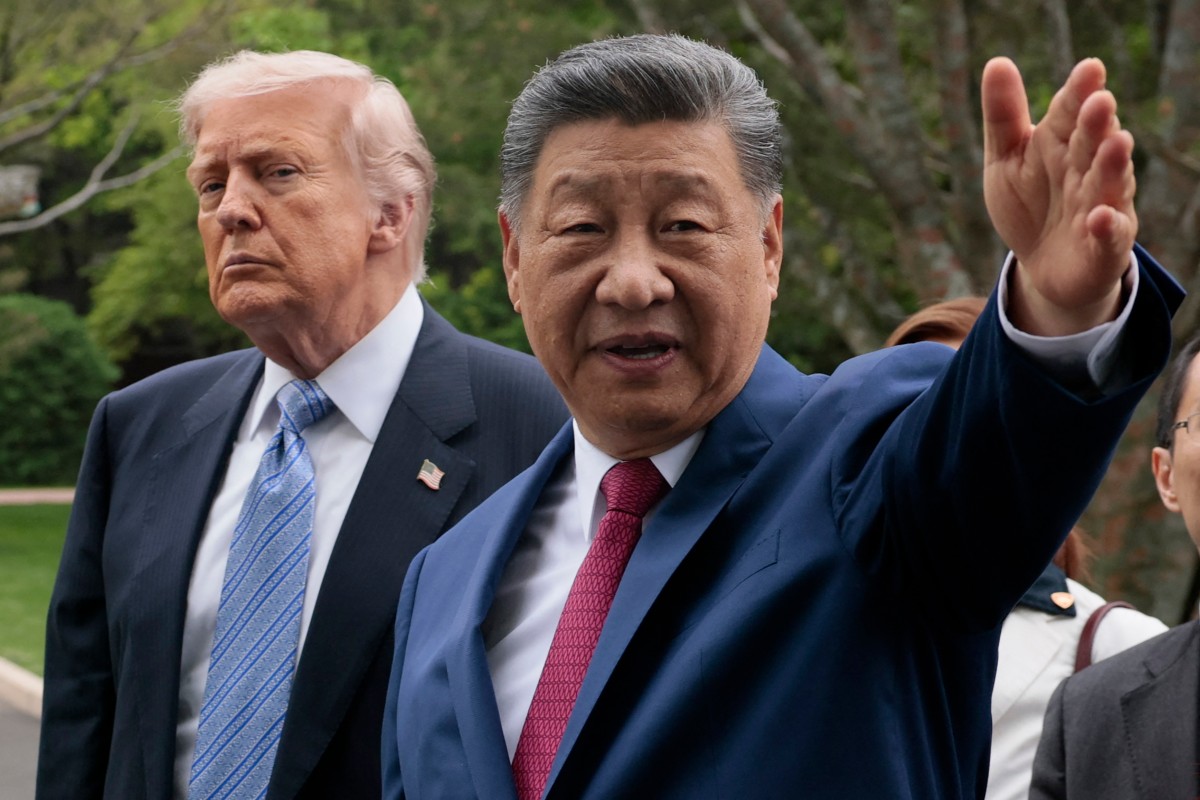
    China’s President Xi Jinping (R) gestures as he meets with US President Donald Trump (L) during a visit to Zhongnanhai Garden in Beijing on May 15, 2026. (Photo by Evan Vucci / POOL / AFP)


    Xi, according to Hope, has been a keen promoter of “Asian values” in the region (of China) in recent times, which for the ruling Chinese Communist Party is a byword for anti-Western and pro-authoritarian, and is linked to gaining advantage in strategic competition with the United States.

    Following the Pew survey, China’s People’s Daily wrote a commentary, which says, among other reasons, that China’s growing international goodwill is fostered by the appeal of its culture.

    “Chinese cultural products are reaching wider global audiences than ever before. The phenomenal international success of the animated film Ne Zha 2 and the video game Black Myth: Wukong has sparked renewed global interest in Chinese mythology and traditional culture”, the commentary says.

    Scholars like Yanzhong Huang agree.

    “Culturally, the “Chinamaxxing” phenomenon—a viral social-media trend in which young Westerners embrace Chinese lifestyles, from drinking hot water to riding China’s high-speed rail vicariously through influencer livestreams—has given China the kind of organic, bottom-up cachet long enjoyed by Japan and South Korea, amplified by breakout products like the video game Black Myth: Wukong, the film Ne Zha 2, and Labubu dolls”.

    He adds that China’s development model has also gained prestige: its dominance in electric vehicles, batteries, and infrastructure has made “the China model” an object of emulation rather than derision—so much so that Washington itself now practices industrial policy that borrows unmistakably from Beijing’s playbook.

    However, notwithstanding all this, there are some limitations of China if one takes the Pew findings under closer scrutiny.

    First, Chinese popularity is not uniform, covering all parts of the world.

    Pew finds favorability toward China markedly higher in the emerging economies of Africa, Latin America, and South and Southeast Asia, with record highs this year in Colombia, Indonesia, Malaysia, Mexico, Nigeria, and Turkey.

    China has also gained among the United States’ Western allies—Australia, Canada, France, Germany, Italy, the United Kingdom, Sweden, the Netherlands —as well as in parts of Latin America, where several publics once viewed the United States more favorably before Trump’s second innings.

    But the fact remains that the U.S. also has significant support in six countries – India, Japan, the Philippines, South Korea, Israel and Poland. Consequently, four of these happen to be China’s neighbors, and five of them (except Poland) are in Asia.

    In the Philippines, 81 percent see the United States as a reliable partner compared with 42 percent for China. It seems that proximity to Chinese power, particularly when accompanied by maritime disputes, blunts Beijing’s appeal.

    Secondly, and this is a corollary of the above, in terms of numbers, people in the world supporting the U.S. and China are more or less even. The U.S. should thank India for this. Negative-leaning views of India’s 1.4 billion people completely offset the strongly positive views of China in 30 other countries.

    And here, what is noteworthy is that in Trump’s favorite Pakistan, China leads the U.S. in popularity by over 75 percent, the highest in the countries surveyed. Even in Bangladesh, where the coup dislodging Sheikh Hasina had the American blessings, China’s lead is over 30 percent.

    Thirdly, Huang makes one interesting point that “soft power”, which reflects popularity, is, by its very nature, far more mercurial than hard power. Public opinion can swing within a single year.

    He quotes the ISEAS-Yusof Ishak Institute’s annual survey of Southeast Asia to illustrate that in 2024, when asked to choose, respondents sided with China for the first time (50.5 to 49.5 percent); in 2025, they flipped back to the United States (52.3 to 47.7 percent); and in 2026, they flipped again to China (52 to 48 percent). “Sentiment that oscillates this easily is a weathervane, not a monument”, he argues.

    To buttress his argument, he adds that Soft power ultimately derives from credibility rather than propaganda—and solid, credible foundations for China’s appeal have yet to be laid. In Inside China, there are no signs of meaningful improvement in the rule of law or political freedom—if anything, the trajectory points the other way—and global publics have noticed. In only eleven of the thirty-six countries Pew surveyed do around half or more say the Chinese government respects the personal freedoms of its people.

    Considering all this, the Chinese score over the U.S. in the Pew Survey does not necessarily flow from intrinsic strength, and it is most likely due to deteriorating opinions of the United States under Trump.

    In other words, Washington’s loss does not necessarily translate into a commensurate lasting gain for Beijing.

    Thus, one could say that it is too soon to declare a Chinese victory.

    In 2026, the world may “like” China more than America for the first time, going by the Pew survey. But does the world “love” China more than America? Pew does not deal with this question, though in geopolitics, the difference between “like” and “love” does matter. And things can change sooner rather than later if the U.S. takes corrective measures.


    Author and veteran journalist Prakash Nanda is Chairman of the Editorial Board of the EurAsian Times and has been commenting on politics, foreign policy, and strategic affairs for nearly three decades. He is a former National Fellow of the Indian Council for Historical Research and a recipient of the Seoul Peace Prize Scholarship.


    A preview of the Negeri Sembilan election


    Murray Hunter


    A preview of the Negeri Sembilan election


    This election is seeing some changes in tactics by some of the parties, and the result will guide how the major parties line up in the next general election


    Murray Hunter
    Jul 31, 2026


    THE Negeri Sembilan state election on Saturday, August 1, should not normally attract much attention, as only 889,490 registered voters are involved.

    Thirty-six seats are up for grabs, where PH had a minority government, after Umno and Barisan Nasional (BN) earlier withdrew support for the state administration led by Datuk Seri Aminuddin Harun.

    This election is seeing some changes in tactics by some of the parties, and the result will set the scene for how the major parties line up in the next general election.

    In the Johor state election earlier this month, we saw the Barisan Nasional enjoy a convincing win. The question for Negeri Sembilan now is whether the BN can take the government from the current PH administration.

    Based on the momentum from the Johor election, the odds seem stacked in favour of the BN.

    Political analysts believe that the BN will take much of the Bersatu vote this time and, with that, win the state government.

    However, the election is still volatile. Umno’s vote is perceived to rise at the cost of Bersatu and give it a majority of seats to take the government.

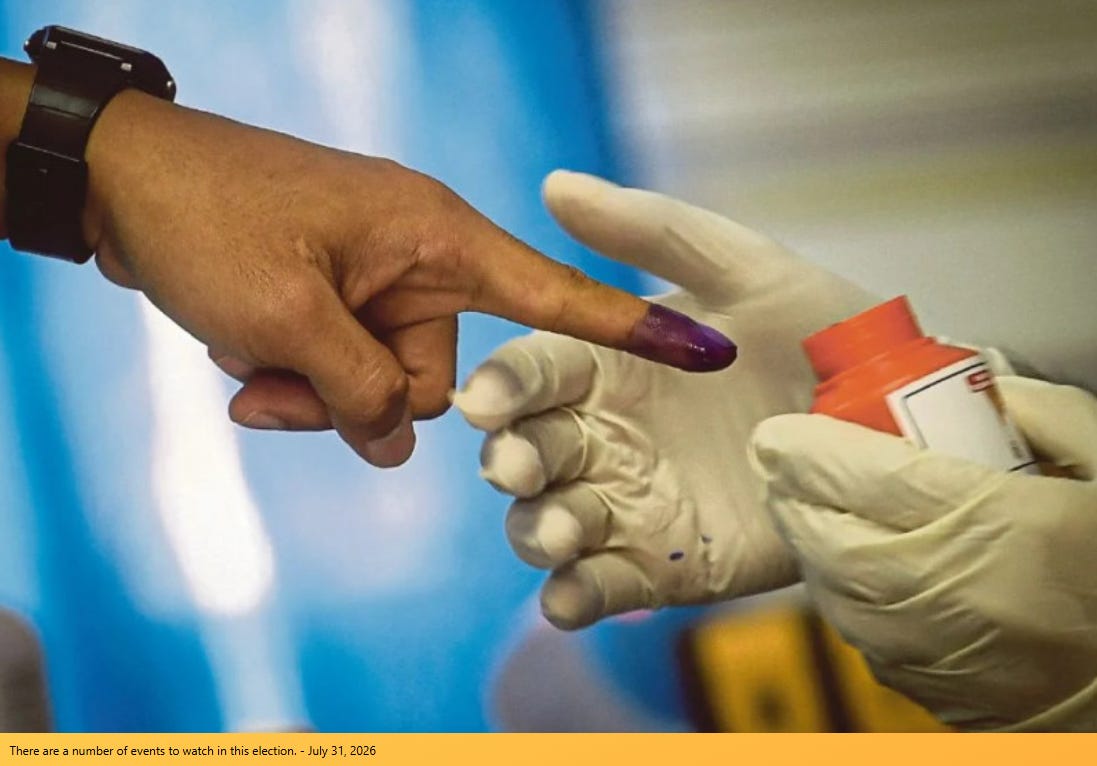
    There are a number of events to watch in this election.

    First is the PN-BN alliance. On the surface, this alliance appears to be the springboard Umno needs to do very well.

    However, many traditional PAS supporters question the electoral alliance and may not support it by voting for Umno where PAS is not standing.

    Second is Anthony Loke’s seat of Chennah, which he won with a 2,200-vote margin in 2023.

    If Loke loses the seat, the DAP’s position within the unity government may become a major question within the party, forcing the leadership to make a decision about staying.

    If Loke holds his seat, there will be some pressure taken off the leadership on the question of staying in the unity government.

    This leads to the third test. The DAP should be able to hold onto all the 11 seats it won in the last state election.

    For PKR, voter turnout will be the key here. If the party machinery can muster its supporters to come and vote, it may be able to hold its seats and even increase its votes.


    Linggi should be PKR’s big test on Saturday.

    Aminuddin, the caretaker Menteri Besar, is standing in the Umno stronghold and is seen as a very brave move.

    It’s going to be a very tough, but not impossible, fight against the Umno incumbent, Datuk Mohd Faizal Ramli.

    The seat, located about 36km from Seremban, is considered a Barisan stronghold, with the coalition having held it since 1974.

    Aminuddin is up against a three-cornered fight against Mohd Faizal and Datuk Zamri Md Said of Bersatu.

    In the 2023 state election, Mohd Faizal won with a 1,461-vote majority in a straight fight against Zamri.

    Fourth, Datuk Seri Hamzah Zainuddin’s Wawasan is entering the electoral foray for the first time on Saturday.

    The big question is whether Wawasan will fizzle out like Datuk Seri Rafizi Ramli’s Bersama in Johor, or show that they can be a legitimate replacement for Bersatu.

    PAS support will be very important in these contests. However, it looks like Wawasan may just become a vote spoiler for Bersatu, giving PKR some advantage.

    Finally, the MCA will have to show that it is more than just a party hanging onto Umno’s coattails in this election.

    There is also another dimension riding on this election. A BN win could lead to friction against the monarchy in the state, and this could lead to some drawn-out drama.

    The BN may likely achieve a win in the coming election, but there is also a strong possibility that PH may surprise many with a higher aggregate vote than in 2023.

    This will depend largely on the voter turnout and last-minute decisions by fence-sitters this Saturday. – July 31, 2026

    Pakatan 'push-pull' in NS


    Image


    • Can Tabung Haji save Harapan?

    • Anwar says sorry to Indians


    Can Tabung Haji save Harapan?

    The Madani administration finally released the Tabung Haji royal commission of inquiry report three years after it was completed.

    While it was a cabinet decision, Pakatan Harapan leaders, including premier Anwar Ibrahim, wasted no time taking veiled jabs at their estranged partner BN, accusing them of mismanaging the fund while Harapan rescued it.

    However, while the report did confirm there was mismanagement and creative accounting, it didn’t make any damning accusations that Umno leaders were directly responsible for these issues, nor was there any evidence of corruption involving Umno.

    Umno is letting the attacks roll like water off a duck’s back, and the RCI report may not make a dent on the BN-PN Malay unity wave that’s about to slam into Harapan in Negeri Sembilan.

    HIGHLIGHTS


    Anwar says sorry to Indians

    Prime Minister Anwar Ibrahim made a rare apology on Wednesday night, saying sorry to Indians in Negeri Sembilan for referring to houses of worship on disputed land as “kuil haram” (illegal temples).

    “When I realised that it was wrong for me to say ‘kuil haram’, I apologised. I said ‘no’, that was technical, (what) I have said was a mistake,” he said.

    With Indian voters accounting for over 20 percent of the electorate across 11 seats in Negeri Sembilan, their turnout and sentiment could prove decisive for Pakatan Harapan’s survival in the state.

    Stay tuned to Malaysiakini today for a report on what Indian voters in the state feel about Anwar and his government, and whether it will impact their votes.