
Israel aims for regime change in Iran, but may not care as much about whether the transition is smooth

Israeli firefighters work to put out a fire on a car at a site impacted by a projectile after Iran launched missiles into Israel, following Israeli and US strikes on Iran, in Tel Aviv, Israel, February 28, 2026 [Tomer Appelbaum/Reuters]

By Simon Speakman Cordall
Published On 3 Mar 2026
As its joint attack with the United States on Iran continues, Israel sees its task as the culmination of a longstanding policy on: ushering in regime change from within.
Taking to the airwaves in the wake of the killing of Iranian Supreme Leader Ayatollah Ali Khamenei on Saturday, Israeli Prime Minister Benjamin Netanyahu addressed the Iranian people directly, calling on them in Farsi to “come to the streets, come out in your millions, to finish the job, to overthrow the regime of fear that has made your lives bitter”.
Recommended Stories
“Your suffering and sacrifices will not be in vain. The help you wished for – that help has now arrived,” he said of the US-Israeli air strikes, which have already killed more than 555 people in Iran, including 180 at a girls’ school in the country’s south.
“The Israeli authorities don’t spell it out, but it is clear that what they want to see is a regime change in Iran,” said Ahron Bregman, a senior teaching fellow at the Department for War Studies at King’s College London, who had returned to Israel to research a book before the latest round of strikes took place.
“I’m stuck in Tel Aviv and spend many hours with Israelis in a local shelter. I’m taken aback by the strong support among these – mainly liberal – Israelis of the war,” he said. “They, like their leaders, believe that if you only topple the Iranian regime, the Middle East will totally transform for the better, which is, of course, nonsense.”
But there is a question of how invested Netanyahu and his allies are in ensuring that regime change in Iran is smooth.
Israeli officials know that Iran, including its opposition, has a diverse array of views and backgrounds.
Many Iranians who have taken to the streets, including in the large protests that took place in January, are united only in their hostility to the government, with various factions calling for everything from the restoration of the monarchy to a full democracy. Others, however, are rallying on the government’s side after the attacks on their country and Khamenei’s killing.

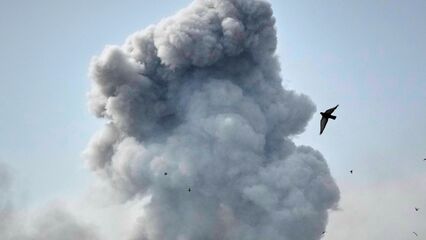
A plume of smoke ascends to the sky in Tehran after a strike on March 2, 2026 [Atta Kenare/AFP]
Questions remain
“I think there’s a public opacity to Israel’s war aims,” former Israeli government adviser Daniel Levy told Al Jazeera. “My sense is that Israel has no real interest in smooth regime change. I think most [Israeli leaders] regard that as a kind of fairytale, though that’s not something Netanyahu and allies might be ready to admit publicly.”
“Israel’s more interested in regime and state collapse,” Levy noted. “They want Iran to implode, and if the spillover from that takes in Iraq, the Gulf and much of the region, so much the better.”
“They’ll have removed a significant regional counter to their freedom to act, leaving Israel and its allies free to remake the regions and, critically, to continue both killing Palestinians, and possibly even move against Turkiye, which is the next logical step,” he said, reflecting a recent rise in anti-Turkiye rhetoric in Israel, with politicians even characterising the country as the “new Iran”.
However, while public appetite for the war may be high, there is an understanding that the duration of that war might not be of Israel’s choosing.
The bulk of Israel’s military spending is underwritten by the US, where the attack on Iran is proving less than popular. Equally, in a world where many states had belatedly grown critical of Israel’s genocidal actions towards Palestinians – in particular in Gaza – US diplomatic heft has been vital in protecting its ally from criticism, and even wider sanctions.
How long the US’s allies in the Gulf are ready to withstand Iranian assaults on their territory in response to a war they had repeatedly cautioned against is far from clear. Equally, how long it might be before regional diplomatic pressure on US President Donald Trump begins to have an impact is also hard to predict, Levy warned.
“It’s fitting that this is the holiday of Purim, which also marks the survival of the Jewish people over a threat from Persia 2,500 years ago, and we still celebrate it today. People understand that,” Barak said.
“Israel going to war in tandem with our greatest ally and the world’s greatest power is unprecedented,” Barak continued. “It’s hard to make any predictions, but Trump has his own priorities and his own endgame, which might not be the same as ours. It could be that Trump pulls out and leaves Israel holding the bag. What happens then, I don’t know.”
Israel bombs Tehran and Beirut, including strikes on Iran's state TV
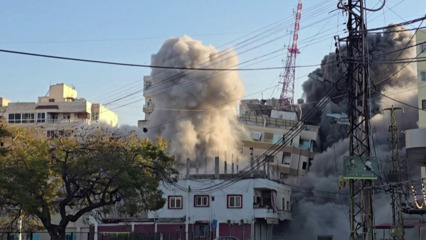
Israeli attacks kill dozens of people across Lebanon
Public backing
Iranian missiles may be hitting Israel, but analysts there say the general sentiment among the public is supportive of active hostilities against Iran, with the backing of the US.
It stems from years – if not decades – of messaging that Iran and its allies are the main threats to Israel.
From Netanyahu’s repeated warnings that Iran is on the brink of acquiring nuclear weapons, to the predictions from politicians of all stripes that Israel’s destruction at the hands of Iran is imminent, the outbreak of a conflict that many Israelis see as the final showdown with their enemy has almost been welcomed.
Politicians from the right to the centre-left have backed the US and Israeli decision to attack Iran.
Yair Golan, the leader of the centre-left Democrats, who, in May last year, outraged many Israelis by saying that the endless killing of Palestinians risked reducing Israel to a “pariah state”, welcomed the war, saying the Israeli military had his “full backing” in “removing the Iranian threat”.
Other opposition politicians, such as the centrist Yair Lapid and the right-wing Naftali Bennett, have all fallen into line behind Netanyahu in his confrontation with Iran.
“People here know Iran is a threat. They know it because Iran keeps telling us,” said Mitchell Barak, a political pollster who was an aide to Netanyahu in the early 1990s. “They [Iran] have the weapons, the will, and we know they’re ready to attack. Everyone is happy that the war is under way, and this time, it will be finished.
“It gives Israelis a great sense of pride that it is a fully joint operation with the United States,” Barak, who spoke from a shelter in West Jerusalem, said. “The aim is regime change and protecting Israelis. They understand that. Israelis are hunkering down and resolved to see this through.”
“I think there’s a public opacity to Israel’s war aims,” former Israeli government adviser Daniel Levy told Al Jazeera. “My sense is that Israel has no real interest in smooth regime change. I think most [Israeli leaders] regard that as a kind of fairytale, though that’s not something Netanyahu and allies might be ready to admit publicly.”
“Israel’s more interested in regime and state collapse,” Levy noted. “They want Iran to implode, and if the spillover from that takes in Iraq, the Gulf and much of the region, so much the better.”
“They’ll have removed a significant regional counter to their freedom to act, leaving Israel and its allies free to remake the regions and, critically, to continue both killing Palestinians, and possibly even move against Turkiye, which is the next logical step,” he said, reflecting a recent rise in anti-Turkiye rhetoric in Israel, with politicians even characterising the country as the “new Iran”.
However, while public appetite for the war may be high, there is an understanding that the duration of that war might not be of Israel’s choosing.
The bulk of Israel’s military spending is underwritten by the US, where the attack on Iran is proving less than popular. Equally, in a world where many states had belatedly grown critical of Israel’s genocidal actions towards Palestinians – in particular in Gaza – US diplomatic heft has been vital in protecting its ally from criticism, and even wider sanctions.
How long the US’s allies in the Gulf are ready to withstand Iranian assaults on their territory in response to a war they had repeatedly cautioned against is far from clear. Equally, how long it might be before regional diplomatic pressure on US President Donald Trump begins to have an impact is also hard to predict, Levy warned.
“It’s fitting that this is the holiday of Purim, which also marks the survival of the Jewish people over a threat from Persia 2,500 years ago, and we still celebrate it today. People understand that,” Barak said.
“Israel going to war in tandem with our greatest ally and the world’s greatest power is unprecedented,” Barak continued. “It’s hard to make any predictions, but Trump has his own priorities and his own endgame, which might not be the same as ours. It could be that Trump pulls out and leaves Israel holding the bag. What happens then, I don’t know.”
Israel bombs Tehran and Beirut, including strikes on Iran's state TV
Israeli attacks kill dozens of people across Lebanon
Public backing
Iranian missiles may be hitting Israel, but analysts there say the general sentiment among the public is supportive of active hostilities against Iran, with the backing of the US.
It stems from years – if not decades – of messaging that Iran and its allies are the main threats to Israel.
From Netanyahu’s repeated warnings that Iran is on the brink of acquiring nuclear weapons, to the predictions from politicians of all stripes that Israel’s destruction at the hands of Iran is imminent, the outbreak of a conflict that many Israelis see as the final showdown with their enemy has almost been welcomed.
Politicians from the right to the centre-left have backed the US and Israeli decision to attack Iran.
Yair Golan, the leader of the centre-left Democrats, who, in May last year, outraged many Israelis by saying that the endless killing of Palestinians risked reducing Israel to a “pariah state”, welcomed the war, saying the Israeli military had his “full backing” in “removing the Iranian threat”.
Other opposition politicians, such as the centrist Yair Lapid and the right-wing Naftali Bennett, have all fallen into line behind Netanyahu in his confrontation with Iran.
“People here know Iran is a threat. They know it because Iran keeps telling us,” said Mitchell Barak, a political pollster who was an aide to Netanyahu in the early 1990s. “They [Iran] have the weapons, the will, and we know they’re ready to attack. Everyone is happy that the war is under way, and this time, it will be finished.
“It gives Israelis a great sense of pride that it is a fully joint operation with the United States,” Barak, who spoke from a shelter in West Jerusalem, said. “The aim is regime change and protecting Israelis. They understand that. Israelis are hunkering down and resolved to see this through.”
Am Yisrael Chai
ReplyDeleteIf you Beat Your Chest and Scream
ReplyDelete"Death to Umrica"
"Death to Yahud"
for 50 years
How Do You Think Umrica and Yahud will respond?
The IRGC can forget about getting help from BullyXi. He is still busy purging (lowsai) generals.
ReplyDeleteChina removes three retired generals from national advisory body
Kelly Ng
China's leader Xi Jinping has launched a sweeping anti-corruption campaign since he came to power
China has removed three retired military generals, including a former commander of the People's Liberation Army ground force, from a top political advisory body just days before its largest annual political gathering.
The advisory body, the Chinese People's Political Consultative Conference (CPPCC) voted to remove Han Weiguo, Gao Jin and Liu Lei, state media said on Monday.
Authorities gave no explanation for the ousters but they come after purges of military top brass have picked up pace in recent weeks.
China's leader Xi Jinping has regularly launched anti-corruption campaigns in since coming to power in 2012, but critics say it is a tool for removing political rivals.
Some 3,000 delegates from the CPPCC, an advisory body with no legislative power – and China's rubber-stamp legislature the National People's Congress – will gather in Beijing this week for the annual Two Sessions. The meetings begin tomorrow and will run for about a week.
Delegates of the CPPCC and NPC typically serve out their five-year terms, and their current terms are set to end in March 2028, which makes these mid-term removals unusual.
Han, 70, served as the PLA army's commander from August 2017 until he retired in June 2021. His two successors, Liu Zhenli and Li Qiaoming, have also been removed from their respective roles in the last two months.
Liu Lei, also 70, served as political commissar of the army from December 2015 to January 2022, which includes the period during which Han was in command.
Gao, 67, was the inaugural commander of the now-dissolved Strategic Support Force when it was formed in 2015. He was most recently the commander of the Central Military Commission's Logistic Support Department, until he retired in January 2022.
In addition to the three generals, several other CPPCC members were officially sacked, including Zhang Kejian, a senior official in the defence industry who is under investigation for corruption.
https://www.bbc.com/news/articles/cddngg31n0mo
Process of military rejuvenation mah, mfer.
DeleteSince they r the lowsai generals to be known by a know-nothing sinofart, they have to be purged w/o mercy.
Tong Sampah Busuk UN
ReplyDeleteReminder: The Islamic Republic consistently holds key positions at the @UN—including as Vice-Chair role on the Commission for Social Development, elected in February 2026 for the 65th session.
Yes. Social. F*cking. Development!
The UN must be held accountable.
You cannot whitewash a terrorist regime that massacred 30,000+ innocent protesters in a matter of days—and just carry on as if nothing happened.
Dismantle and defund!
https://x.com/hashemallmighty/status/2028639401535017039?s=46
Wakakakaka…
Delete'massacred 30,000+ innocent protesters in a matter of days'
Wow!!!!!???
Why not 100,000 or 1,ooo,ooo?
Ooop… tak tau kira kecil kecil, mfer
Dozens of Malaysians gathered outside the U.S. embassy in Kuala Lumpur on March 1 to protest strikes on Iran that killed the country's Supreme Leader Ayatollah Ali Khamenei.
ReplyDeleteAn activist said the rally was held in solidarity with groups that were resisting U.S. imperialism.
https://x.com/staronline/status/2028455989692059790?s=46
But Very Aneh, when IRGC murdered tens of thousands of innocent civilians, their own citizens, there was no protest at the Iranian embassy.
ReplyDeleteVery Aneh, indeed, mfer!
DeleteWhere r u hibernating?
UN officials have warned that the United Nations faces total financial collapse as a result of "non-payment of dues by member states".
ReplyDelete"We face a real danger of running out of money."
https://x.com/wideawake_media/status/2028401586616009107?s=46
Do u know WHO is the biggest cauka, in non-payment of dues by member states?
DeleteNo Money Pack Up and Go Home lah. And Don’t Come Back.
ReplyDeletedon't pay yr dues, yet still want to exercise yr voting right!
DeleteThat's worst than cauka!