
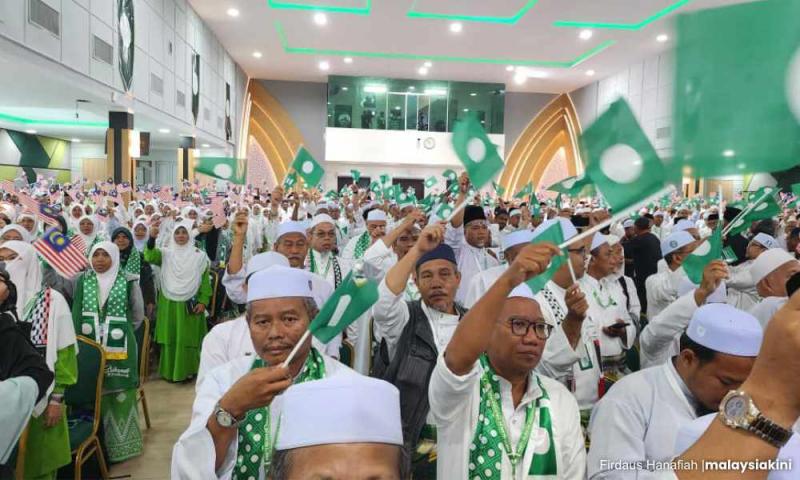

Non-Muslim support biggest hurdle for PAS-led PN, say analysts
Qistina Nadia Dzulqarnain
Published: Sep 18, 2025 8:01 PM
Updated: 10:01 PM
Summary
Analysts view PAS’ growing assertiveness in Perikatan Nasional as a natural consequence of its larger parliamentary presence and stronger grassroots machinery relative to its coalition partner Bersatu.
However, the observers opined that despite PAS’ strength among Malay voters, the Islamist party’s lack of support from non-Muslims remains the biggest obstacle to its ambitions of capturing Putrajaya.
While recent signals from PAS - including calls from delegates for the party to take over PN’s leadership - reflect the party’s growing confidence in steering the coalition into the 16th general election, analysts told Malaysiakini that its hopes of leading the nation might not be a walk in the park.
Universiti Teknologi Malaysia’s Faculty of Social Sciences and Humanities director Mazlan Ali argued that PAS’ Malay-Muslim narrative may play well in its east coast and northern strongholds, but is likely to face resistance in mixed constituencies on the west coast as well as in Sabah and Sarawak.
“(Some voters in the latter areas) don’t seem to agree with PAS’ Malay-Muslim narrative, so it might be difficult for PAS to win a large number of seats outside of its comfortable political base.
“It will be hard for the party to secure votes from non-Muslims and achieve its goal of forming the federal government, as such voters will reject PAS’ leadership,” he added.
Published: Sep 18, 2025 8:01 PM
Updated: 10:01 PM
Summary
- Analysts say PAS’ dominance among Malay voters is offset by its lack of non-Muslim support - the main hurdle to the party’s ambition of leading Putrajaya.
- Despite PAS’ growing clout in PN and confidence to lead the coalition, observers note its reliance on allies like Gerakan, MIC and MCA underscores the limits of its reach.
- Relations between PAS and Bersatu are at their most strained, with PAS pressing its advantage in seats, machinery and grassroots while Bersatu struggles with identity and leadership renewal.
Analysts view PAS’ growing assertiveness in Perikatan Nasional as a natural consequence of its larger parliamentary presence and stronger grassroots machinery relative to its coalition partner Bersatu.
However, the observers opined that despite PAS’ strength among Malay voters, the Islamist party’s lack of support from non-Muslims remains the biggest obstacle to its ambitions of capturing Putrajaya.
While recent signals from PAS - including calls from delegates for the party to take over PN’s leadership - reflect the party’s growing confidence in steering the coalition into the 16th general election, analysts told Malaysiakini that its hopes of leading the nation might not be a walk in the park.
Universiti Teknologi Malaysia’s Faculty of Social Sciences and Humanities director Mazlan Ali argued that PAS’ Malay-Muslim narrative may play well in its east coast and northern strongholds, but is likely to face resistance in mixed constituencies on the west coast as well as in Sabah and Sarawak.
“(Some voters in the latter areas) don’t seem to agree with PAS’ Malay-Muslim narrative, so it might be difficult for PAS to win a large number of seats outside of its comfortable political base.
“It will be hard for the party to secure votes from non-Muslims and achieve its goal of forming the federal government, as such voters will reject PAS’ leadership,” he added.
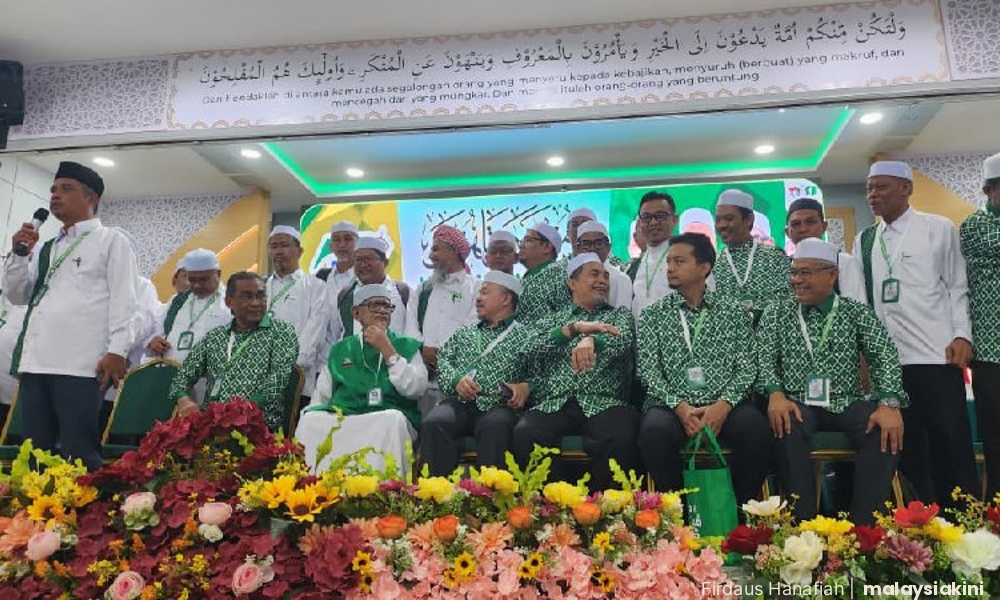
PAS leaders during party’s recent muktamar
During PAS’ 71st muktamar recently, party president Abdul Hadi Awang had signalled that the time is nigh for the party to lead PN and the country’s pluralistic society.
Stressing that Islam is the solution for the country’s problems, Hadi affirmed that PAS’ leadership of the nation will not neglect the rights and interests of other communities.
Following Hadi’s speech, a Penang PAS delegate claimed that there is “no way a non-Malay can lead the Malay-Muslims” while condemning PN’s decision to field Gerakan president Dominic Lau at the Bayan Lepas seat during the 2023 state election.
‘Limited openness’
Highlighting what she described as a “longstanding contradiction” in PAS’ politics, International Islamic University Malaysia political science associate professor Syaza Shukri said PAS’ stance of being “open, but only to a certain extent” is likely to pose tribulations for the party.
“It would be very difficult for PAS to convince non-Muslims to vote for it, but on the other hand, they get to maintain their momentum with the Malay voters,” she noted.
“PAS knows and acknowledges the only way for it to get to Putrajaya is with the support of non-Muslims, but they still need to maintain (their position) as a party that defends Malay-Muslim rights.
“In other words, PAS could not (form) the federal government on their own right now,” she added, referencing PN coalition member Gerakan as well as PAS’ courting of BN component members MIC and MCA.
During PAS’ 71st muktamar recently, party president Abdul Hadi Awang had signalled that the time is nigh for the party to lead PN and the country’s pluralistic society.
Stressing that Islam is the solution for the country’s problems, Hadi affirmed that PAS’ leadership of the nation will not neglect the rights and interests of other communities.
Following Hadi’s speech, a Penang PAS delegate claimed that there is “no way a non-Malay can lead the Malay-Muslims” while condemning PN’s decision to field Gerakan president Dominic Lau at the Bayan Lepas seat during the 2023 state election.
‘Limited openness’
Highlighting what she described as a “longstanding contradiction” in PAS’ politics, International Islamic University Malaysia political science associate professor Syaza Shukri said PAS’ stance of being “open, but only to a certain extent” is likely to pose tribulations for the party.
“It would be very difficult for PAS to convince non-Muslims to vote for it, but on the other hand, they get to maintain their momentum with the Malay voters,” she noted.
“PAS knows and acknowledges the only way for it to get to Putrajaya is with the support of non-Muslims, but they still need to maintain (their position) as a party that defends Malay-Muslim rights.
“In other words, PAS could not (form) the federal government on their own right now,” she added, referencing PN coalition member Gerakan as well as PAS’ courting of BN component members MIC and MCA.
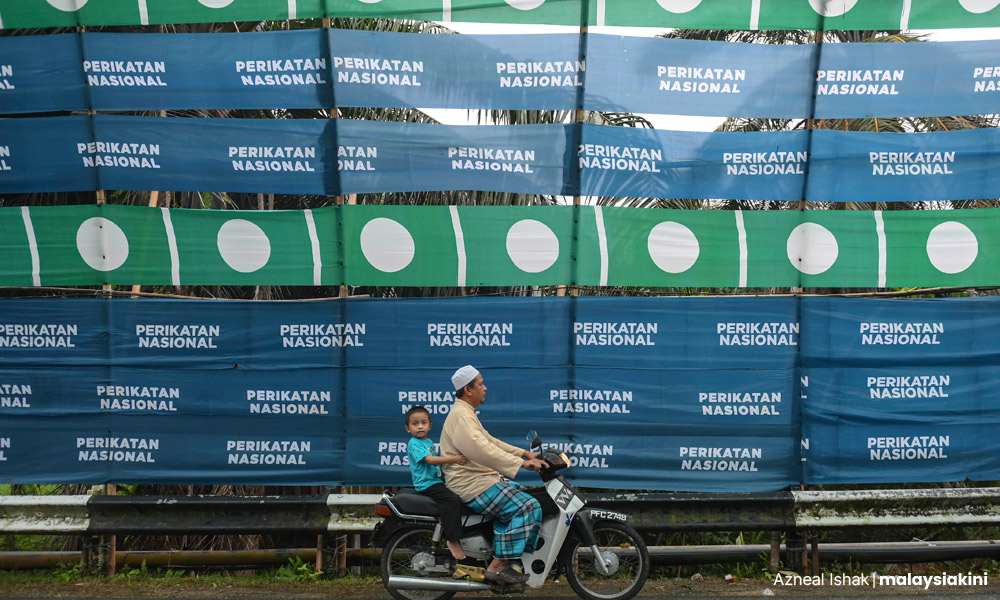
Commenting on the matter, Oh Ei Sun asserted that since PAS is effectively replacing Umno as the dominant Malay party, the Islamist party “expects” other non-Malay parties to flock to its fold to stay in the political mainstream.
“(PAS) has no non-Malay support whatsoever despite such expectations, and those non-Malay parties are expected to be decorative in nature and toe their obedient line, while PAS sweeps most of the Malay votes,” the senior fellow of the Singapore Institute of International Affairs said.
Palpable tensions
Mazlan noted that relations between PAS and Bersatu appear to be at their “most contrasting point” since the formation of PN in 2020.
“PAS is now sternly and aggressively saying, without compromise, that they want to lead PN when they had previously given room to Bersatu. They are in an open crisis where mutual criticism is being hurled between the parties,” he said.
“PAS also has an advantage in terms of a higher number of representatives in the Dewan Rakyat, more party members, as well as stronger grassroots, while Bersatu’s machinery is weak and it does not have many members.
“If a clash were to occur within these two parties, I believe that PAS will emerge victorious,” he added.
Earlier this week, PAS closed its biggest annual assembly with a clear signal – in line with its members’ demands – that the party is now prepared to play a bigger role within PN.
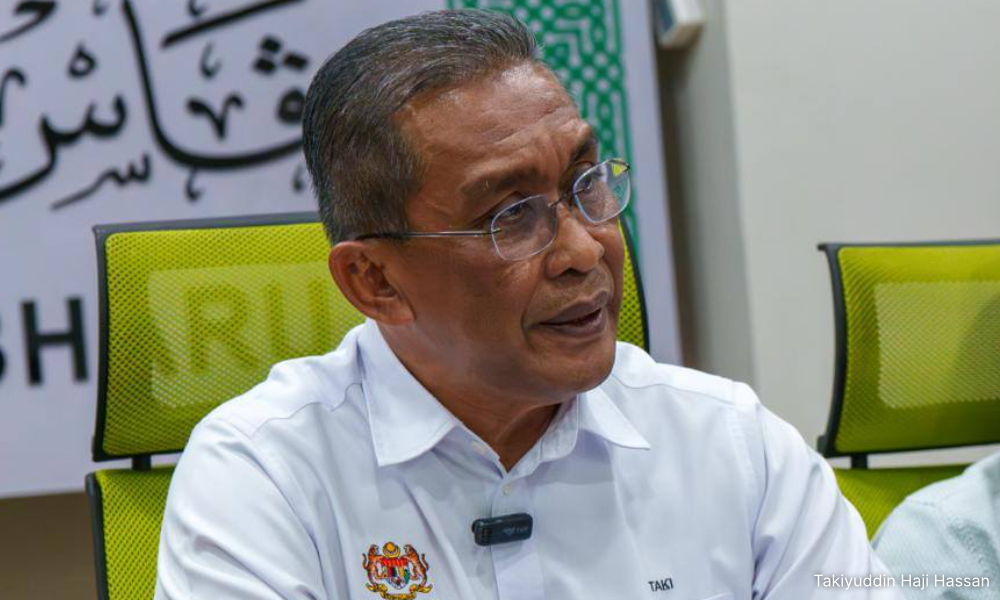
PAS sec-gen Takiyuddin Hassan
PAS secretary-general Takiyuddin Hassan said the party’s readiness is backed by its parliamentary strength – 43 seats – and control of four state governments, as well as the number of seats it has won compared to Bersatu in other states.
He also highlighted that the newly elected PAS leadership lineup has many leaders qualified to be put forward as prime minister candidates, amid the party’s chastisement of Bersatu, which had earlier endorsed its president and PN chairperson Muhyiddin Yassin as the next prime minister.
Mazlan asserted that PAS’ remark on the capability of its leaders to be prime minister hints at the possibility of PAS losing confidence in Muhyiddin’s leadership and the latter’s supposed declining suitability as a candidate.
PAS secretary-general Takiyuddin Hassan said the party’s readiness is backed by its parliamentary strength – 43 seats – and control of four state governments, as well as the number of seats it has won compared to Bersatu in other states.
He also highlighted that the newly elected PAS leadership lineup has many leaders qualified to be put forward as prime minister candidates, amid the party’s chastisement of Bersatu, which had earlier endorsed its president and PN chairperson Muhyiddin Yassin as the next prime minister.
Mazlan asserted that PAS’ remark on the capability of its leaders to be prime minister hints at the possibility of PAS losing confidence in Muhyiddin’s leadership and the latter’s supposed declining suitability as a candidate.
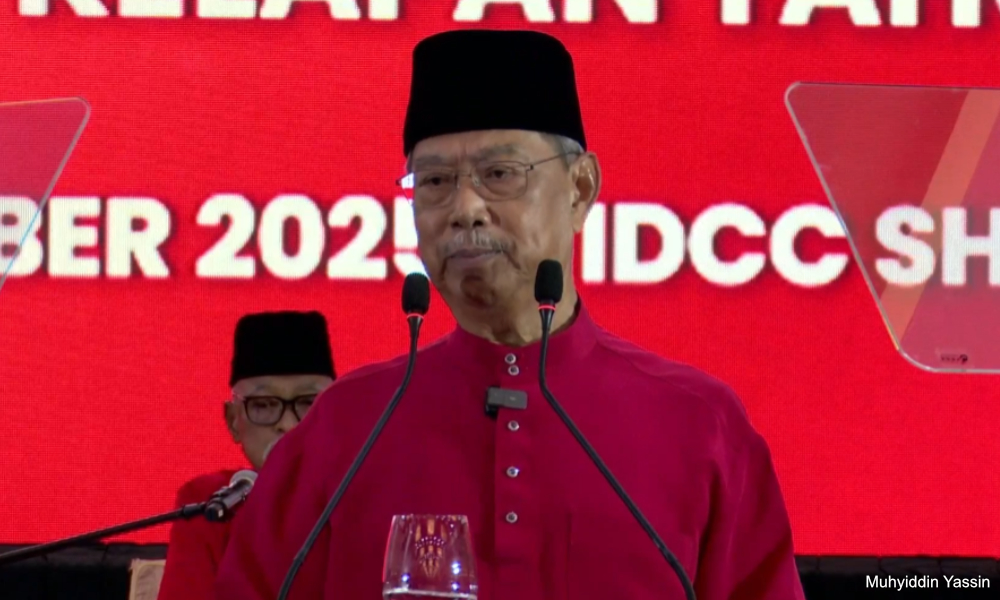
Bersatu president Muhyiddin Yassin
Oh said that since many seats held by Bersatu were won mainly with the help of PAS’ grassroots machinery, it is “only natural” that PAS would like to reclaim such seats and PN’s leadership for itself.
“Bersatu is thus squeezed by PAS from one side and Umno from the other. It risks submerging into oblivion if it does not somehow find a political blue ocean for itself,” he added.
Expressing similar sentiments, Syaza said Bersatu’s lack of clarity on the party’s trajectory and identity has led to the party becoming “irrelevant”.
“PAS comes out on top as the stronger party, which technically (means that it) should lead PN. Bersatu needs to prove itself especially in upcoming state elections, otherwise PN will really be a PAS vehicle,” she added.
Fresh faces could save Bersatu
Still, the analysts believe Bersatu is not without options.
According to Oh, the party must urgently shed its reliance on Muhyiddin and other “tired faces” by cultivating a new generation of leaders who can speak to younger voters and offer a fresher image compared to PAS’ lineup.
“At the very least, old guards such as Muhyiddin and (Bersatu deputy president) Hamzah Zainudin must step down in favour of leaders who can articulate themselves better, such as (Bersatu supreme council members) Wan Saiful Wan Jan and Wan Ahmad Fayhsal Wan Ahmad Kamal,” he said.
“Bersatu is thus squeezed by PAS from one side and Umno from the other. It risks submerging into oblivion if it does not somehow find a political blue ocean for itself,” he added.
Expressing similar sentiments, Syaza said Bersatu’s lack of clarity on the party’s trajectory and identity has led to the party becoming “irrelevant”.
“PAS comes out on top as the stronger party, which technically (means that it) should lead PN. Bersatu needs to prove itself especially in upcoming state elections, otherwise PN will really be a PAS vehicle,” she added.
Fresh faces could save Bersatu
Still, the analysts believe Bersatu is not without options.
According to Oh, the party must urgently shed its reliance on Muhyiddin and other “tired faces” by cultivating a new generation of leaders who can speak to younger voters and offer a fresher image compared to PAS’ lineup.
“At the very least, old guards such as Muhyiddin and (Bersatu deputy president) Hamzah Zainudin must step down in favour of leaders who can articulate themselves better, such as (Bersatu supreme council members) Wan Saiful Wan Jan and Wan Ahmad Fayhsal Wan Ahmad Kamal,” he said.
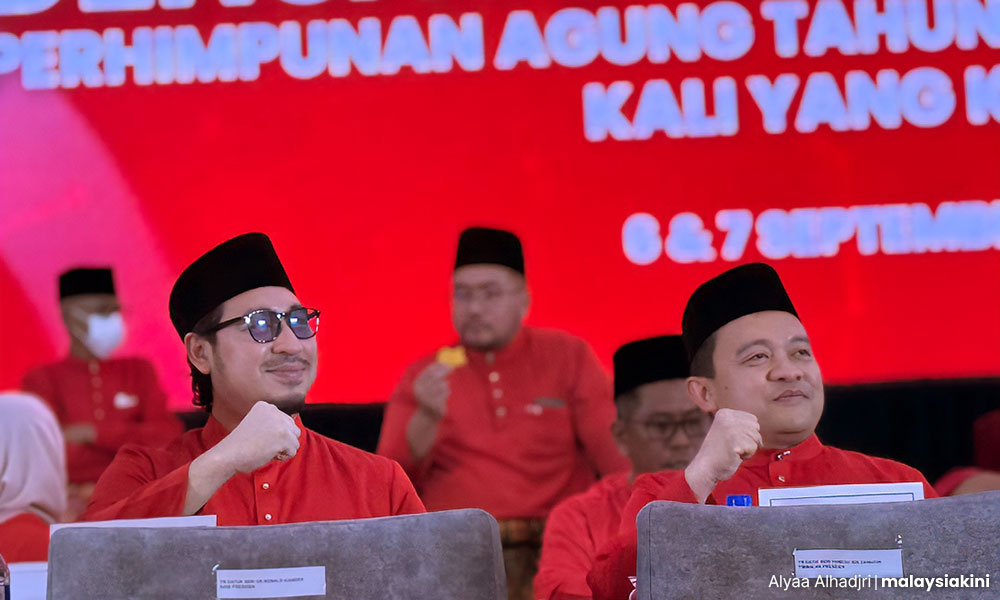
Bersatu members Wan Ahmad Fayhsal Wan Ahmad Kamal (left) and Wan Saiful Wan Jan
Oh argued that with such efforts, Bersatu could rebrand itself as a promising choice for younger Malays - and perhaps even attract some non-Malay voters.
Mazlan, however, noted that Bersatu still has advantages it can leverage to remain relevant within PN. Chief among these is the party’s leadership pool, which he argued carries more national-level experience compared to PAS.
“Bersatu has dynamic leaders who have proven themselves at the federal level. PAS may dominate in the east coast and northern states, but it is still difficult to identify PAS leaders who could convincingly lead the country,” he said.
While PAS has boasted of having “lorry-loads” of potential leaders on par with Prime Minister Anwar Ibrahim, Mazlan said such claims remain unproven, while Bersatu figures are “more suited” to be presented on a national stage.
Oh argued that with such efforts, Bersatu could rebrand itself as a promising choice for younger Malays - and perhaps even attract some non-Malay voters.
Mazlan, however, noted that Bersatu still has advantages it can leverage to remain relevant within PN. Chief among these is the party’s leadership pool, which he argued carries more national-level experience compared to PAS.
“Bersatu has dynamic leaders who have proven themselves at the federal level. PAS may dominate in the east coast and northern states, but it is still difficult to identify PAS leaders who could convincingly lead the country,” he said.
While PAS has boasted of having “lorry-loads” of potential leaders on par with Prime Minister Anwar Ibrahim, Mazlan said such claims remain unproven, while Bersatu figures are “more suited” to be presented on a national stage.
PAS actually has an active non-Muslim wing comprising associate members.
ReplyDelete