THANKS MF

Shaiel Ben-Ephraim
@academic_la
Israel feels that in the last few days Trump has turned against it. They are worried the change is permanent. But Israeli sources are not claiming Trump is being unfair necessarily, they are describing a trap of Netanyahu's own making:
1) Israelis read the rebuke as deliberate humiliation. A senior official close to Netanyahu told Channel 12 that Jerusalem was "stunned" by Trump's criticism and called it "a resounding slap in the face." The Times of Israel
2) Israelis accept they oversold the war and got caught. Former PM Ehud Barak, on Israel's public broadcaster, said "Israel is paying the price of Netanyahu's hubris and blindness, and the price of the manipulations that he tried to pull on Trump."
3) Israelis believe Trump now sees Netanyahu as a possession. A critic quoted in Israeli media warned that Netanyahu "is turning us into a client state that takes orders about its national security." Maariv columnist Ben Caspit put it more sharply: "Israeli policy is dictated by Trump's social media posts."
4) Israelis read the Netanyahu "won't run again" remark as Trump reaching into their politics. After Trump floated that it was an open question whether the 76-year-old wants to continue his political career, Likud was forced to publicly confirm Netanyahu would run.
5) They see Lebanon signals as abandonment of a front they consider existential. Nadav Strauchler, a former Netanyahu adviser, conceded to the Times of Israel that the premier was counting on Trump's support in the election, and how the war ends will affect the result more than anything. This lands hard given fourteen IDF soldiers killed by Hezbollah since the April ceasefire. The Times of IsraelThe Times of Israel
6) Israelis see Netanyahu boxed in with no answer. Yair Golan, the center-left party leader and former general, posted on X that Trump "signs an agreement that funnels billions to the Ayatollahs' regime, leaves the nuclear infrastructure intact, preserves the ballistic threat as is, and throws a lifeline to the murderous regime in Tehran."
7) Netanyahu's camp is minimizing the rift, which is the tell. Strauchler argued the perception of a rift was overstated, yet a senior Israeli source briefed on the relationship conceded the leaked call was not helpful to Netanyahu ahead of an election he is polling to lose
Bottom line: the Israeli interpretation is not that Trump betrayed a loyal ally. It is that Israel overpromised a war, Trump caught on, and Netanyahu now has no leverage, no alternative patron, and no way to answer a public humiliation except to deny it is happening.
***
Times of Israel:
Trump: Israel’s war on Hezbollah is too long, too deadly; Syria should fight the group instead
***
Times of Israel:
Trump: Israel’s war on Hezbollah is too long, too deadly; Syria should fight the group instead
‘Without me, there’d be no Israel,’ president claims at G7 summit; threatens ‘ultimate consequences’ if Iran seeks nukes; MOU to be signed Friday in Swiss mountaintop resort
By Nava Freiberg, Agencies and ToI Staff
16 June 2026, 7:31 pm
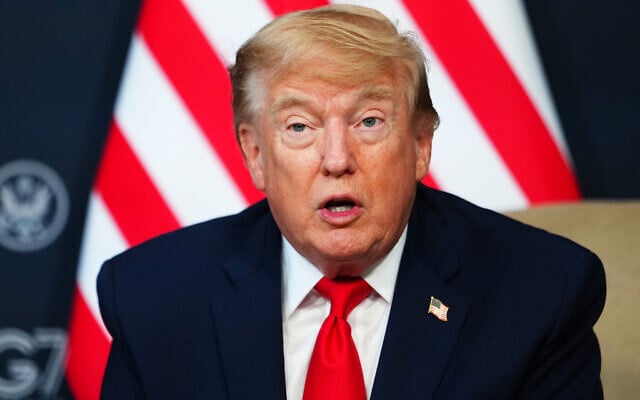
US President Donald Trump meets with Qatar's Emir Sheikh Tamim bin Hamad Al Thani, not seen, during a bilateral meeting on the sidelines of the G7 summit, June 16, 2026, in Evian-les-Bains, France. (AP/Julia Demaree Nikhinson)
US President Donald Trump said Tuesday that Syria should replace Israel in the fight against Lebanon’s Hezbollah, arguing that the Jewish state’s war on the Iran-backed terror group has been too prolonged and indiscriminate, and adding that Israel would have been “blown off the face of the earth” if not for him.
He also threatened unspecified “ultimate consequences” if Iran acquires a nuclear weapon in defiance of the US-Iran agreement to end the war, which was signed digitally on Sunday.
Speaking at the G7 summit of global leaders in France, Trump criticized Israel’s conduct in its fight against Hezbollah. He said that the conflict has gone on for too long, suggesting that Israel has been killing too many noncombatants.
“Israel is fighting Hezbollah too long and too many people are being killed,” Trump said. “And you don’t have to knock down an apartment house every time you’re looking for somebody. Because there are a lot of people in those apartment houses. And they’re not all Hezbollah, that I can tell you.”
Trump said later: “I’m not happy with the way Israel has handled themselves with Lebanon and with Hezbollah. They should have been able to do the job faster. It just goes on forever. And when that happens, it throws a negative light on the big deal, and that’s the deal with Iran.”
He reiterated that he was upset about Israel’s strike on Hezbollah in Beirut on Sunday, shortly before the interim peace deal between Iran and the US was announced.
“I didn’t like where, two hours before we’re signing the agreement, that there was an attack in Lebanon, in Beirut,” he said.
Israel launched the strike after Hezbollah fired several rockets into Israel.
He referred to Ahmed al-Sharaa, a former Islamist rebel leader and now the president of Syria, saying that he would more effectively lead the fight against Hezbollah.
“I suggested to Israel to let Syria take care of Hezbollah,” Trump said. “Because to be honest with you, I think they’d do a better job of doing it.”
He said of Sharaa: “He’s very capable. And he’s been very good for me. He’s protected everything that I’ve asked for… And if Israel can’t do the job without killing everyone else, he’ll do the job. Syria will do the job.”
Hezbollah had assisted former Syrian dictator Bashar Assad in keeping control during the more-than decade-long Syrian civil war. Sharaa was only eventually able to rout Assad’s forces after Israel severely weakened Hezbollah and killed much of its leadership in late 2024.
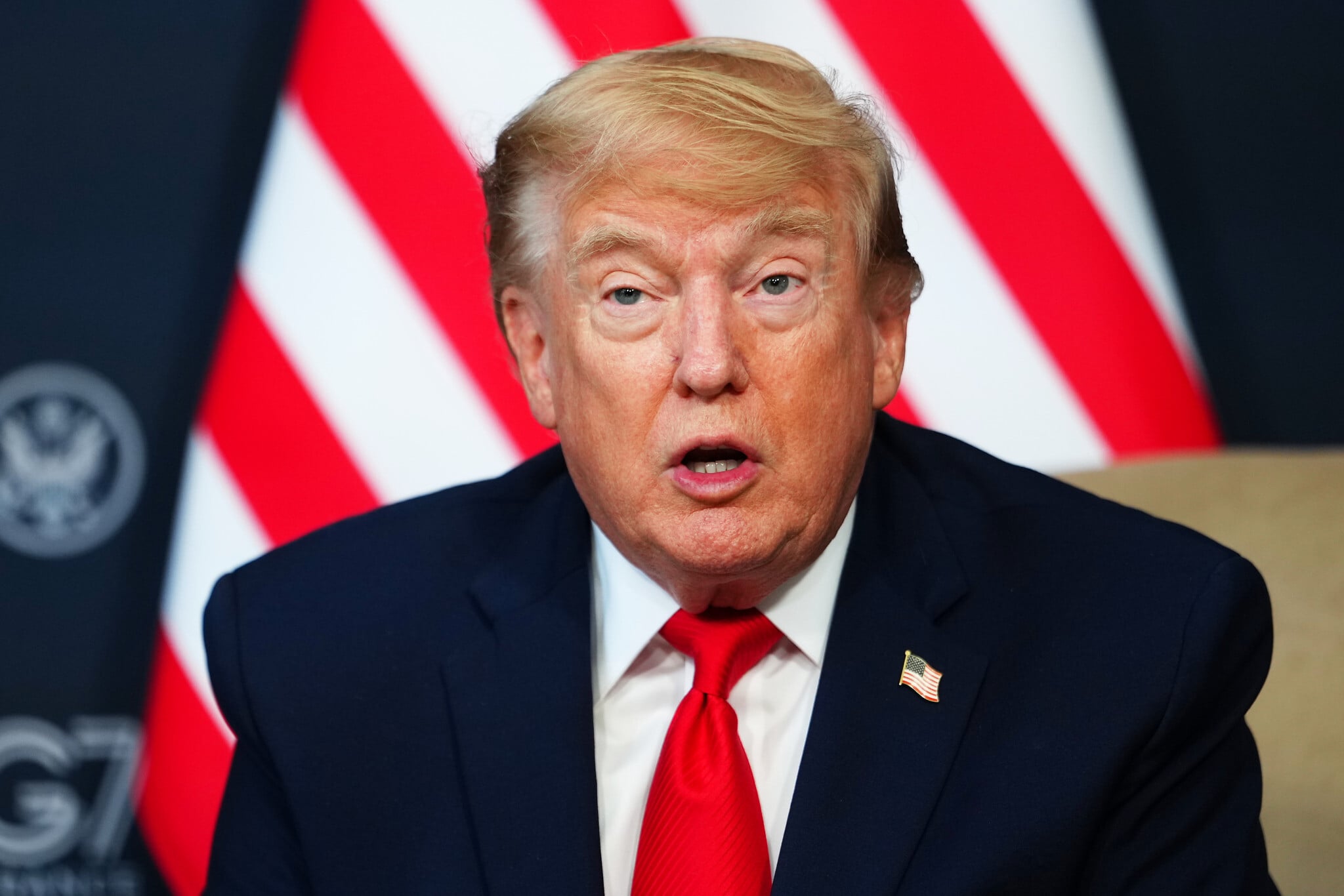
US President Donald Trump meets with Qatar's Emir Sheikh Tamim bin Hamad Al Thani, not seen, during a bilateral meeting on the sidelines of the G7 summit, June 16, 2026, in Evian-les-Bains, France. (AP/Julia Demaree Nikhinson)
US President Donald Trump said Tuesday that Syria should replace Israel in the fight against Lebanon’s Hezbollah, arguing that the Jewish state’s war on the Iran-backed terror group has been too prolonged and indiscriminate, and adding that Israel would have been “blown off the face of the earth” if not for him.
He also threatened unspecified “ultimate consequences” if Iran acquires a nuclear weapon in defiance of the US-Iran agreement to end the war, which was signed digitally on Sunday.
Speaking at the G7 summit of global leaders in France, Trump criticized Israel’s conduct in its fight against Hezbollah. He said that the conflict has gone on for too long, suggesting that Israel has been killing too many noncombatants.
“Israel is fighting Hezbollah too long and too many people are being killed,” Trump said. “And you don’t have to knock down an apartment house every time you’re looking for somebody. Because there are a lot of people in those apartment houses. And they’re not all Hezbollah, that I can tell you.”
Trump said later: “I’m not happy with the way Israel has handled themselves with Lebanon and with Hezbollah. They should have been able to do the job faster. It just goes on forever. And when that happens, it throws a negative light on the big deal, and that’s the deal with Iran.”
He reiterated that he was upset about Israel’s strike on Hezbollah in Beirut on Sunday, shortly before the interim peace deal between Iran and the US was announced.
“I didn’t like where, two hours before we’re signing the agreement, that there was an attack in Lebanon, in Beirut,” he said.
Israel launched the strike after Hezbollah fired several rockets into Israel.
He referred to Ahmed al-Sharaa, a former Islamist rebel leader and now the president of Syria, saying that he would more effectively lead the fight against Hezbollah.
“I suggested to Israel to let Syria take care of Hezbollah,” Trump said. “Because to be honest with you, I think they’d do a better job of doing it.”
He said of Sharaa: “He’s very capable. And he’s been very good for me. He’s protected everything that I’ve asked for… And if Israel can’t do the job without killing everyone else, he’ll do the job. Syria will do the job.”
Hezbollah had assisted former Syrian dictator Bashar Assad in keeping control during the more-than decade-long Syrian civil war. Sharaa was only eventually able to rout Assad’s forces after Israel severely weakened Hezbollah and killed much of its leadership in late 2024.

US President Donald Trump (L) shakes hands with Syria’s President Ahmed al-Sharaa at the White House in Washington, DC, on November 10, 2025. (Handout of the official Syrian Arab News Agency (SANA) / AFP)
Israeli troops are currently stationed deep within southern Lebanon, and the Israeli military has struck targets throughout the country, ever since the Iran-backed Hezbollah terror group attacked Israel on March 2 in support of Tehran.
Later Tuesday, Hezbollah’s media relations office told Reuters that the Shiite organization had received assurances from its backer Iran that it would demand a withdrawal of Israeli troops from Lebanon in its next phase of talks with the United States.
An IDF withdrawal will be the result of, and not a precondition for, continuing talks between Tehran and Washington, following the signing of a memorandum of understanding between the two countries on Friday, Hezbollah said.
The group said there would be “no nuclear deal between Iran and the United States unless the Israelis withdraw” from Lebanon.
Iran’s Foreign Minister Abbas Araghchi has publicly warned that any Israeli attack on Lebanon or continued presence in Lebanese territory would constitute a violation of the agreement with the United States.
Israeli troops are currently stationed deep within southern Lebanon, and the Israeli military has struck targets throughout the country, ever since the Iran-backed Hezbollah terror group attacked Israel on March 2 in support of Tehran.
Later Tuesday, Hezbollah’s media relations office told Reuters that the Shiite organization had received assurances from its backer Iran that it would demand a withdrawal of Israeli troops from Lebanon in its next phase of talks with the United States.
An IDF withdrawal will be the result of, and not a precondition for, continuing talks between Tehran and Washington, following the signing of a memorandum of understanding between the two countries on Friday, Hezbollah said.
The group said there would be “no nuclear deal between Iran and the United States unless the Israelis withdraw” from Lebanon.
Iran’s Foreign Minister Abbas Araghchi has publicly warned that any Israeli attack on Lebanon or continued presence in Lebanese territory would constitute a violation of the agreement with the United States.
Location announced for formal signing ceremony
On Sunday, US President Donald Trump announced that Washington and Tehran had signed a memorandum of understanding to extend their ongoing ceasefire by 60 days and to open the Strait of Hormuz, while holding negotiations on a long-term resolution to the conflict over Iran’s nuclear program.
The MOU, already signed digitally, is set to be signed formally in Switzerland on Friday. That same day, Iran and the US will start a new round of negotiations to reach a final agreement.
According to Axios, Trump aides Steve Witkoff and Jared Kushner will attend the meetings, alongside US Vice President JD Vance, as will Araghchi and Iranian Parliament Speaker Mohammed Bagher Ghalibaf.
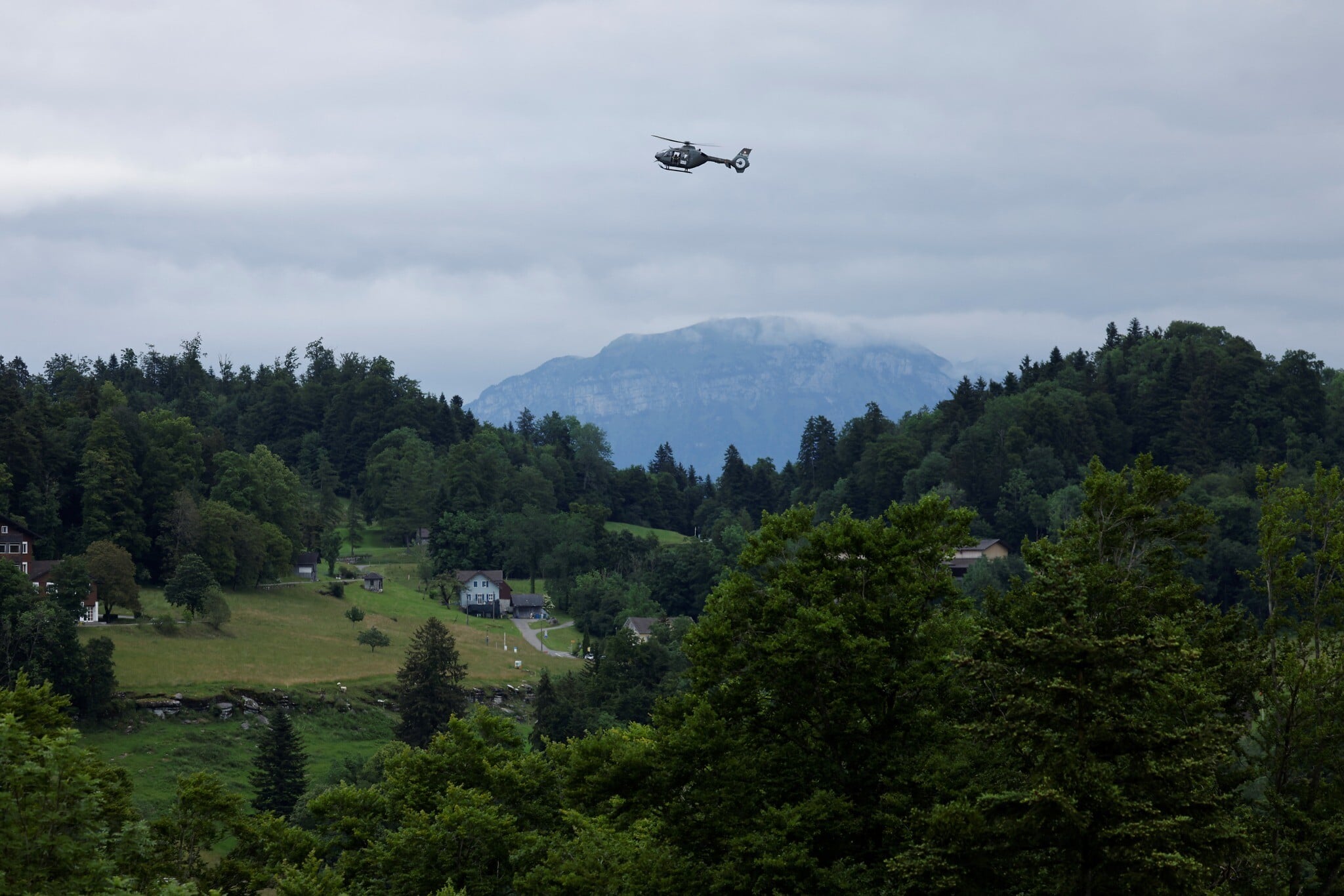
A military helicopter hovers as leaders arrive to take part in the ‘Summit on Peace’ in Ukraine at the luxury Burgenstock resort, near Lucerne in central Switzerland, on June 15, 2024. (Ludovic MARIN / AFP / File)
The signing ceremony is expected to be held at the Burgenstock mountaintop resort in central Switzerland, according to a statement issued by the Swiss government on Tuesday. The site, located near Lucerne in central Switzerland, is difficult to access and therefore easily secured.
The Swiss foreign ministry said in a statement that it had been in close contact with the US, Iran, Pakistan, and Qatar, regarding the possible signing of a memorandum of understanding between Washington and Tehran.
“At this stage, the signing is scheduled for Friday, June 19, at Burgenstock in the canton of Nidwalden. The location was proposed by the Pakistani and Qatari mediators, as well as by the US and Iran,” the ministry said.
Vance said Monday that he believes Israel will become a party to the emerging US-Iran deal at some point in the future, adding that the MOU is “about a page and a half, so it is a very general document,” and that many details have been left for the next phase of negotiations.
An administration official, briefing reporters on Monday, said that the text would likely be released in the next 24 to 48 hours, though Trump himself said Monday that it would only be released after the Friday ceremony.
‘Israel would not exist right now’
Also in his comments at the G7, Trump said Israel owes its continued existence to the United States and him personally.
“If it weren’t for the United States of America — with me, because Obama was the opposite — Israel would not exist right now. Israel would have been blown off the face of the earth, 100 percent. And every smart person in Israel knows that,” the US president said.
“Without us, without the United States, there would be no Israel. Without me, there’d be no Israel,” he stressed, “because no other president was willing to do what I did [in tackling Iran].” He said Iran was “two weeks away from having a nuclear weapon” and would have used it against Israel if the US had not intervened.
Trump also praised his relationship with Prime Minister Benjamin Netanyahu, following a series of negative comments he made about the premier in recent days, including saying that the premier was “crazy” and had “no fucking judgement.”
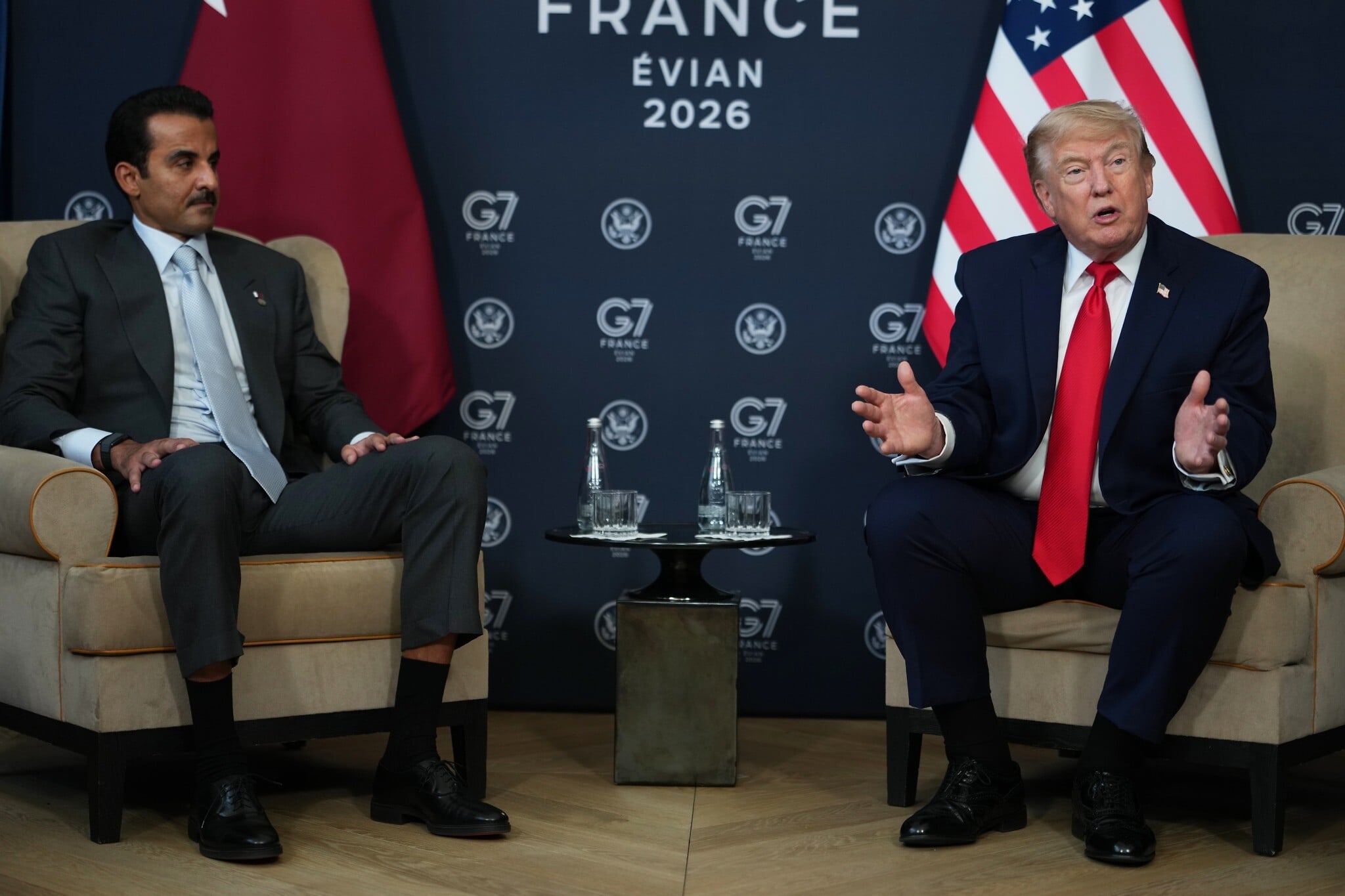
US President Donald Trump meets with Qatar’s Emir Sheikh Tamim bin Hamad Al Thani during a bilateral meeting on the sidelines of the G7 summit, June 16, 2026, in Evian-les-Bains, France. (AP/Julia Demaree Nikhinson)
Asked whether he is frustrated with Netanyahu after the two clashed over Israel’s bombing of Hezbollah targets in Beirut on Sunday, Trump said: “We have a very good relationship… an unbelievable relationship.”
Trump also warned that “all hell will rain down” on Iran if it attempts to develop, purchase, or otherwise acquire a nuclear weapon.
“They’re not going to acquire a nuclear weapon. If they do, all hell will rain down on them,” Trump said.
He added that the preliminary deal “says it loud and clear. They’re not going to develop it. They’re not going to buy it. They’re not going to do anything with it. And if they do, they suffer unbelievable consequences.”
He said that he only agreed to sign the document after Tehran agreed to adjust the wording so that it prevented them not only from developing a nuclear weapon, but also from purchasing one or acquiring it through some other means.
Trump did not specify what the consequences for doing so would be, however, saying: “I won’t even tell you the consequences. But the consequences are the ultimate consequences. And with that being said, I hope we have a very good relationship.”
“I think it’s going to go pretty quickly,” Trump told reporters about the next phase of negotiations with Iran, stipulated with a 60-day deadline.
“Iran wants to get it done. They have to get back to business, and the relationship is now normalized, so I think it’s going to go pretty quickly,” Trump told reporters during his meeting with Mohamed bin Zayed Al Nahyan, the president of the United Arab Emirates. “Could go faster, could take longer too, but it could go fast.”
However, European allies have voiced concern that an inexperienced US negotiating team could struggle to secure a robust agreement, potentially leading to a prolonged standoff.
Diplomats and analysts note that Iranian negotiators are highly skilled in nuclear diplomacy, often exploiting weaknesses in their counterparts and buying time to advance their agenda, making the prospect of a comprehensive agreement within 60 days challenging.
In 2015, former US president Barack Obama secured a nuclear deal with Iran in exchange for sanctions relief, a process that took two years to finalize. Trump withdrew the United States from that accord during his first term.
“This deal is a wall to a nuclear weapon. [Obama’s] deal was a road to a nuclear weapon. My deal, they can’t have a nuclear, they get blown up,” Trump said.
Netanyahu made a similar argument in a press conference on Monday evening, saying that while Obama’s deal was not accompanied by a credible military threat if Iran does not comply, the recent war provides such a threat in the case of the current deal.
Trump also warned that “all hell will rain down” on Iran if it attempts to develop, purchase, or otherwise acquire a nuclear weapon.
“They’re not going to acquire a nuclear weapon. If they do, all hell will rain down on them,” Trump said.
He added that the preliminary deal “says it loud and clear. They’re not going to develop it. They’re not going to buy it. They’re not going to do anything with it. And if they do, they suffer unbelievable consequences.”
He said that he only agreed to sign the document after Tehran agreed to adjust the wording so that it prevented them not only from developing a nuclear weapon, but also from purchasing one or acquiring it through some other means.
Trump did not specify what the consequences for doing so would be, however, saying: “I won’t even tell you the consequences. But the consequences are the ultimate consequences. And with that being said, I hope we have a very good relationship.”
“I think it’s going to go pretty quickly,” Trump told reporters about the next phase of negotiations with Iran, stipulated with a 60-day deadline.
“Iran wants to get it done. They have to get back to business, and the relationship is now normalized, so I think it’s going to go pretty quickly,” Trump told reporters during his meeting with Mohamed bin Zayed Al Nahyan, the president of the United Arab Emirates. “Could go faster, could take longer too, but it could go fast.”
However, European allies have voiced concern that an inexperienced US negotiating team could struggle to secure a robust agreement, potentially leading to a prolonged standoff.
Diplomats and analysts note that Iranian negotiators are highly skilled in nuclear diplomacy, often exploiting weaknesses in their counterparts and buying time to advance their agenda, making the prospect of a comprehensive agreement within 60 days challenging.
In 2015, former US president Barack Obama secured a nuclear deal with Iran in exchange for sanctions relief, a process that took two years to finalize. Trump withdrew the United States from that accord during his first term.
“This deal is a wall to a nuclear weapon. [Obama’s] deal was a road to a nuclear weapon. My deal, they can’t have a nuclear, they get blown up,” Trump said.
Netanyahu made a similar argument in a press conference on Monday evening, saying that while Obama’s deal was not accompanied by a credible military threat if Iran does not comply, the recent war provides such a threat in the case of the current deal.
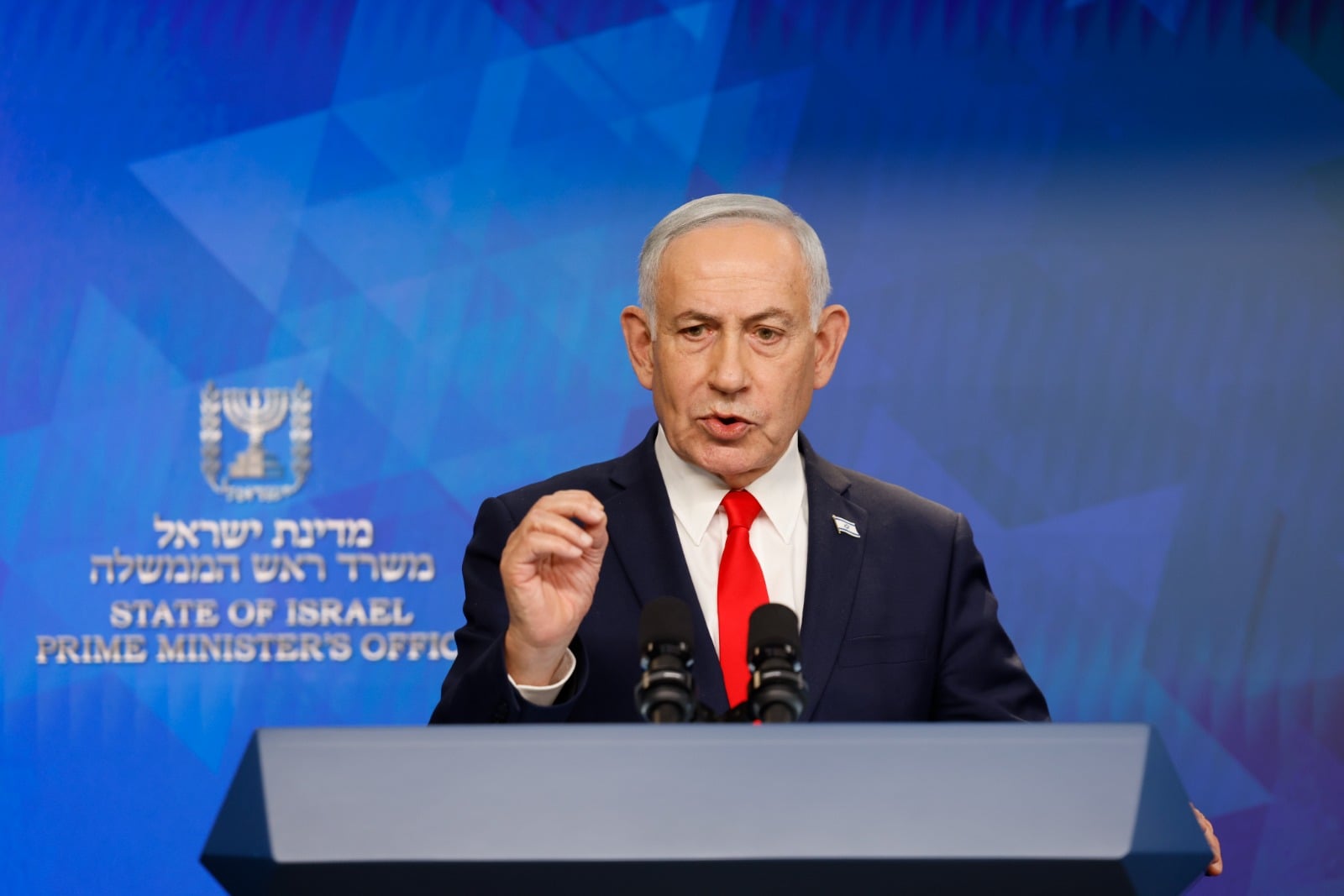
Prime Minister Benjamin Netanyahu holds a press conference at the Prime Minister’s Office in Jerusalem, June 15, 2026. (Olivier Fitoussi/POOL)
Iran has long insisted that it does not seek a nuclear weapon, and made such a commitment in the 2015 deal that Trump vilified and withdrew from in 2018.
Both of Trump’s administrations, along with Israel, have refused thus far to take Tehran at its word, something the US president seemed to indicate he was now prepared to do.
Iran, whose leaders frequently call for the destruction of Israel, has always maintained that its nuclear program is for peaceful purposes only, but it has enriched uranium to levels far beyond what is necessary for civilian use and has obstructed inspectors from examining its facilities.
Trump claims he does not ‘believe in regime change’
Continuing his remarks, Trump claimed he had “never cared about regime change” as a goal in the US-Israeli campaign against Tehran, while reiterating his belief that the elimination of so many senior Iranian officials effectively amounts to regime change, even though the Islamic Republic’s theocratic system has remained intact and stable.
“You talk about regime change. I never cared about regime change. It [was] never a part. But I guess you have regime change because you know better than anybody, the first group, they’re all dead. The second group, they’re dead. A part of the third group is gone,” he said, referring to echelons of the Iranian leadership.
“And we’re dealing with people that I think are very rational people. They were nice to deal with. They were strong people, smart people. I think actually they’re smarter than the first and second group, but they’re not radicalized and they’re, you know, looking to help their country,” he continued.
“I don’t believe in regime change,” he added. “And I’ve watched regime changes for years. They never work. It has to just happen [naturally].”
On the first day of the war in late February, Trump indicated that the goal of the strikes in Iran was to topple the regime, and called on the Iranian people to seize the opportunity to take over their government, telling them that “the hour of your freedom is at hand.”
“When we are finished, take over your government. It will be yours to take. This will be probably your only chance for generations,” he said at the time.
Iran has long insisted that it does not seek a nuclear weapon, and made such a commitment in the 2015 deal that Trump vilified and withdrew from in 2018.
Both of Trump’s administrations, along with Israel, have refused thus far to take Tehran at its word, something the US president seemed to indicate he was now prepared to do.
Iran, whose leaders frequently call for the destruction of Israel, has always maintained that its nuclear program is for peaceful purposes only, but it has enriched uranium to levels far beyond what is necessary for civilian use and has obstructed inspectors from examining its facilities.
Trump claims he does not ‘believe in regime change’
Continuing his remarks, Trump claimed he had “never cared about regime change” as a goal in the US-Israeli campaign against Tehran, while reiterating his belief that the elimination of so many senior Iranian officials effectively amounts to regime change, even though the Islamic Republic’s theocratic system has remained intact and stable.
“You talk about regime change. I never cared about regime change. It [was] never a part. But I guess you have regime change because you know better than anybody, the first group, they’re all dead. The second group, they’re dead. A part of the third group is gone,” he said, referring to echelons of the Iranian leadership.
“And we’re dealing with people that I think are very rational people. They were nice to deal with. They were strong people, smart people. I think actually they’re smarter than the first and second group, but they’re not radicalized and they’re, you know, looking to help their country,” he continued.
“I don’t believe in regime change,” he added. “And I’ve watched regime changes for years. They never work. It has to just happen [naturally].”
On the first day of the war in late February, Trump indicated that the goal of the strikes in Iran was to topple the regime, and called on the Iranian people to seize the opportunity to take over their government, telling them that “the hour of your freedom is at hand.”
“When we are finished, take over your government. It will be yours to take. This will be probably your only chance for generations,” he said at the time.
Fuck will not survive politically directly undermining Zion.
ReplyDeleteBarak Hussein Obama was no friend of Zion, but rather quickly realised it is political quicksand to go against them.
The Little Satan gets only 3.8B but people complain this lah that lah.
ReplyDeleteNow Rocketollah will get $300 billion from the Great Satan. Any complaints from anyone?
3.8 Billion free of charge to shailoks, but 300 Billion is only promised INVESTMENT but by private sector
DeleteAnatolia was Greek and Orthodox Kristian until colonized by Ishmaels who instituted forced conversion and Hotel California.
ReplyDeleteWe All Know The Drill.
Now Tell Me Which Part of the World does Isaacs rule today besides their one and only, the Size of Perak and more than half Open Negev Desert?
A Turkish journalist has sparked intense debate after claiming that much of modern Turkey was once part of the Christian Greek world and that many people living there today descend from populations that were forcibly or gradually Islamized over the centuries.
According to her statements, vast regions of Anatolia were Orthodox Christian and Greek for centuries before the spread of Islam transformed the demographic and cultural landscape. She argues that many families of Greek and Armenian origin eventually lost their original faith and identity, adopting Islam and a Turkish national identity instead.
The journalist describes the disappearance of churches, the destruction of Christian cemeteries, and the gradual erasure of a civilization that had existed in Asia Minor for more than a thousand years. She also claims that many descendants of Islamized Greeks have been taught to view Orthodox Greeks as enemies despite their shared ancestry.
“I have seen firsthand what Islamization does to culture and freedom,” she stated, warning that Europe should learn from the historical experience of Anatolia and protect its cultural heritage and identity.
Her comments have reignited discussions about the forgotten Christian history of Asia Minor, the existence of Crypto-Christians, and the complex ethnic origins of many people in modern Turkey. For many Greeks, these remarks are seen as a rare acknowledgment from within Turkey of the deep historical roots of Hellenism in Anatolia and the dramatic changes that followed the Ottoman era.
https://x.com/dr_thehistories/status/2067164751952846962?s=46&t=8K6fzabO3g6uaj4KxwSSjg
What's with the digital signature in a peace agreement or international treaty document? What has changed? What legal instrument of framework govern digital signature? How is it being ensure against forgery or tampering?
ReplyDeletehttps://x.com/i/status/2067048664992710920
ReplyDelete🧵New: The US is in talks with the Palestinian Authority about boosting what has been a strained bilateral relationship, as Washington seeks Ramallah’s cooperation to advance policies in region, three gov officials familiar told @TimesofIsrael (1/36)
https://x.com/i/status/2067119263274446891
At long last, I hope policymakers in Washington have come to understand a reality that has too often been ignored: the road to regional normalization runs through Ramallah, not Tehran.
The recent campaign against Iran only reinforced a fundamental strategic lesson. Despite repeated claims to the contrary, the prospects for meaningful normalization between Israel and key Arab states, particularly Saudi Arabia, remain extremely limited without tangible progress on the Palestinian track.
The Palestinian Authority undoubtedly suffers from serious shortcomings and requires significant reforms. Yet it remains the internationally recognized representative of the Palestinian people and the only viable political framework through which a sustainable solution can be pursued. There is no realistic path to stability in either Gaza or the West Bank that bypasses the PA. While reform is necessary, making reform a precondition for any political progress risks turning it into an excuse for indefinite paralysis.
More broadly, the unresolved Palestinian issue continues to provide Iran with one of its most effective tools for regional influence. Tehran has long exploited the Palestinian cause to justify its intervention across the Middle East, strengthen its network of proxies, and challenge the legitimacy of Arab governments pursuing closer ties with Israel. Genuine political progress between Israelis and Palestinians would significantly weaken this narrative, strengthen the foundations for Saudi-Israeli normalization, It would also help repair and strengthen Israel’s increasingly fragile ties with Jordan and Egypt as Both governments face significant domestic and regional pressures related to the Palestinian issue, making progress on the Palestinian track essential not only for future normalization efforts, but also for preserving and deepening Israel’s existing strategic partnerships in the Arab world. and increase pressure on Iran as regional actors move toward greater cooperation.
Conversely, when Israel avoids meaningful movement on the Palestinian issue and allows the diplomatic process to stagnate, it inadvertently serves the interests of Iran and the so-called “Axis of Resistance.” The absence of a political horizon creates opportunities for Tehran to present itself as the primary defender of Palestinian aspirations and to expand its regional influence.
The immediate priority should be the creation of a credible political horizon. This requires advancing confidence-building measures, preventing unilateral actions that could fundamentally alter realities on the ground, and reestablishing meaningful political dialogue between the parties. These steps alone will not resolve the conflict, but they are essential for restoring the conditions necessary for future diplomacy.
Ironically, the confrontation with Iran demonstrated precisely why the Palestinian issue cannot be sidelined. Military pressure on Tehran may constrain some of its capabilities, but it cannot substitute for a political strategy that addresses one of the region’s central sources of instability. If the United States seeks to advance a broader regional architecture centered on normalization, integration, and the containment of Iran, progress on the Palestinian issue is not optional—it is indispensable.
#iran
What would appear in a search result if the term, "Save Israel for last" is entered? It is probably browser dependent. Brave browser and Google Chrome were tested on.
ReplyDelete