
Displaced Lebanese families ‘living in constant fear’ under Israeli bombardment, warns UN Refugee Agency official

A woman who fled Israeli attacks in southern Lebanon sits outside a tent in Beirut, Lebanon, on March 25, 2026 [Emilio Morenatti/AP Photo]

By Al Jazeera Staff
Published On 27 Mar 2026
Lebanon faces the threat of a “humanitarian catastrophe”, the United Nations Refugee Agency (UNHCR) has warned, as Israel expands its weeks-long bombardment and ground invasion of the country.
UNHCR’s Lebanon representative Karolina Lindholm Billing said on Friday that Israeli strikes and forced displacement orders have affected people living across the country – from southern Lebanon to the Bekaa Valley, the capital Beirut, and further north.
Recommended Stories
More than 1.2 million people have been forced from their homes since Israel’s intensified attacks against its northern neighbour began in early March, according to UN figures.
“The situation remains extremely worrying and the risk of a humanitarian catastrophe … is real,” Lindholm Billing told reporters during a briefing in Geneva.
She noted that, as displacement numbers continue to rise, Lebanon’s already overstretched shelter system is struggling to meet families’ needs.
“Just last week, there were strikes that hit central Beirut, including in densely populated neighbourhoods … where many people had tried to find safety in collective shelters,” Lindholm Billing said.
“The families are … living in constant fear, and the psychological toll, particularly on children, will last far beyond this current escalation.”
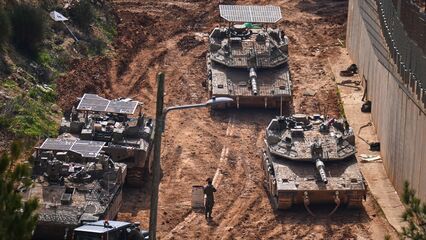
Israeli military advances into Lebanon amid escalating clashes with Hezbollah
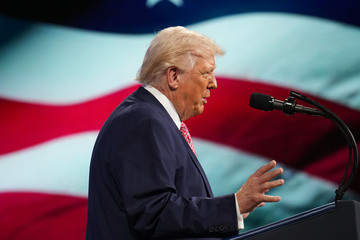
Trump says US-Israeli war on Iran creating a new Middle East
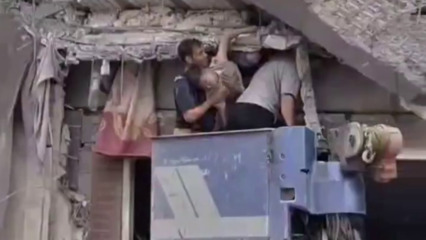
Rescue workers rush to save lives after south Tehran missile strike
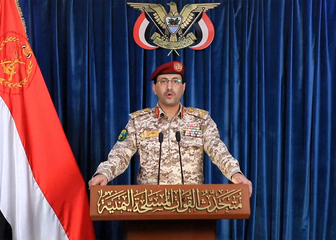
‘Fingers on the trigger’ for military intervention, Houthis warn
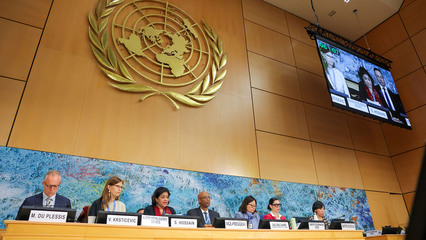
Grieving Iranian mother tells UN about children before school attack
Israel launched intensified attacks across Lebanon after Hezbollah fired rockets towards Israeli territory following the February 28 assassination of Iranian Supreme Leader Ayatollah Ali Khamenei in the US-Israel war on Iran.
The Israeli military has carried out aerial and ground attacks across the country while issuing mass forced displacement orders for residents of the country’s south, as well as several suburbs of Beirut.
On Friday afternoon, the Israeli military said it had begun a wave of air strikes on Beirut. It also issued more forced displacement orders for several areas in the city’s southern suburbs, including the neighbourhoods of Haret Hreik and Burj al-Barajneh.
Hezbollah has continued to fire rockets into northern Israel and confront Israeli troops in southern Lebanon, with leader Naim Qassem stressing this week that the group had no plans to stop fighting “an enemy that occupies land and continues daily aggression”.
Israeli Prime Minister Benjamin Netanyahu also announced plans to expand the country’s ground invasion in southern Lebanon, saying the military would create “a larger buffer zone” in Lebanese territory.
Rights groups have condemned the expanded operation and warned that preventing Lebanese civilians from returning to their homes in the south may amount to the war crime of forced displacement.
“Israel’s tactics of mass expulsion in Lebanon raise serious risks of forced displacement,” Human Rights Watch said on Thursday. “Forced displacement and collective punishment are war crimes.”

Displaced residents sit outside a tent in a local school in Beirut after fleeing their homes in southern Lebanon, on March 27, 2026 [Wael Hamzeh/EPA]
The Israeli military’s destruction of civilian homes and several bridges linking southern Lebanon to the rest of the country has also fuelled concerns that Israel is trying to isolate the area.
During Friday’s news briefing, UNHCR’s Lindholm Billing noted that the destruction of the bridges has made accessing southern Lebanon “increasingly difficult”.
“The destruction of key bridges in the south has cut off entire districts … isolating over 150,000 people and severely limiting humanitarian access with essential items to reach them,” she said.
Reporting from Tyre in southern Lebanon on Friday afternoon, Al Jazeera’s Obaida Hitto also stressed that Israel’s forced evacuation orders are “causing a lot of panic” among residents.
“Evacuation orders are happening in areas that were previously thought to be safe,” he said, adding that the destruction and damage to bridges over the Litani River in the south has made the prospect of finding safety more difficult.
“This is putting the government in Beirut in a very difficult situation to try and respond to the humanitarian crisis quickly growing in the south of the country,” Hitto said.
The Israeli military’s destruction of civilian homes and several bridges linking southern Lebanon to the rest of the country has also fuelled concerns that Israel is trying to isolate the area.
During Friday’s news briefing, UNHCR’s Lindholm Billing noted that the destruction of the bridges has made accessing southern Lebanon “increasingly difficult”.
“The destruction of key bridges in the south has cut off entire districts … isolating over 150,000 people and severely limiting humanitarian access with essential items to reach them,” she said.
Reporting from Tyre in southern Lebanon on Friday afternoon, Al Jazeera’s Obaida Hitto also stressed that Israel’s forced evacuation orders are “causing a lot of panic” among residents.
“Evacuation orders are happening in areas that were previously thought to be safe,” he said, adding that the destruction and damage to bridges over the Litani River in the south has made the prospect of finding safety more difficult.
“This is putting the government in Beirut in a very difficult situation to try and respond to the humanitarian crisis quickly growing in the south of the country,” Hitto said.
***
Shailoks heavily aided by wankees' military, financial, political, intelligence aid.
My advice to KT is dun swallow everything Al Jezebel reports like a Gullible Guppy.
ReplyDeleteIt’s EMBARRASSING.
ReplyDeletetruly f*cked kawx2!
DeleteLebanon was carved out of the Ottoman Empire to give Christians a home in the ME. Similarly Isaac carved out to give Isaac’s a home.
ReplyDeleteBut Ishmaels mati2 tak mau bagi. Mesti Sapu Bersih. River to The Sea.
So Tamak.
Apa Lagi Ishmael Mau?
Mfer, u memamg buat tak tau!
DeleteHancurkan yahedi dari bumi Levant.
Faham, tak?
What’s all this talk about white people must pay reparations for slavery?
ReplyDeleteIt was the Brits who banned slavery and forced its implementation throughout its colonies worldwide, despite resistance from many of its colonies.
Note: even the Malays practiced slavery, as did the Ottomans.
THOMAS SOWELL: “if you’re going to have reparations for slavery, it’s going to be the greatest transfer of wealth back and forth, because the number of Whites who were enslaved in North Africa by the Barbary Pirates exceeded the number of Africans enslaved in the United States.”
https://x.com/rothmus/status/2037651667030552912?s=46&t=8K6fzabO3g6uaj4KxwSSjg
TS, this is why I DON'T trust the veracity of your input - read this and stoop brown-nosing the whites
Deletethe British were heavily involved in transporting and selling African slaves to the Americas, becoming the dominant European slave-trading nation between 1640 and 1807. British merchants transported an estimated 3.1 million enslaved Africans to the Caribbean, North America, and South America, driving substantial profits for the British economy.
Key Aspects of British Involvement:
Triangular Trade: British ships took manufactured goods (guns, textiles) to Africa, traded them for enslaved people, transported them via the "Middle Passage" to the Americas, and returned with slave-produced products like sugar and tobacco.
Dominance and Scale: Britain and Portugal accounted for roughly 70% of all Africans transported to the Americas.
State-Sponsored Trading: The British monarchy and government actively supported the trade, granting royal charters to companies like the Royal African Company, which transported more enslaved people than any other single organization.
Significant Role in American Colonies: British traders were primary suppliers to their own colonies, including the Caribbean and the southern colonies that later became part of the United States.
Who in Bolehland gave this assurance to Aussie?
ReplyDelete“The Malaysian government has indicated to me they regard their role as a reliable supplier of liquid fuel to Australia, extremely importantly, and that they see Australia as a key ally and friend,” he said.
https://x.com/simonbankshb/status/2037460088676548808?s=46
Wrong as Usual. KT has a myopic one-dimensional anti-white anti-Brit view. In reality slavery has a very complex supply chain with many along the chain making huge profits.
ReplyDeleteWho caught the blacks? Other blacks. Who traded? Other Africans, Arabs, Ottomans, Europeans and also Asians.
Portugal/Brazil was the largest transporter of enslaved people in history, responsible for trafficking over 5.8 million African men, women, and children across the Atlantic between 1501 and 1866. They dominated the trade, particularly in the 18th and 19th centuries, accounting for the highest overall number of enslaved people taken.
Encyclopedia Virginia
Portugal/Brazil: Over 5.8 million enslaved people.
Great Britain: The dominant power in the 18th century, accounting for roughly 25% of the total transatlantic trade.
Total Transatlantic Trade: Over 388,000 enslaved Africans arrived in North America, with the majority going to Brazil and the Caribbean.
Peak Period: The trade reached its highest volume in the 1700s.
Look up Barbary Slave Trade.
ReplyDeleteNorth Africans kidnapped and traded white Europeans.
https://en.wikipedia.org/wiki/Barbary_slave_trade
The transatlantic slave trade (15th–19th century) was the forced migration of 11–12 million African men, women, and children to the Americas to work on plantations, driven by European demand for labor. Primarily operated by Portugal, Britain, and France, it involved a "triangular trade" that devastated African communities, caused immense loss of life during the "Middle Passage," and fueled colonial economies.
ReplyDeleteGilder Lehrman Institute of American History |
Key Aspects of the African Slave Trade:
Origins and Extent: Starting in the mid-1400s, Portuguese explorers began trading in West Africa, with the traffic increasing as Indigenous populations in the Americas were decimated by disease. It became the largest forced maritime migration in history.
The Triangular Trade: European ships transported goods (guns, textiles, rum) to Africa, exchanged them for enslaved people, shipped them across the Atlantic (Middle Passage), and brought plantation products (sugar, cotton, tobacco) back to Europe.
The Middle Passage: The journey across the Atlantic was brutal, with many enslaved people dying due to terrible conditions, diseases, and abuse.
Destination of Enslaved People: While Brazil and the Caribbean received the vast majority of enslaved people (~45% and ~37% respectively), only about 4–6% were taken to North America.
Impact on Africa: The trade caused profound devastation, including increased violence, kidnapping, and the disruption of local societies.
Abolition: The trade was legally abolished by many nations in the early 19th century (e.g., Britain in 1807, US in 1808), though illegal trafficking continued for several decades.
Islam brought slavery to old Malay states in the 14th century.
ReplyDeleteAnd we LOVED our hambas.
The Brits had to put a stop to it.
https://en.wikipedia.org/wiki/Slavery_in_Malaysia
It would be very sensitive to bring up if one of the “R”s were historically involved in slavery. Can we ask their descendants for reparations?
Deletemfer, don't twist yr his-story about the emergence of slavery in bolihland. The practice exists long before the arrival of Islam in this part of the world!
DeleteThe term Slav….
ReplyDeleteRelationship to "Slave": In the Middle Ages, the term sclavus (Latin) and sclave (Old French) was derived from Slav because many Slavic people were captured and sold into servitude in the Mediterranean, leading to the use of their ethnonym to describe the social status
So how to calculate reparation ?
ReplyDeleteGreatest Transfer of Wealth Back and Forth With No End.
So Stop Picking on The Whites and Brits.
your brown-nosing is humongously staggeringly HUGE
DeleteThis comment has been removed by a blog administrator.
ReplyDeleteSlaves, in reverent fear of God submit yourselves to your masters, not only to those who are good and considerate, but also to those who are harsh. (1 Peter 2:18)
DeleteYour fantastic efforts in 'ameliorating' the sins of your White Great-father should be rewarded with at least a Victoria Cross (for extreme bravery) - Bravo and wakakaka
DeleteAyam Fair. I criticize that White Wanker Starmer because he deserves it.
DeleteTrivia question:
ReplyDeleteWhen was the first war fought between USA and Ishmaels?
Bet you did not guess in 1801 by Thomas Jefferson.
First Barbary War. But it was over kidnapping in the high seas.
wakakaka…
DeleteSo yr mfering inter- fighting between the Yank & 'Ishmaels' is over kidnapping in the high seas!
Then, what is yr mfering interference about pommie victorian sanctioned piracies against the Spaniards' cargo ships?
KT deleted my comments on slavery in Eastern Bully and Yindia? Or still studying them for compliance to his narrative…..ha3.
ReplyDelete